First Stop
Workshop at Kulturhuset Blå Stället · January 2026
Workshop Leaders: Leila Natsheh and Simona Cavalieri
Workshop Assistant: Camilla Uhlén
Workshop Assistant: Camilla Uhlén
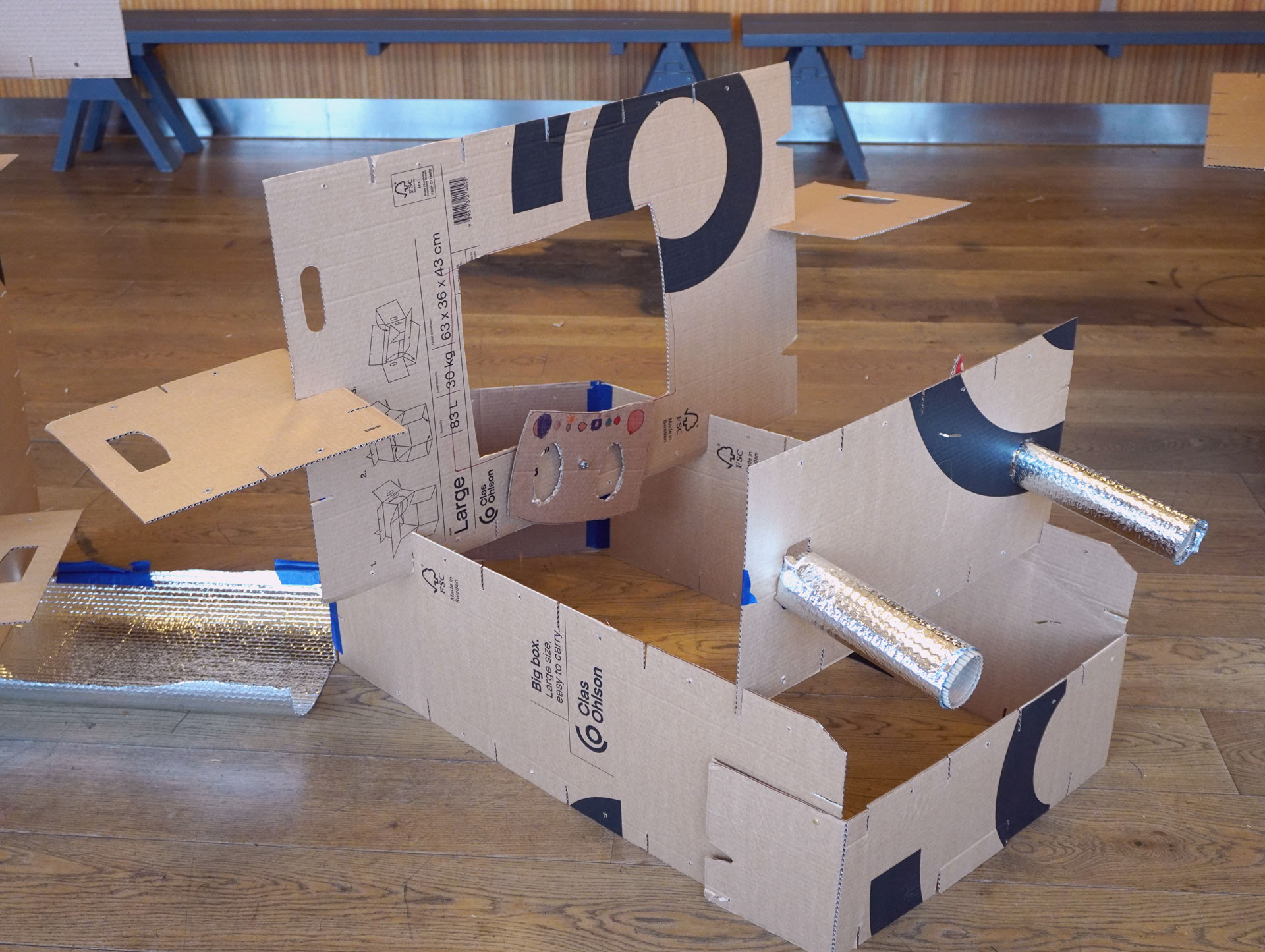
Photo: Leila Natsheh
“There is a warning button, and another button for opening the door for people we want to let in.” — R, 9
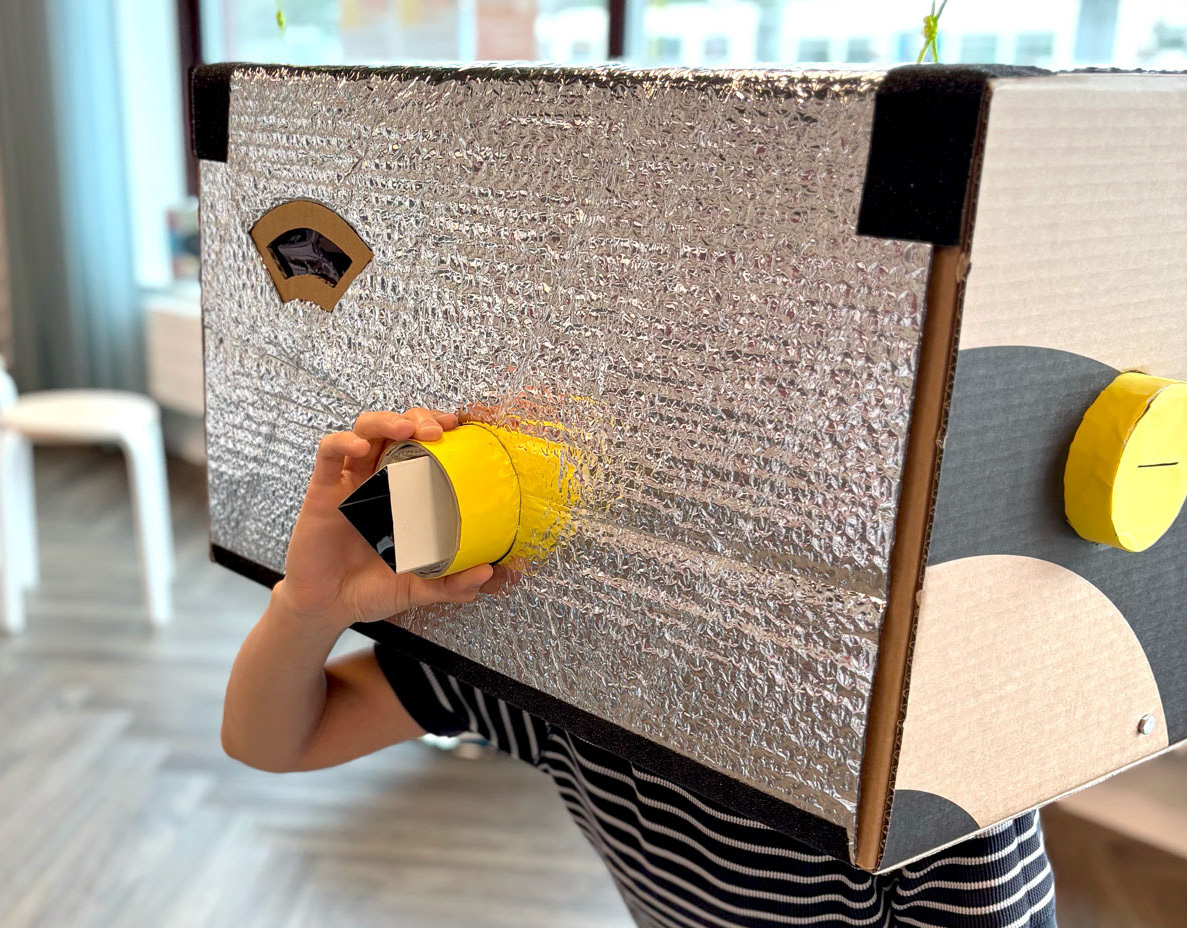
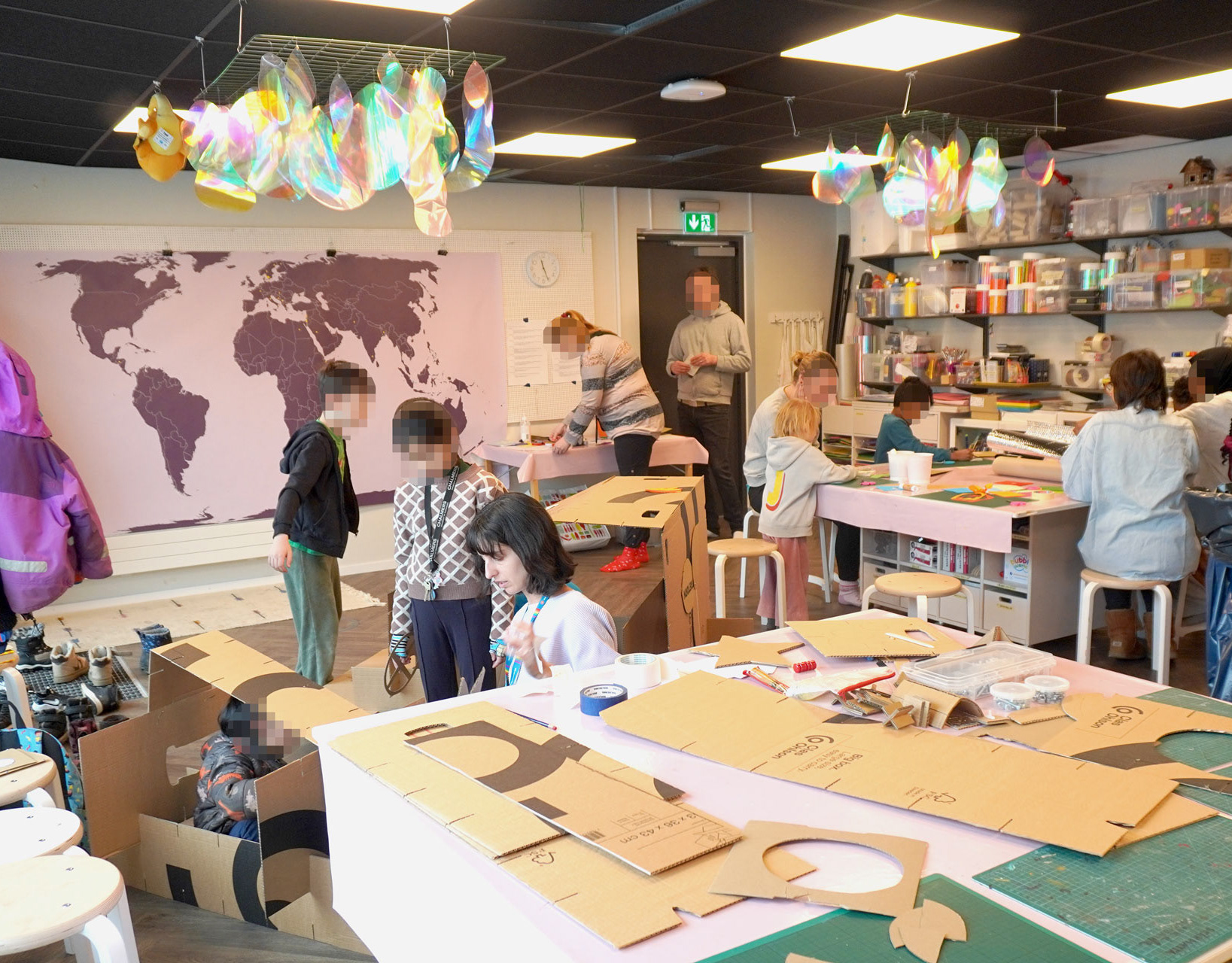
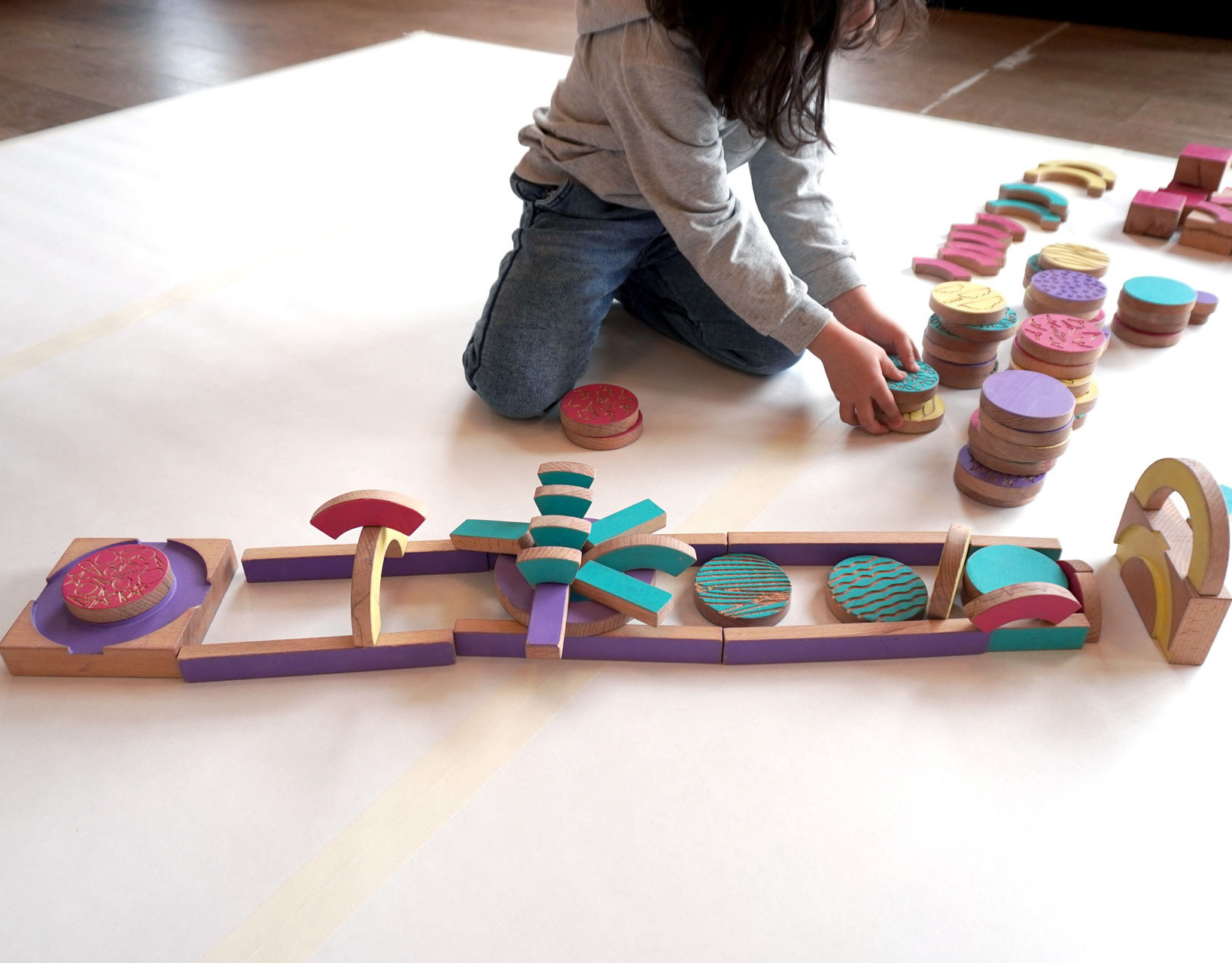
Around 20 children joined the workshop at Kulturhuset Blå Stället, some of the adults who came along joined in the making actively. We built spaceships to encourage conversations with children regarding maps, orientation, navigation and control panels.
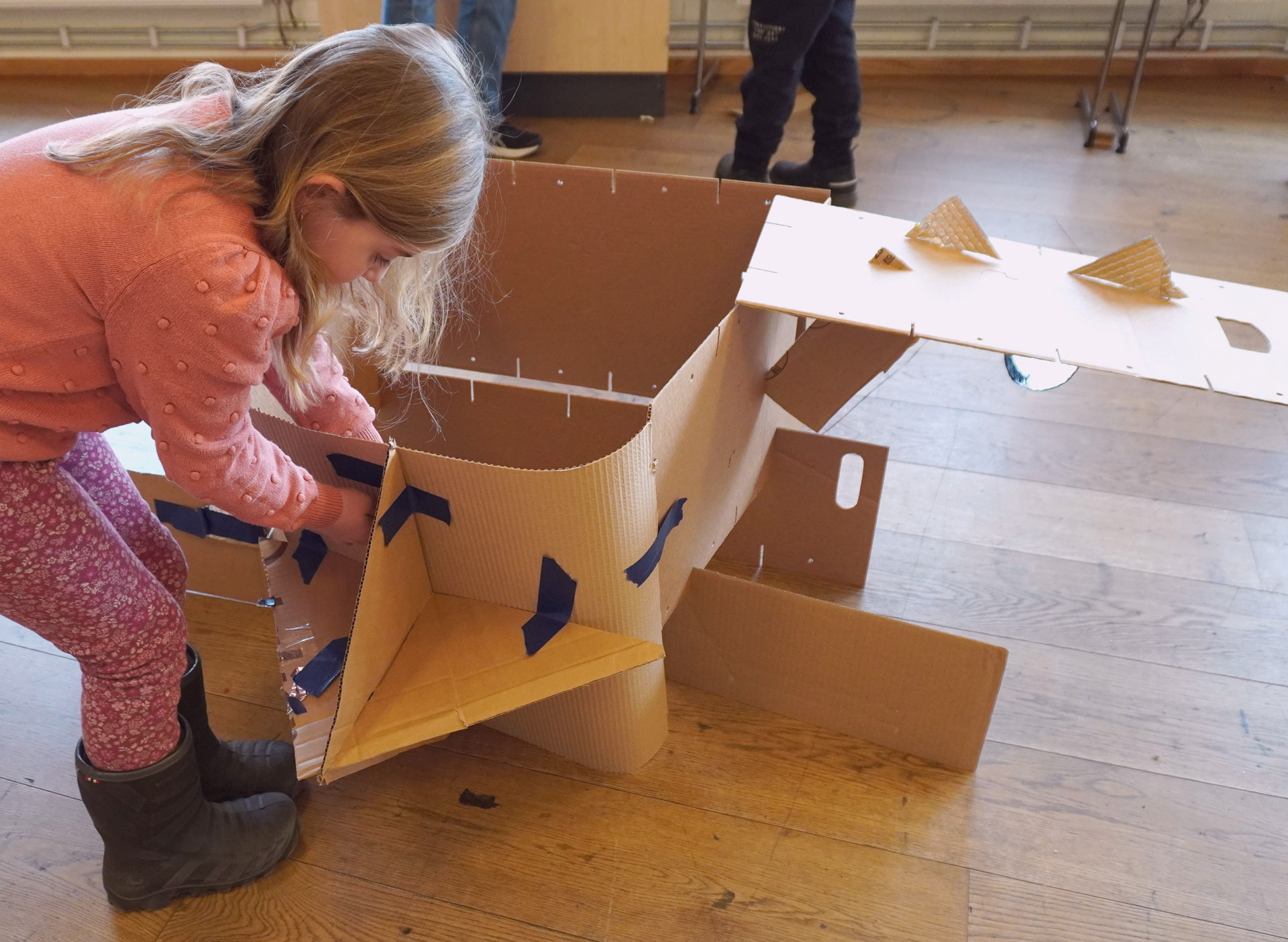
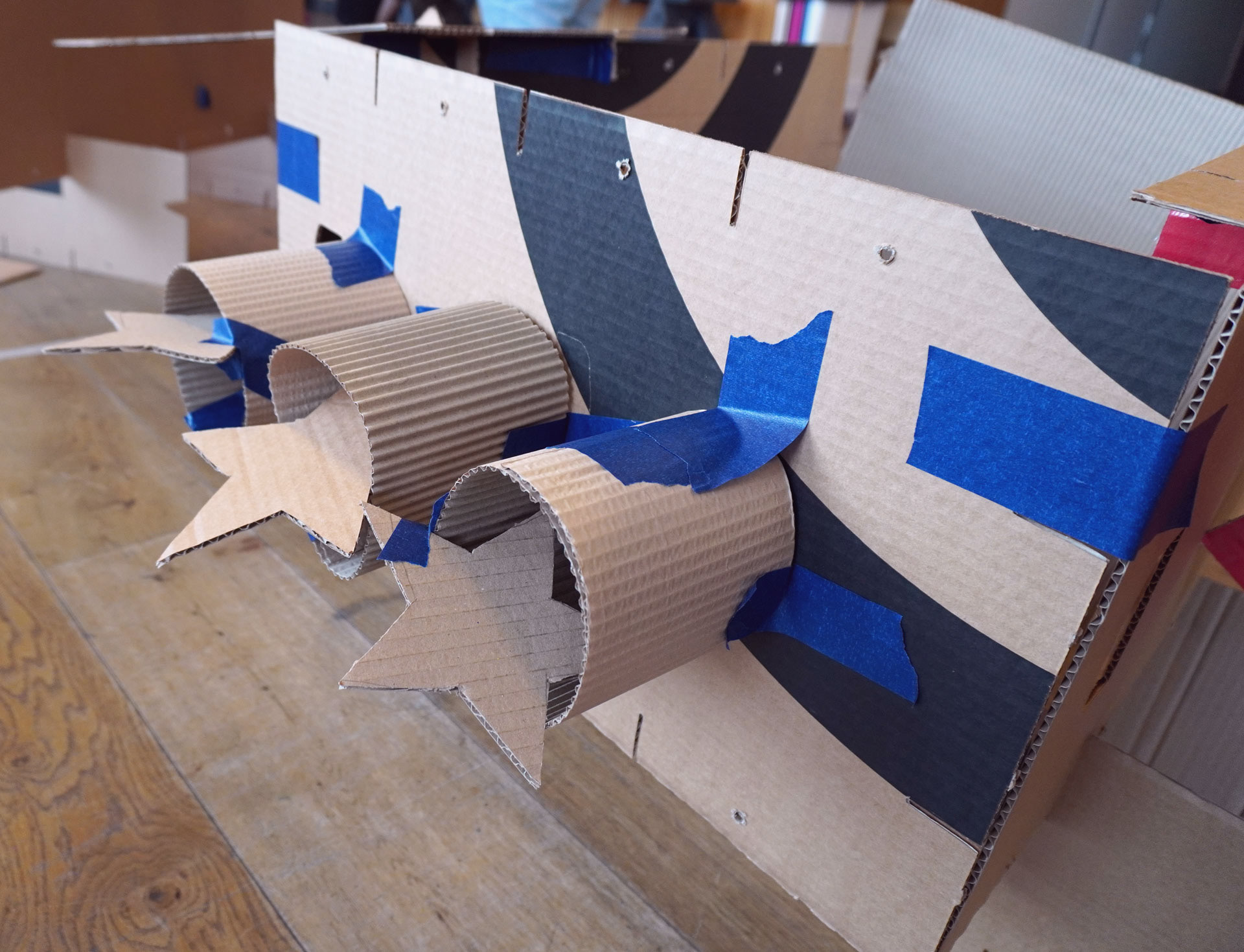
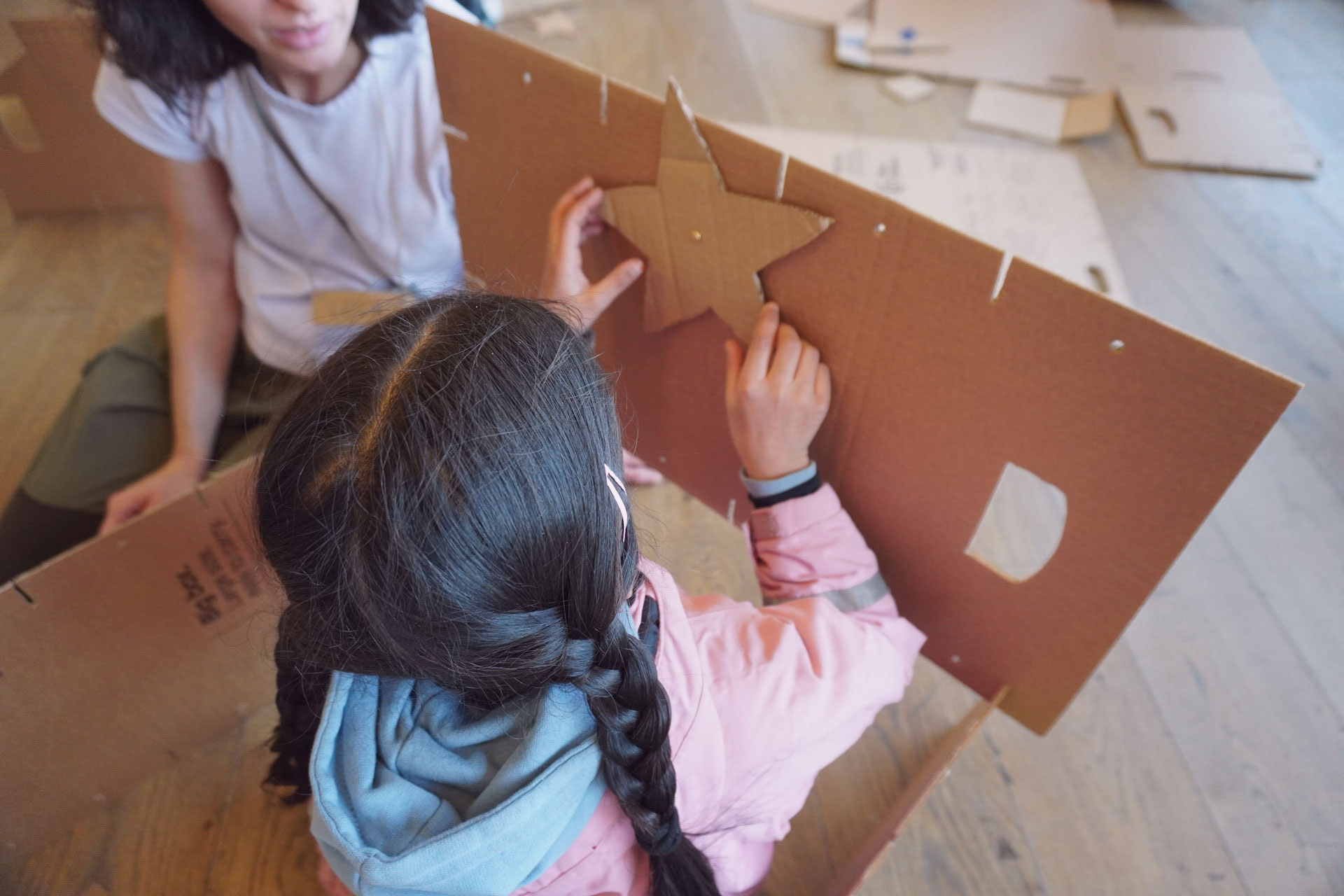
Photo: Camilla Uhlén
Let's build a spaceship!
We conduct our research through the conversations we have with children while we are building and playing together.
To involve children in the process of map-making in a playful way, we designed a workshop where we invited children to build a spaceship with us. Play, and especially imaginary or fantastical play, is proven to be the best way to start thinking about creative solutions for complex problems.
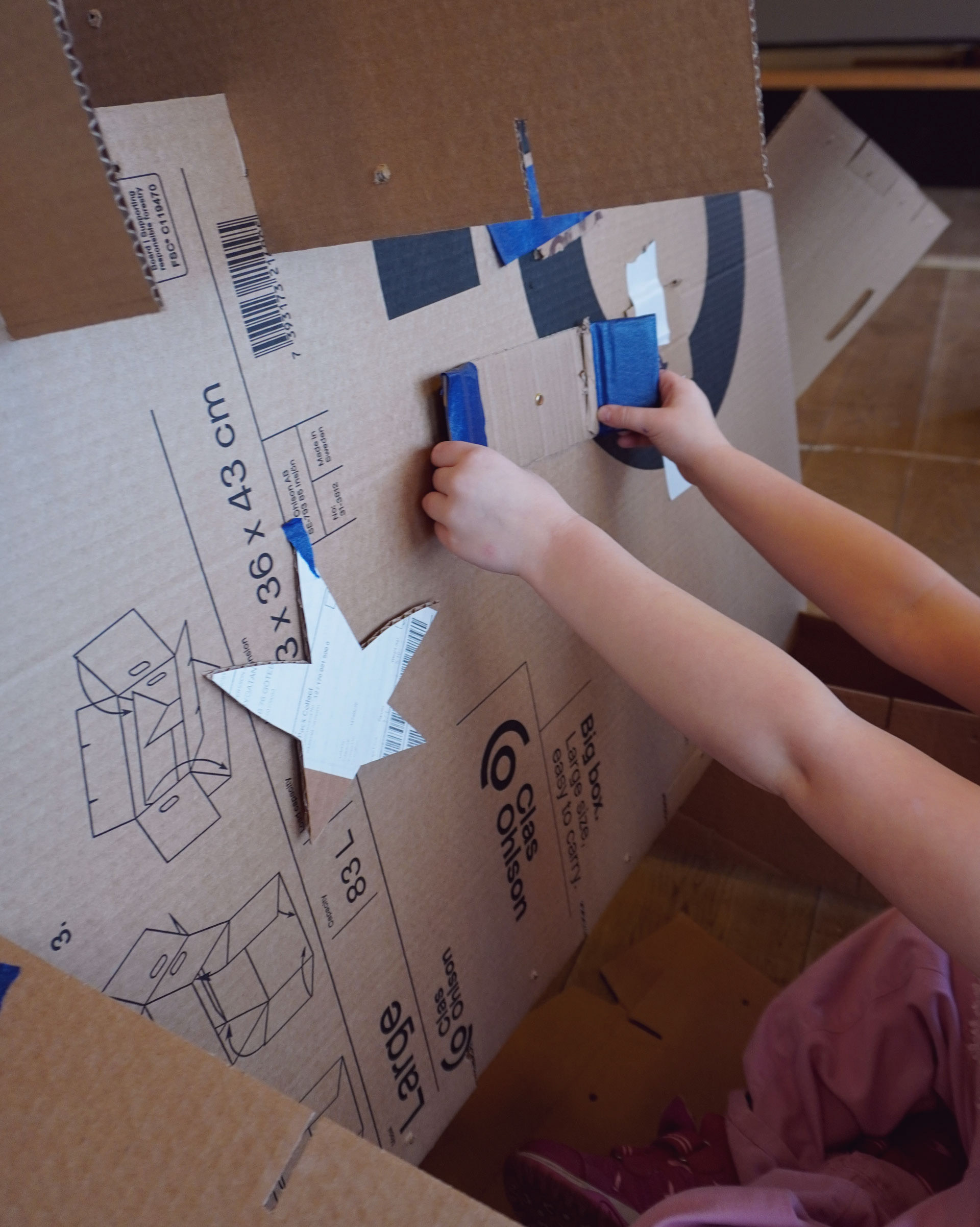
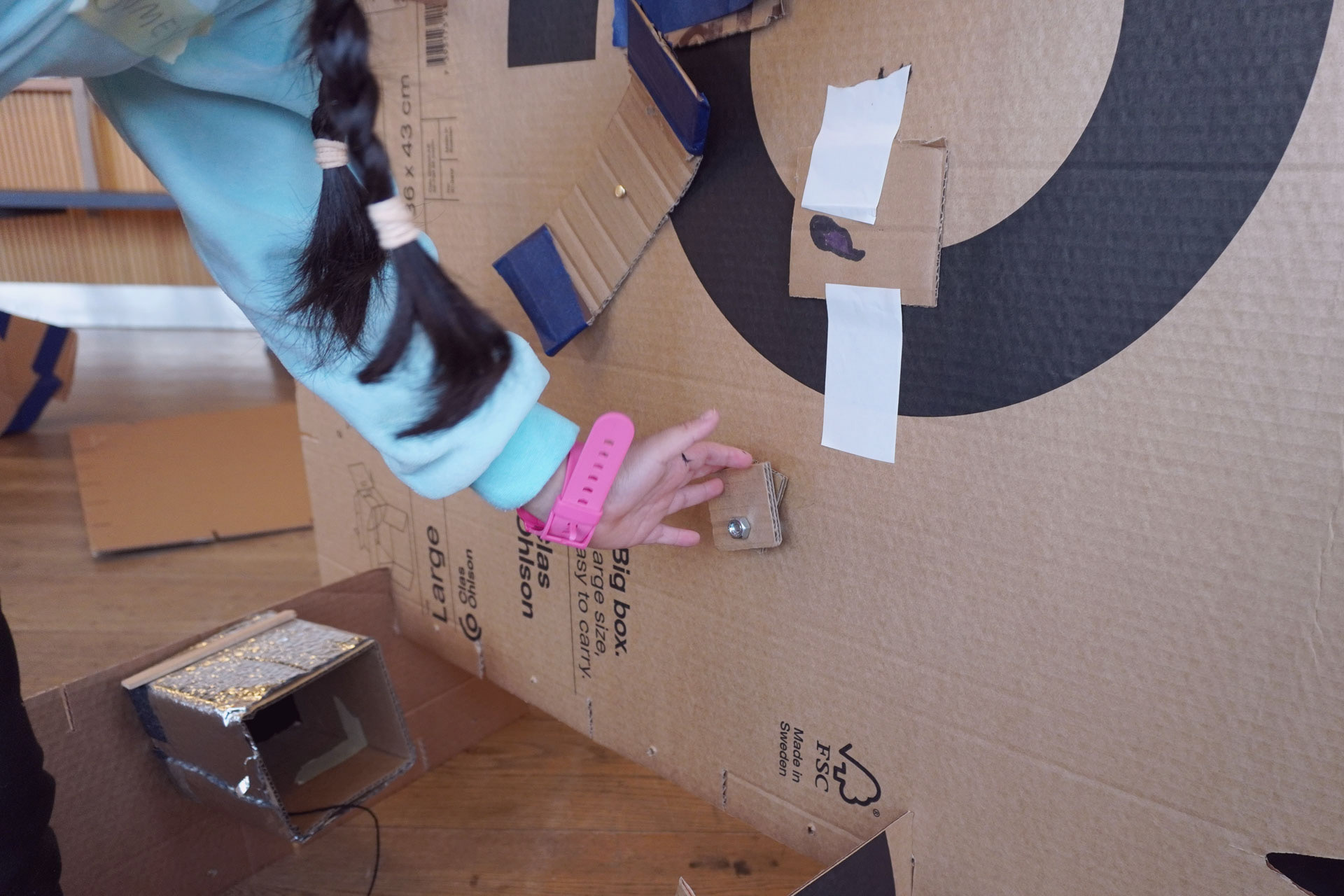
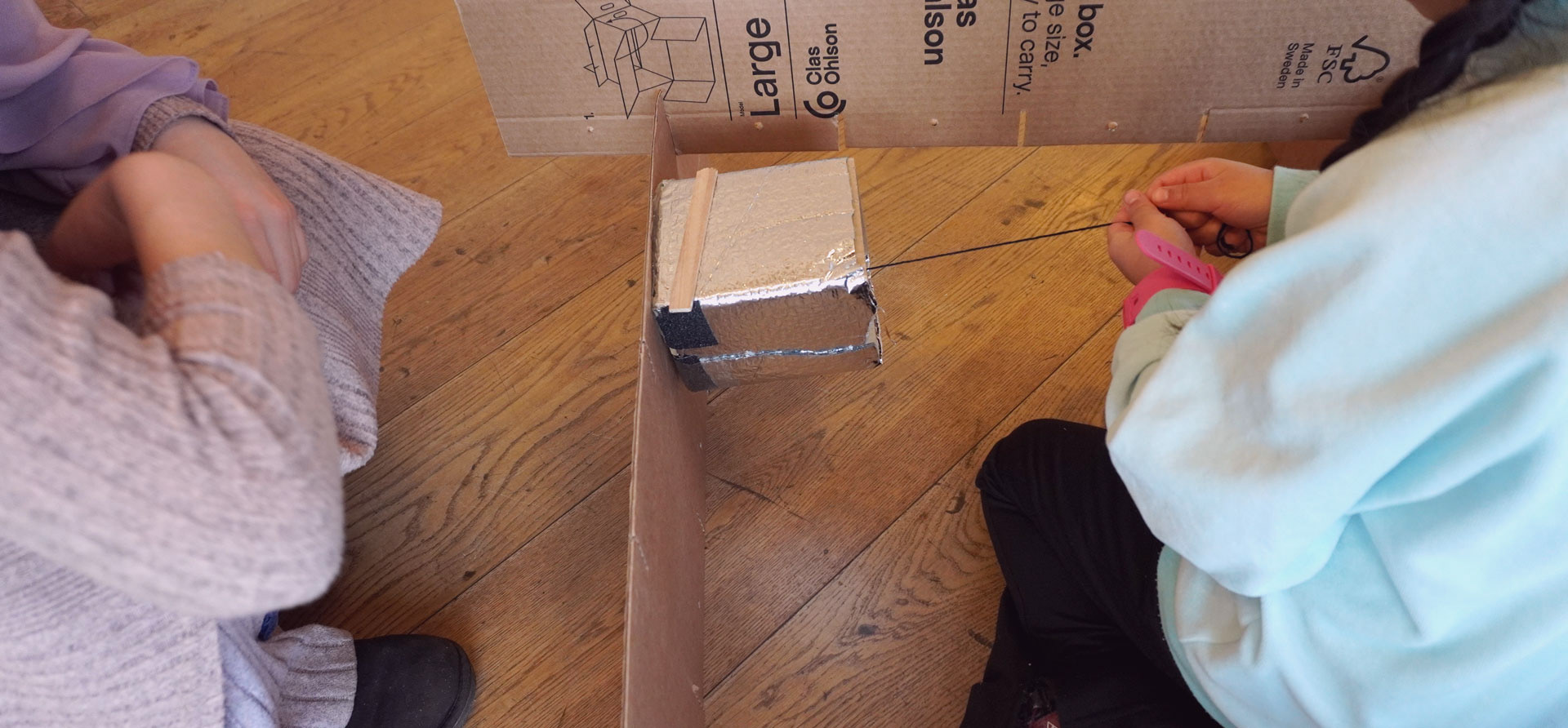
Photo: Camilla Uhlén
Limited Materials and Fantasy
What are important components of a spaceship?
"We need to build a steering wheel to fly this spaceship..." — F, 5. "But first, we need a button to fire up the engine..." — S, 5. "Then you have to pull this cable to lift us up into the sky." — H, 13.
Children easily build on each other’s ideas, and even with limited materials, the possibilities don’t shrink, they actually multiply.
Moving boxes, tape, and some insulating paper were more than enough to create everything the spaceship needs.
While some children think about engines, tech, and ignition, others think about comfort and making the spaceship cozy, because it’s never just about functionality. That’s how patterns start appearing on the walls, decorative motifs, and even little bouquets of flowers next to the ignition button.
Every child contributes with their own perspective and interests. In play, there’s room for everyone, and everyone has a chance to experiment, imagine, and create.
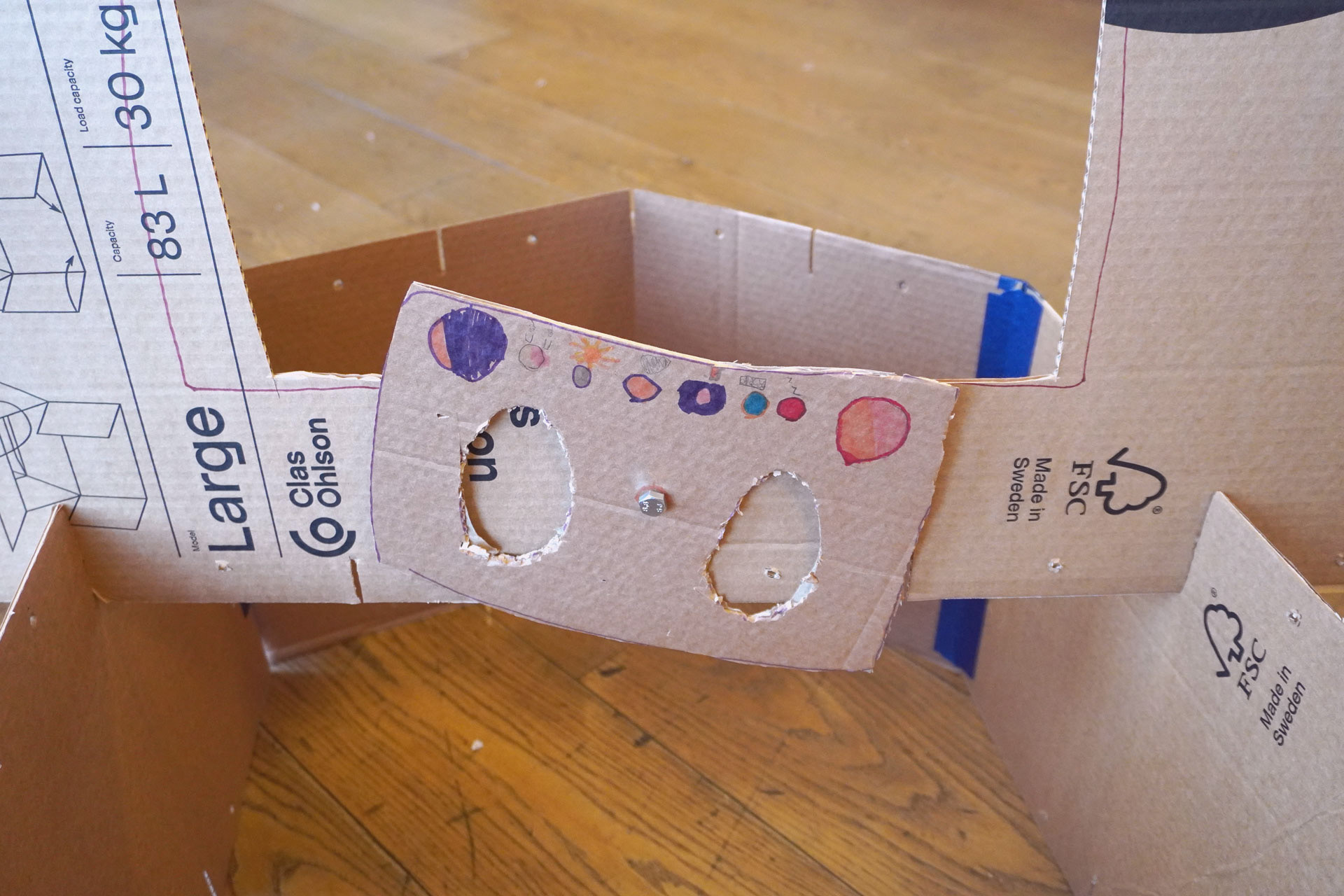
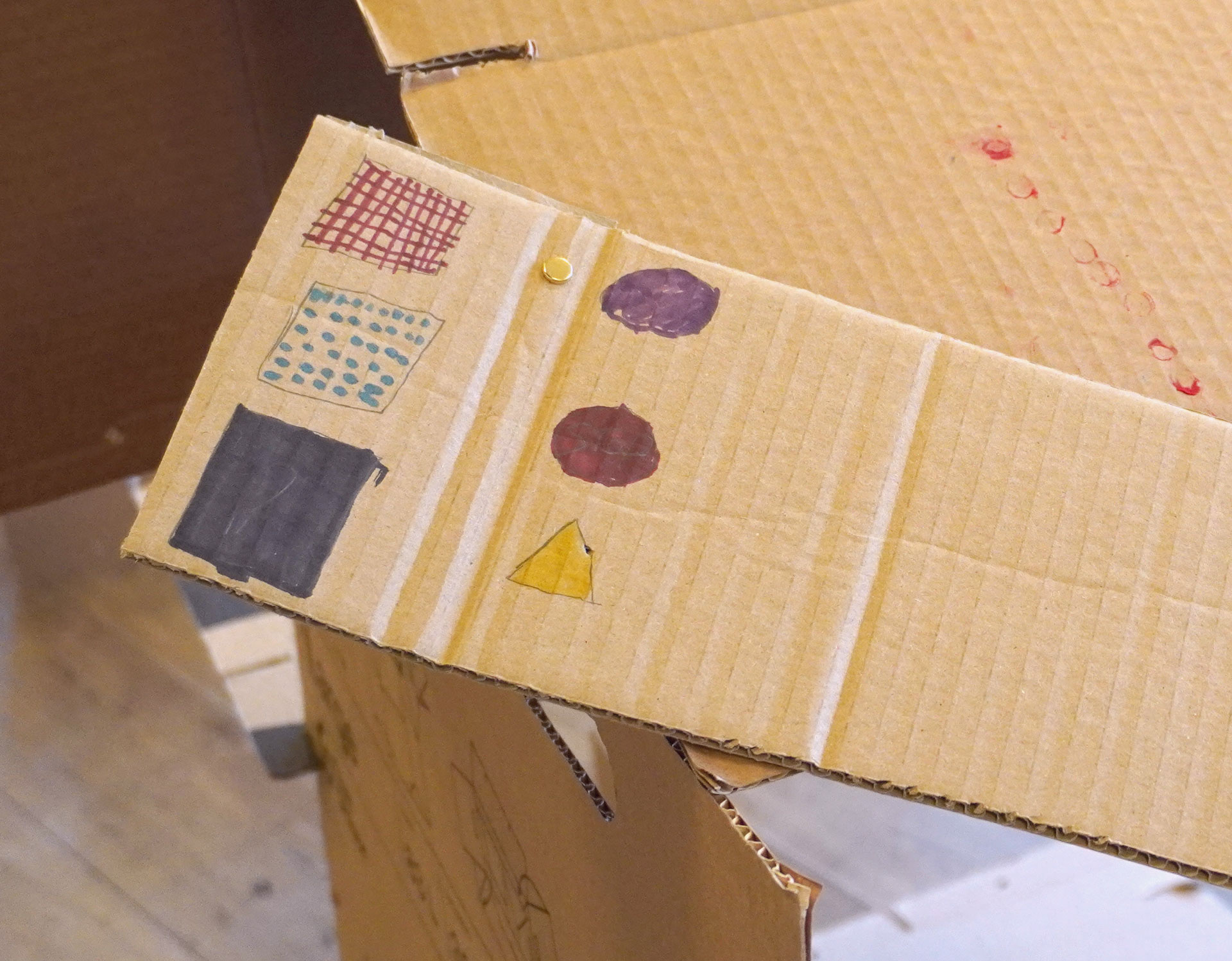
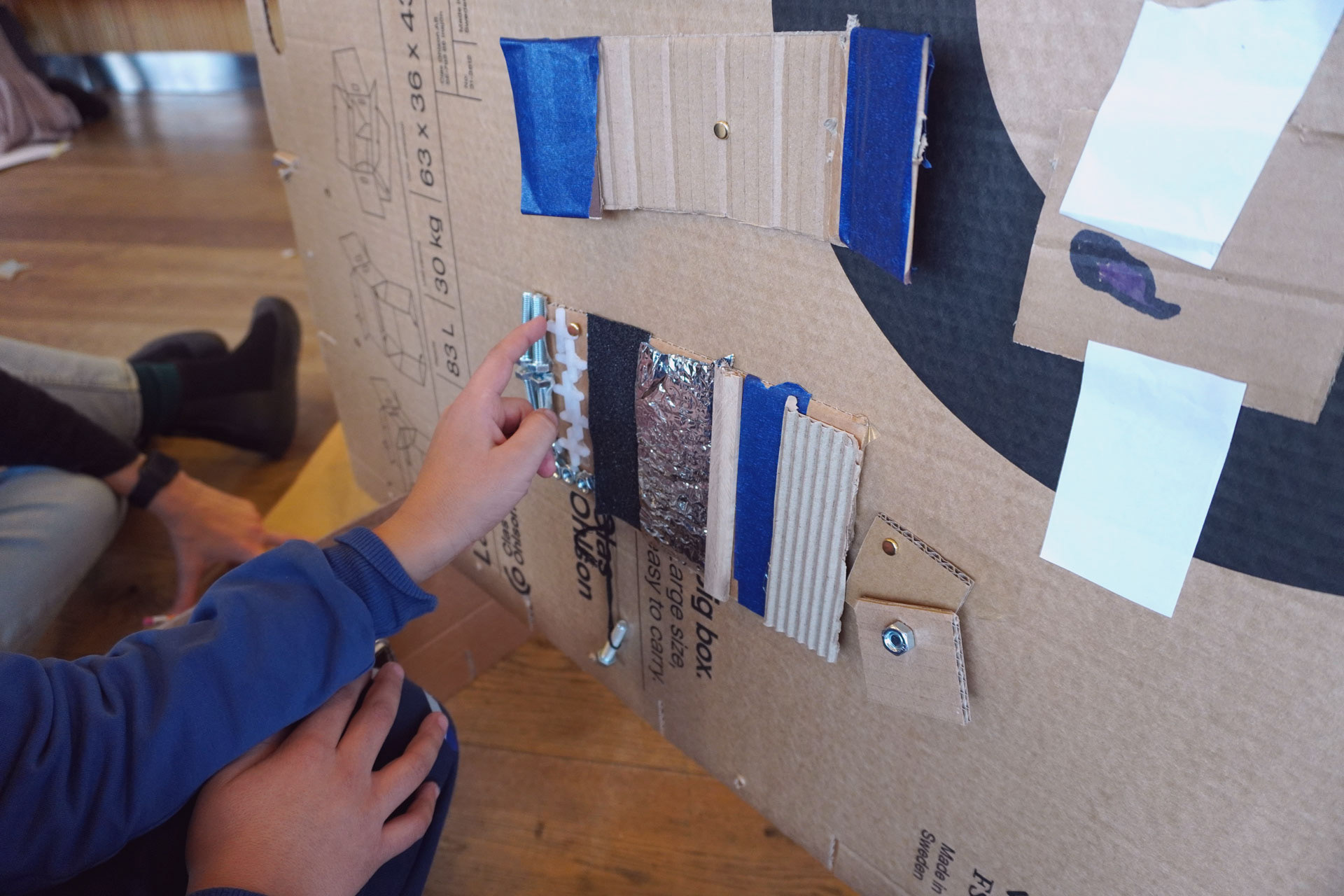
Photo: Camilla Uhlén
"There is a button for when we sleep, we press it and the spaceship goes into automatic steering mode, so that we don't crash into anything." — M, 7
Navigation and Controls
How do we steer in space? What controls do we need while we are steering in space? What are the different functionalities of the buttons? Should the buttons be big or small? How can we remember which button does what?
One child made a control panel with various functions including; start, stop, speed, communications, warning, and a button to open the door for people we want to let in.
A 10-year-old child made their control panel with functionalities including speed up, slow down, turning left and right, takeoff and landing, and a button to translate words so we can talk to anyone who doesn’t speak our language. An important aspect of that control panel was the music controls, because of course…
"…there’s always music when you’re traveling!" — J, 10.
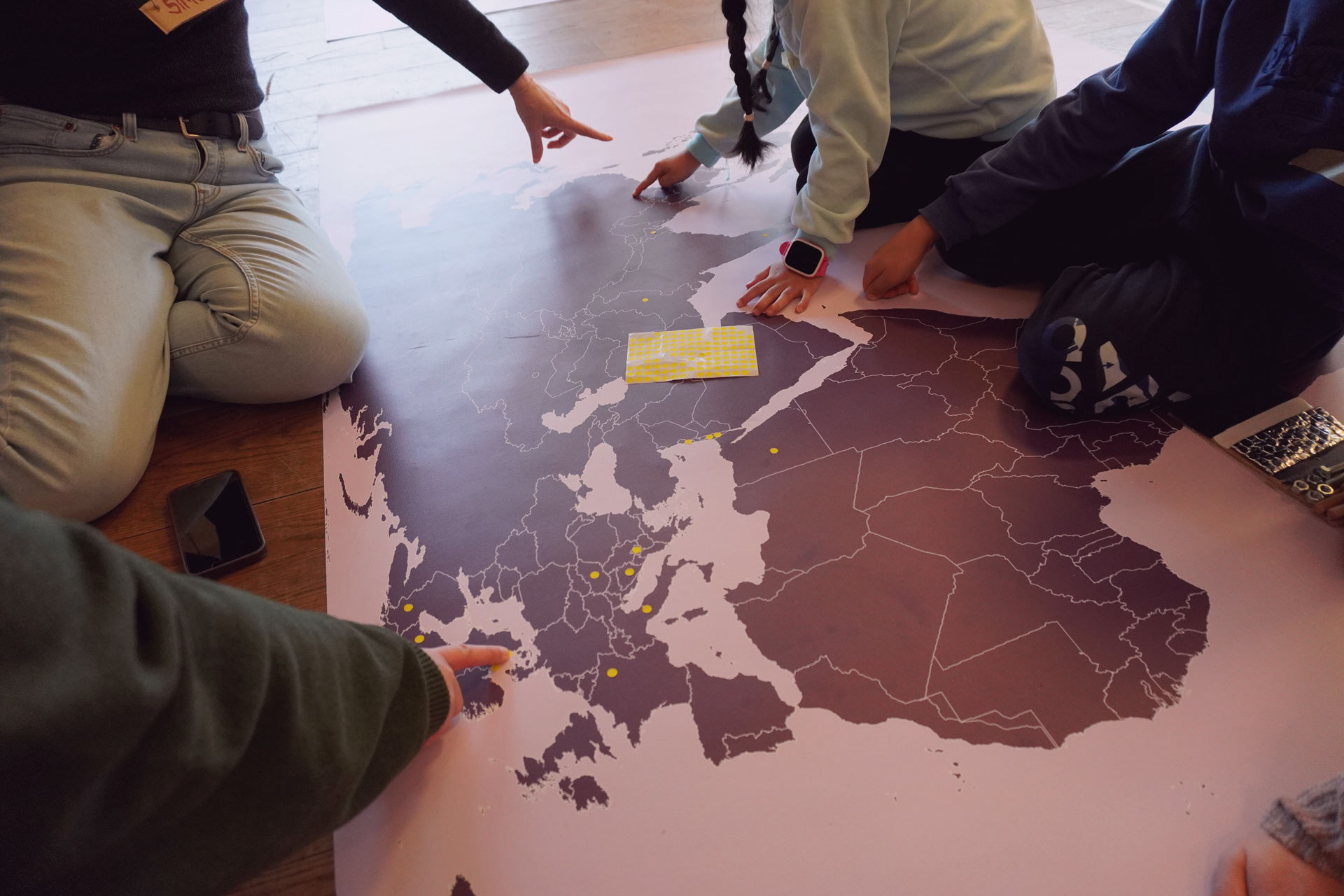
Photo: Camilla Uhlén
"I know some of the countries on this world map, actually maybe only one, my home country." — S, 10
Conventional Maps and Children
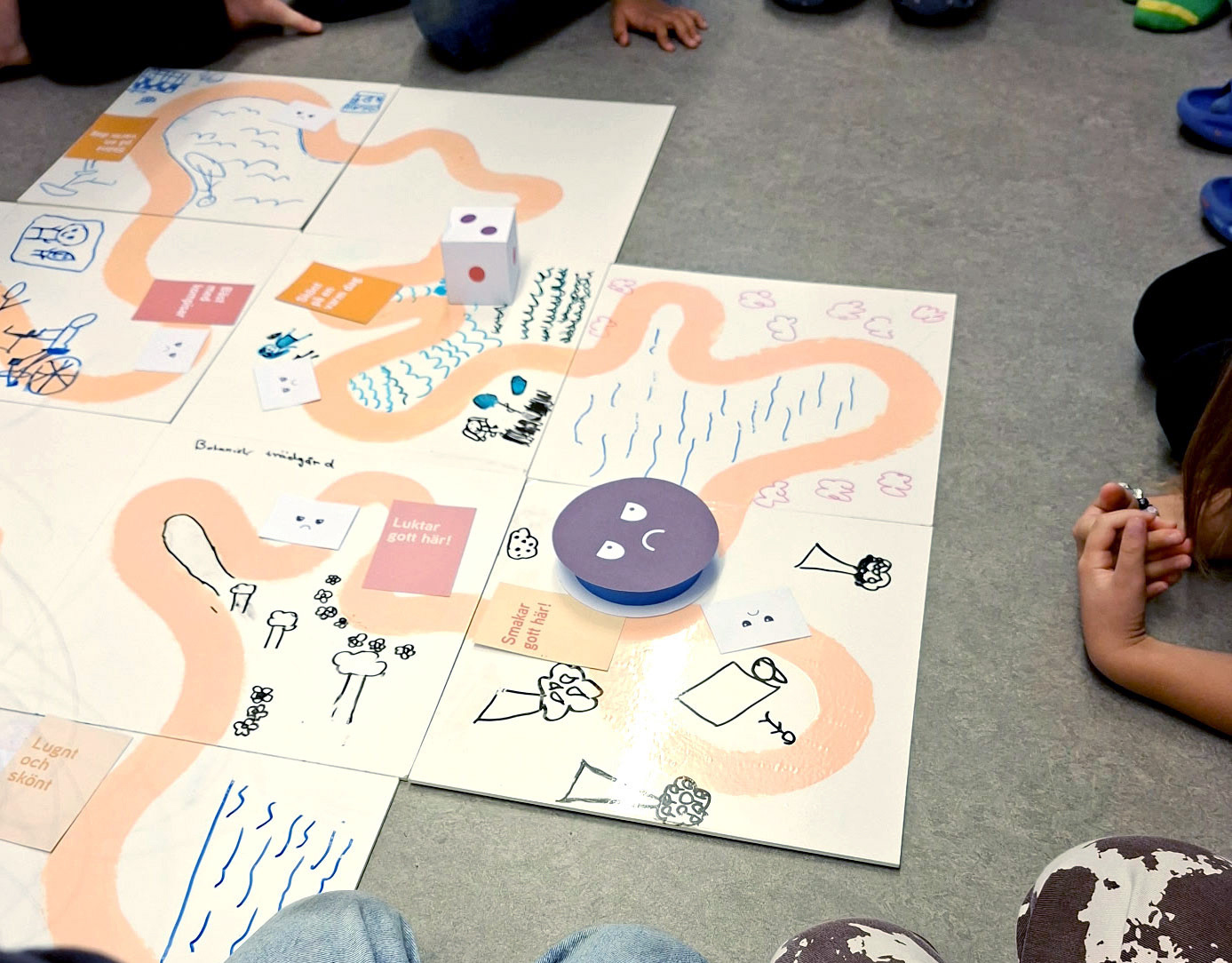
During the workshop children were exposed to two large printed maps: of the world, and of Gothenburg city.
For most children at this workshop, it was rather difficult to navigate maps on their own. Especially non-interactive ones, such as this printed map we take to each workshop.
We usually ask children to show us where they are from, and where they live. Even approximate areas were difficult for children to locate, especially on a map without any typographical or visual indicators.
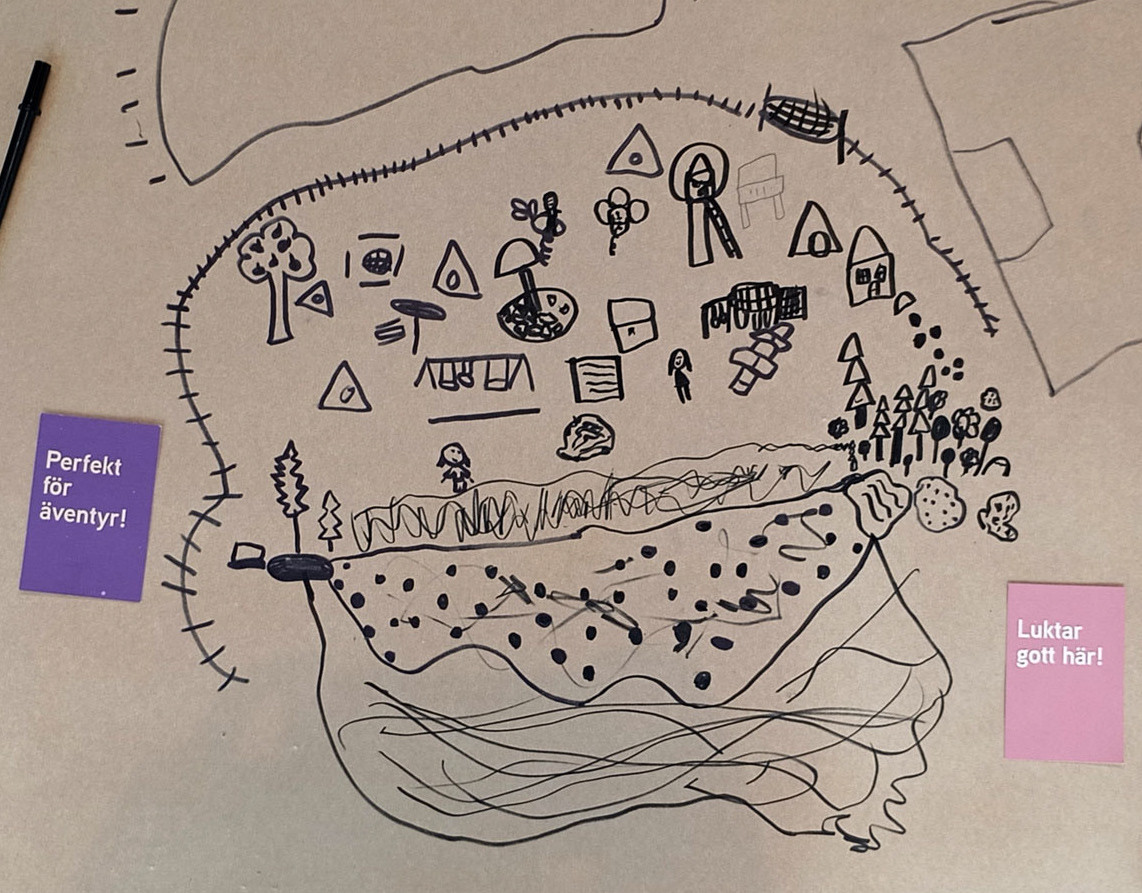
What actually didn't seem difficult was for a child to create a prototype of a digital map. During the workshop, we asked one of the participants to create something that could help astronauts navigate in space. That is how the first spaceship map appeared: a map with built-in GPS that always shows the spaceship's position, voice commands to set new destinations, and a touchscreen system to zoom in and out.
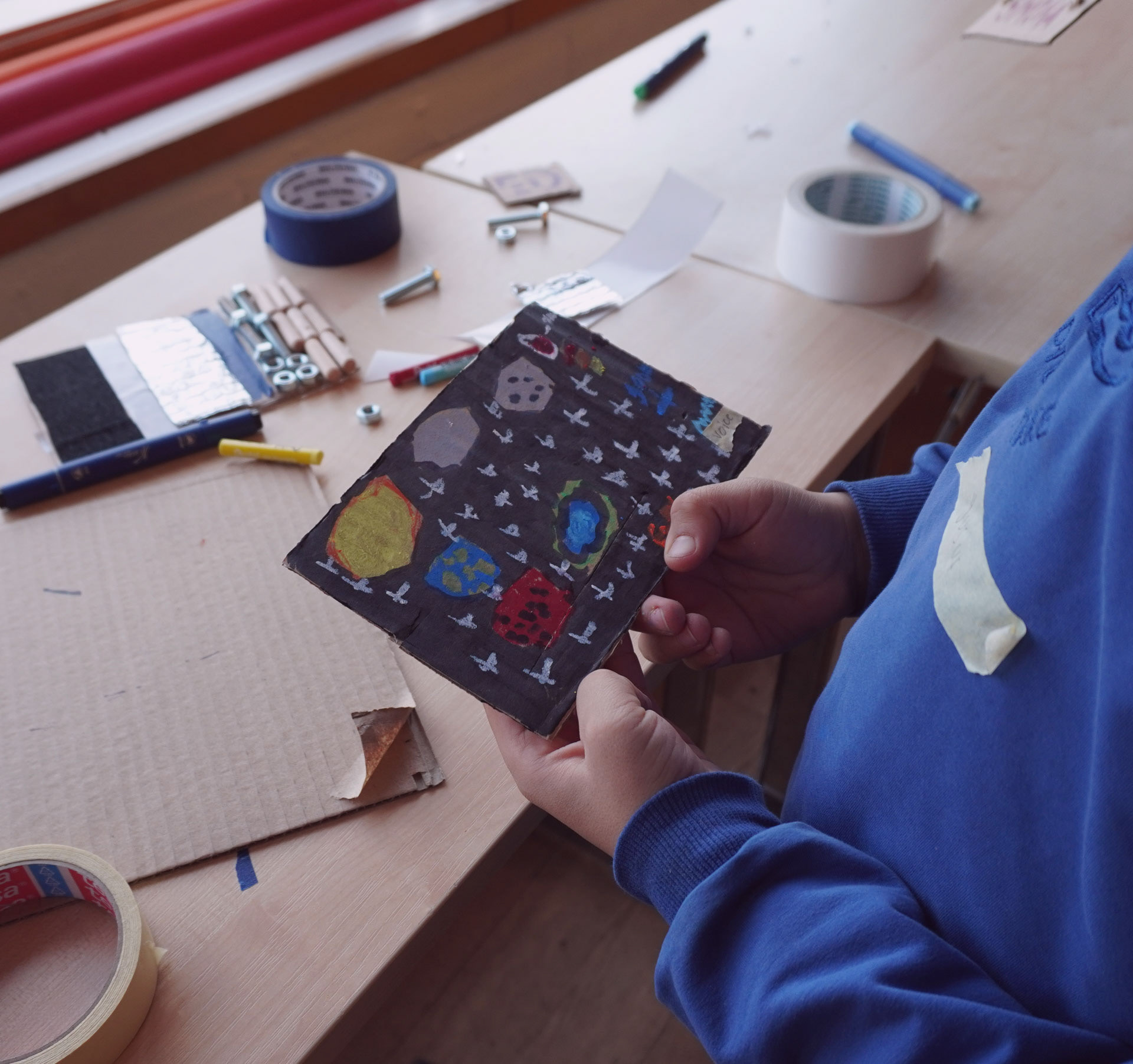
Photo: Camilla Uhlén
Would you like to join us next time?