Fourth Stop
Workshop at Kulturhuset Blå Stället · February 2026
Workshop Leaders: Leila Natsheh and Simona Cavalieri
Workshop Assistant: Priyadarshini Chilaka
Workshop Assistant: Priyadarshini Chilaka
Map By: E, 12
Let's make a map!
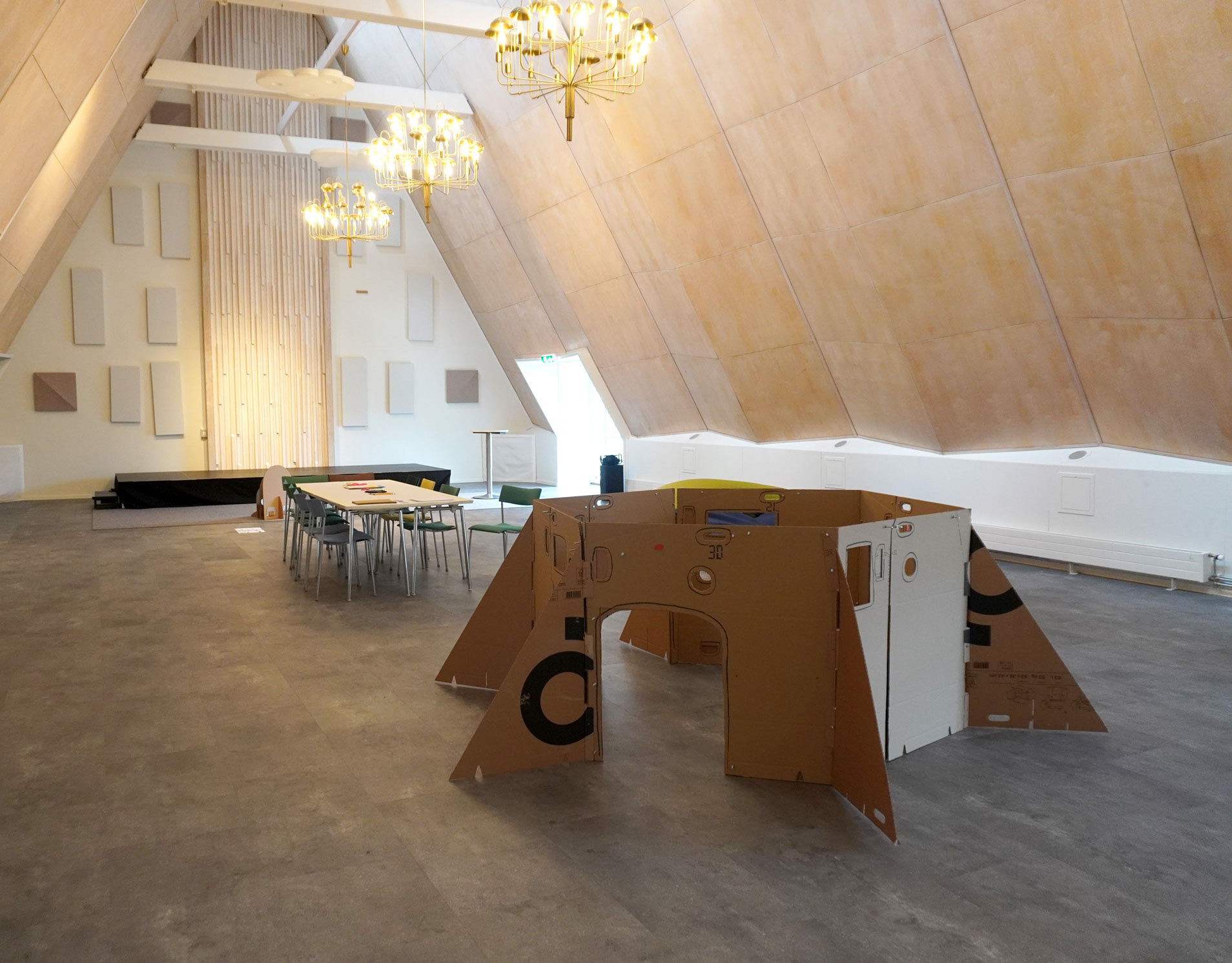
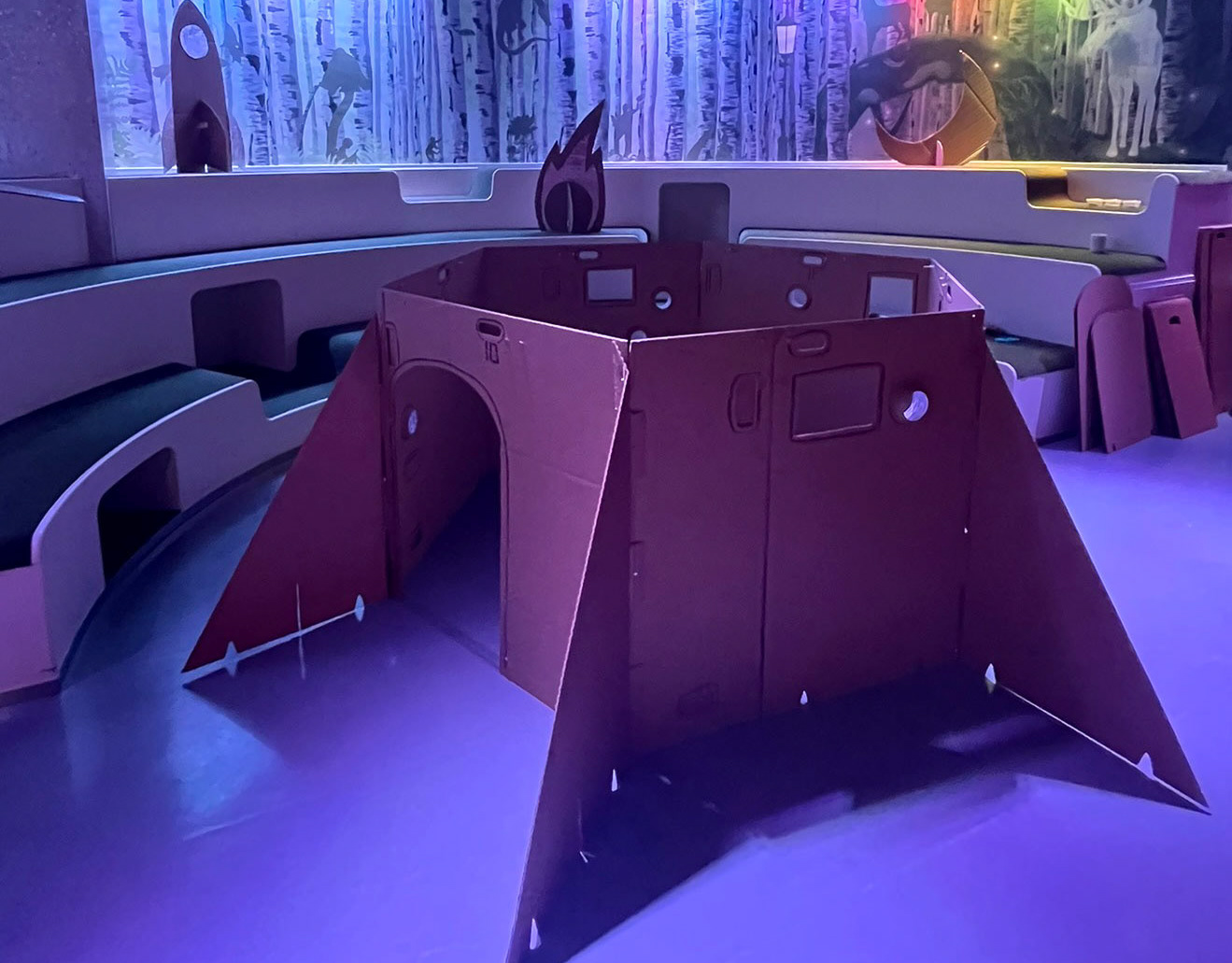
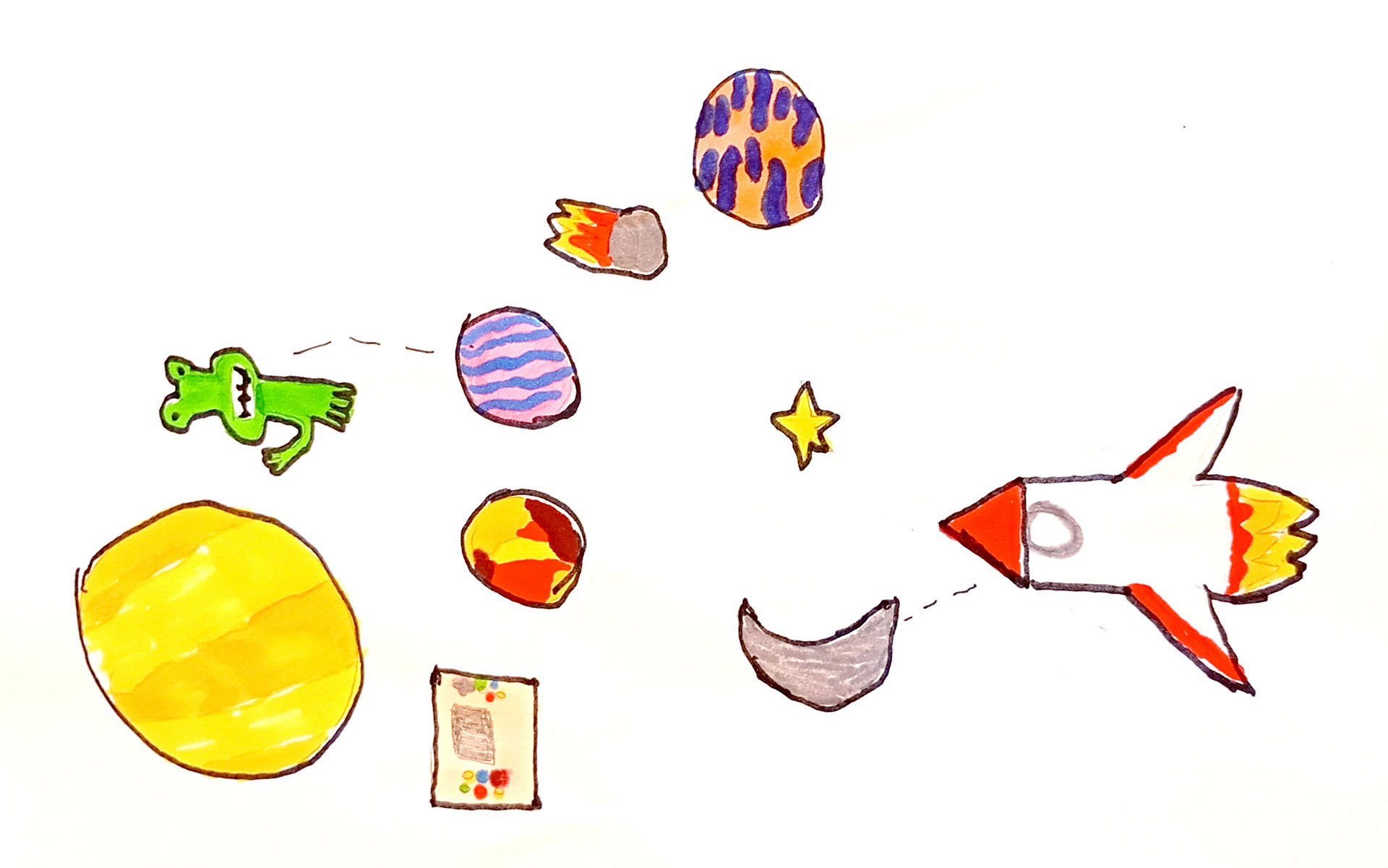
Planets, stars, a spaceship, and a meteor to watch out for filled the space in large, three-dimensional cardboard forms.
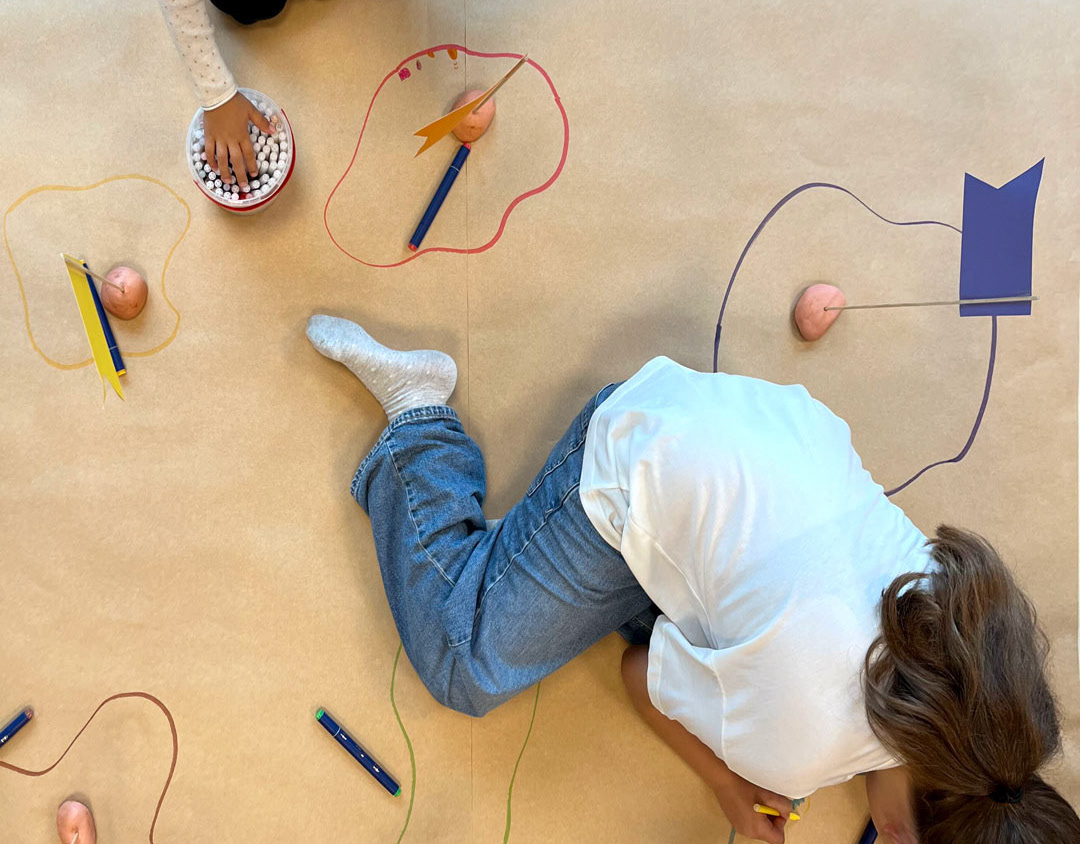
The task was to draw a map of space, using these elements to figure out where we are in relation to them and where we want to go.
Most children aged 6–14 had an understanding of space and knew where to place the elements in relation to each other, almost always accurately.
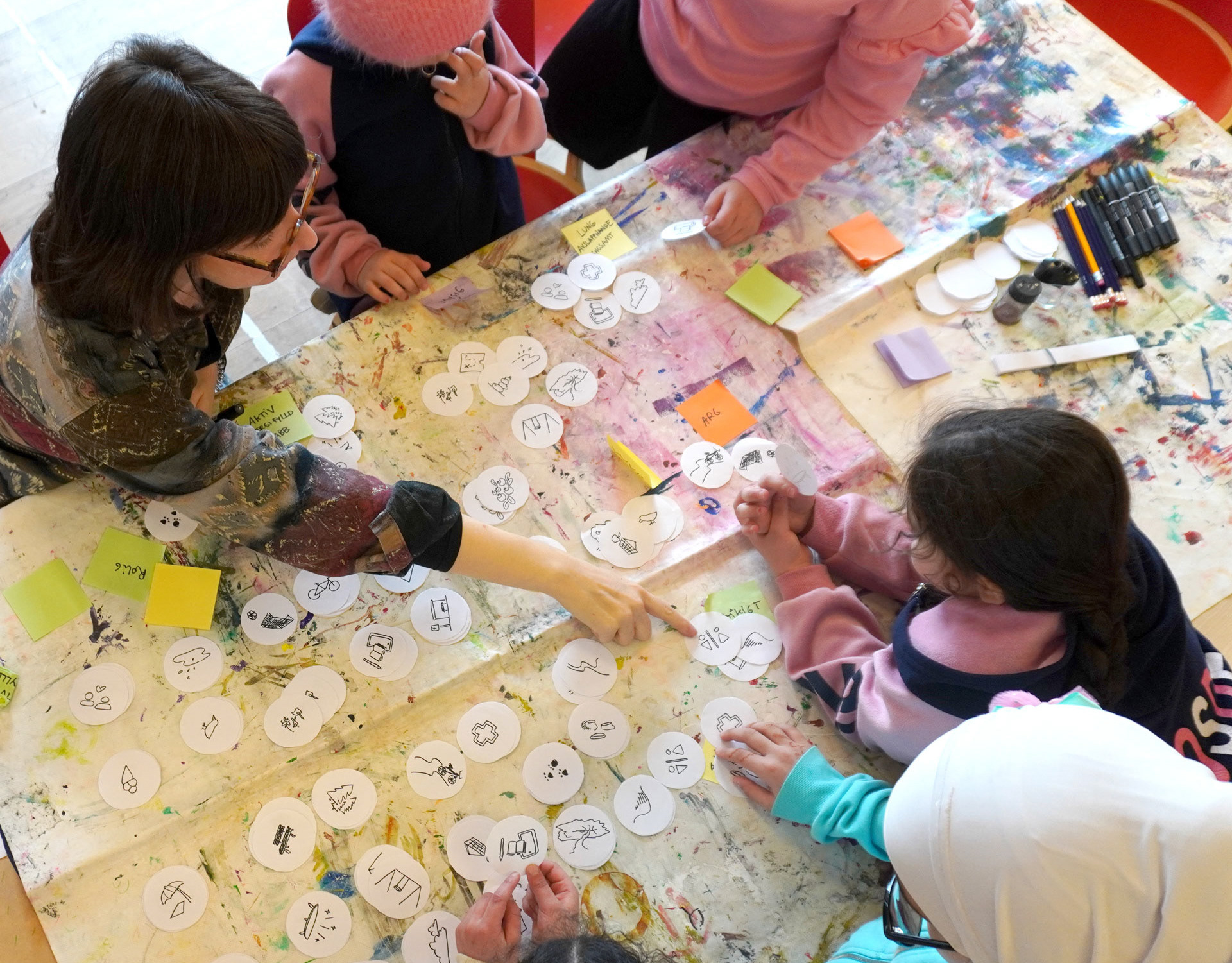
Even though we wanted to focus on symbolism and simplified elements when drawing the maps — providing only black markers and pens — some children asked for color and worked carefully on the visual details.
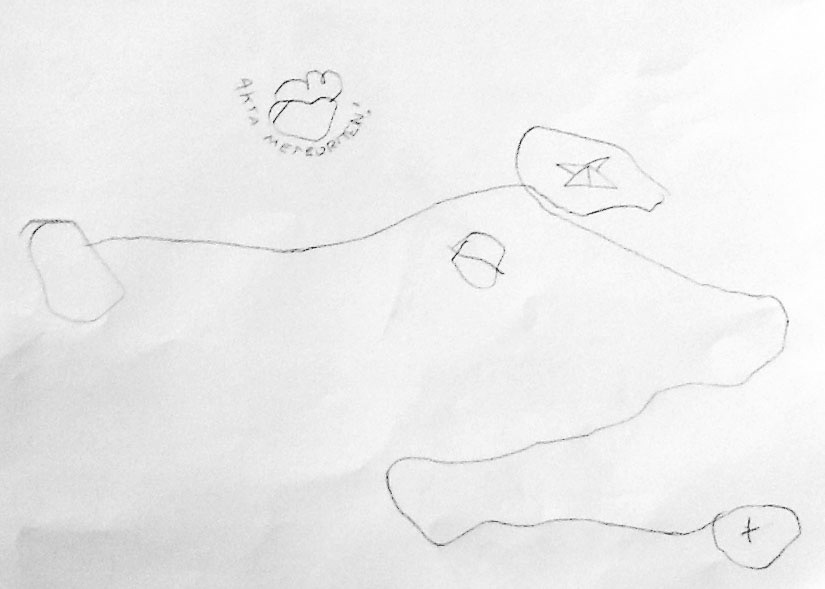
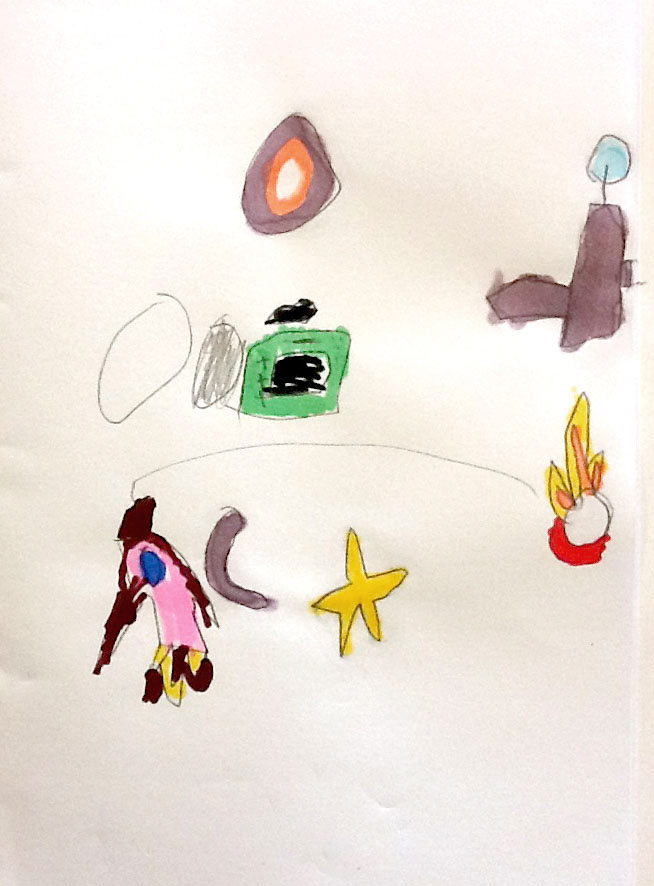
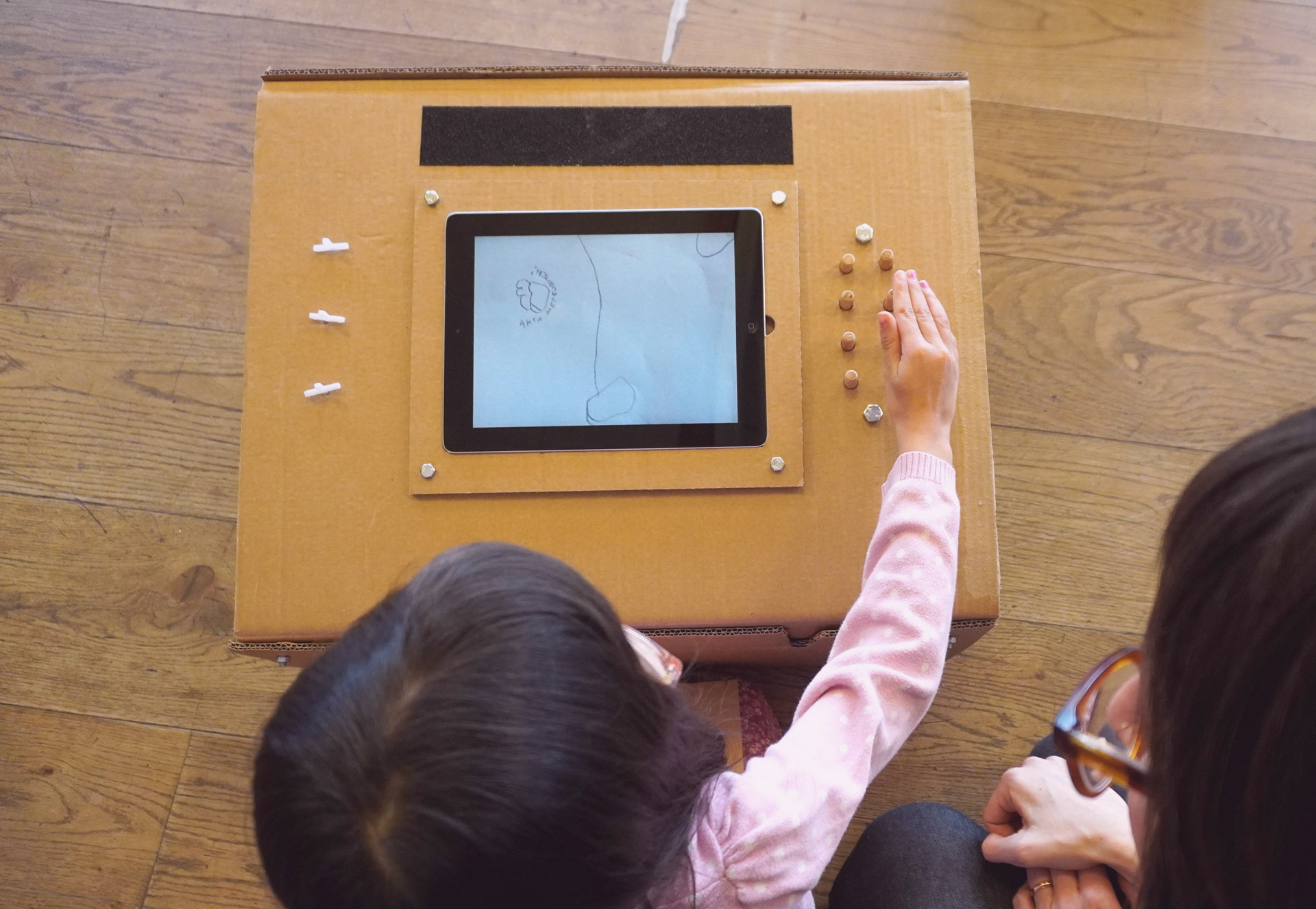
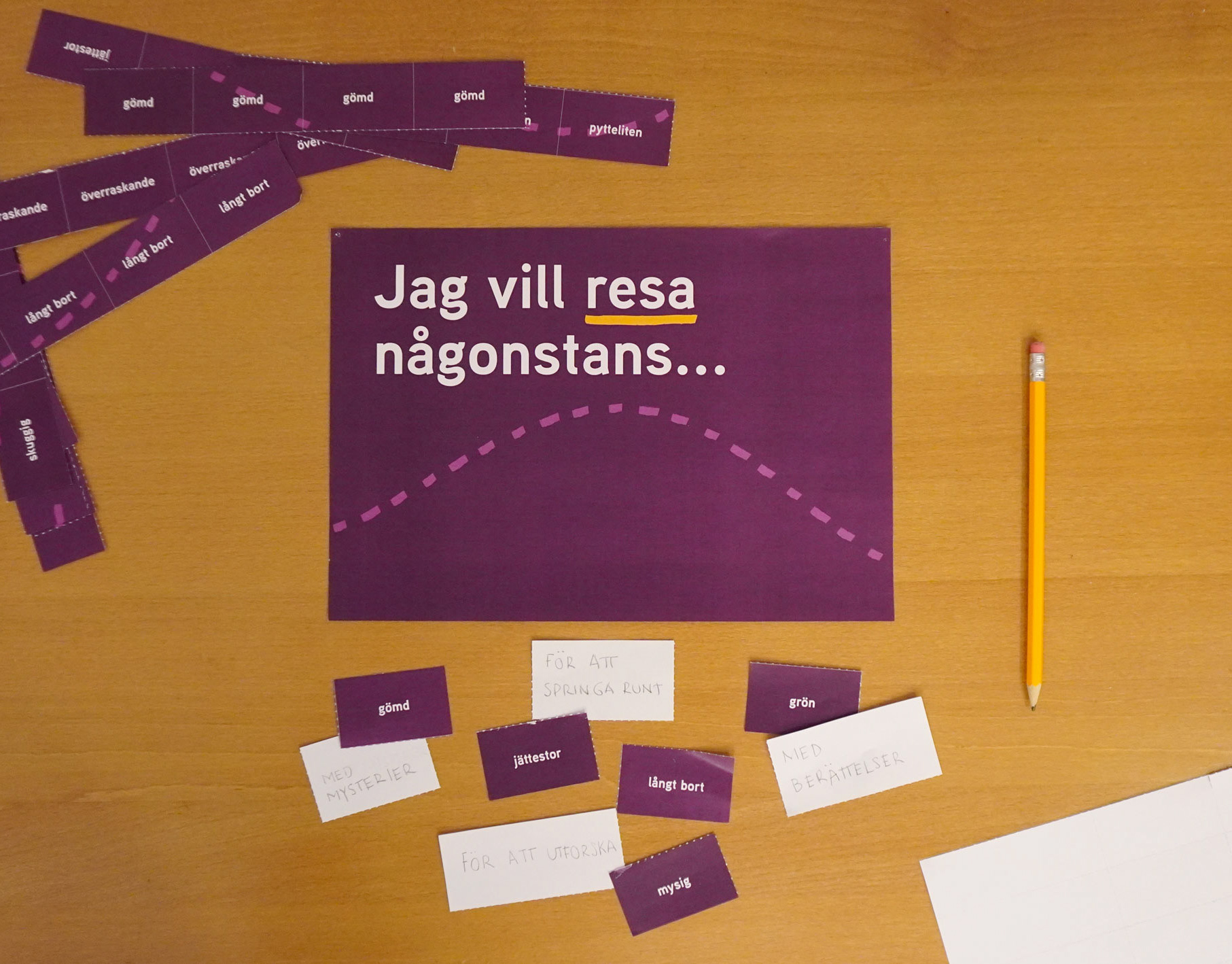
Captions Starting From Top Left: 1. Map By: S, 5. 2. Map By: A, 6. 3. Photo: Leila Natsheh
One five-year-old child not only mapped the space with all the different three-dimensional cardboard elements we had set up in the room, but also turned it into a treasure hunt game, where the starting point was Earth and the treasure was hidden on the Moon.
"Careful! Watch out for the meteor!" — S, 5
Her goal was not to design the most efficient route for the treasure hunt, but to play with and navigate around most of the elements in space.
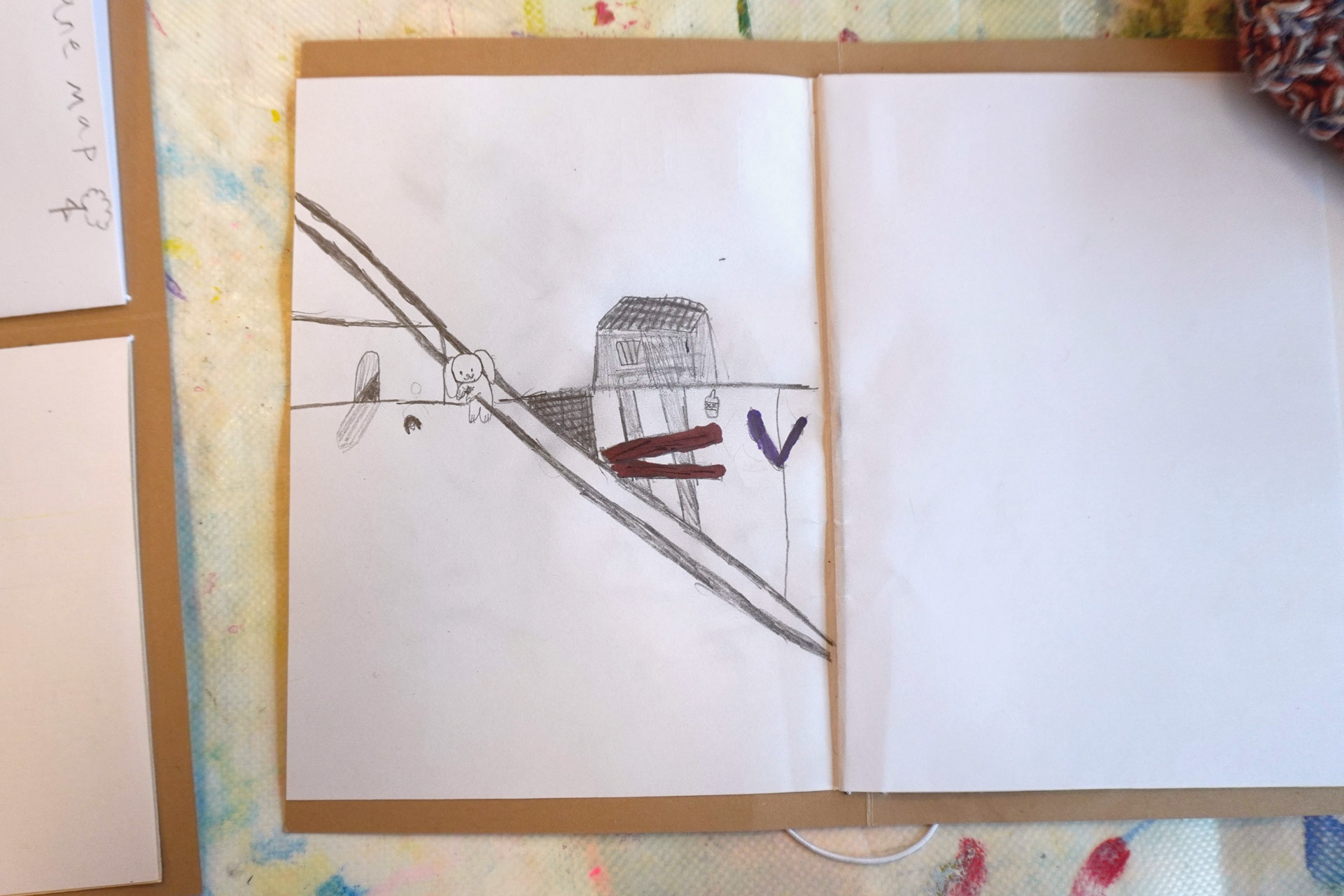
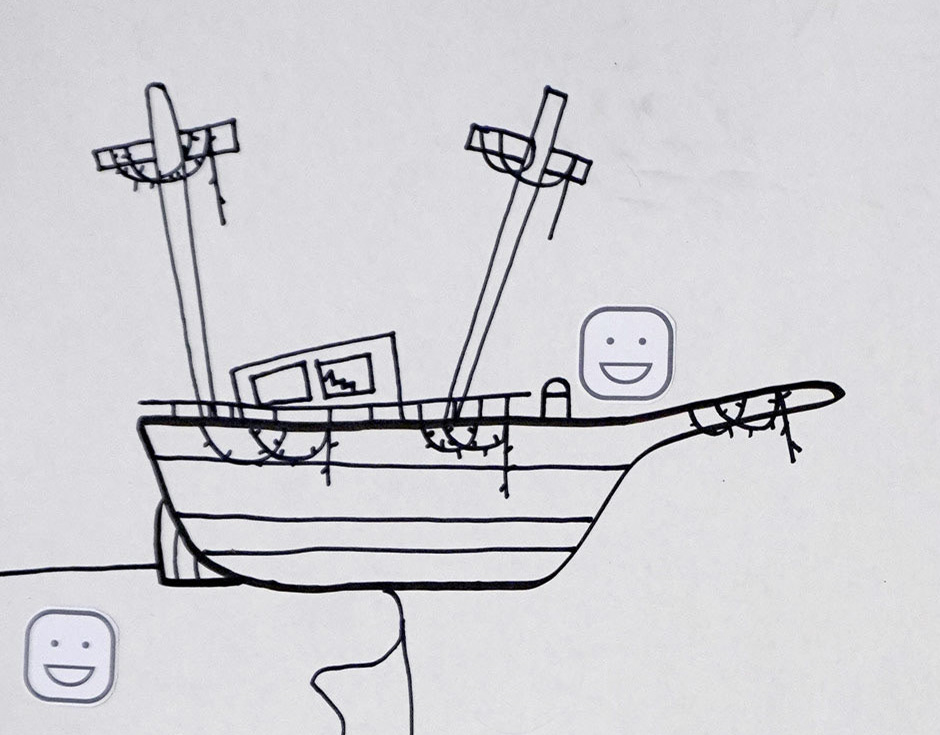
Drawing By: A, 14
"My favorite place that is free is my friend's house" — S, 12
Relational Spaces
While drawing maps, we asked some of the children about their favorite places that are free to access. One child immediately answered that it was her friend's house.
Considering one's own home, or a friend's home, as a favorite place has been a common theme in our conversations with the children we meet and work with. We are exploring how something so personal and meaningful to them can be translated into Barnens Smarta Karta as a feature. Could a map of favorite places be shared with loved ones? We will continue analyzing, developing and testing this idea.
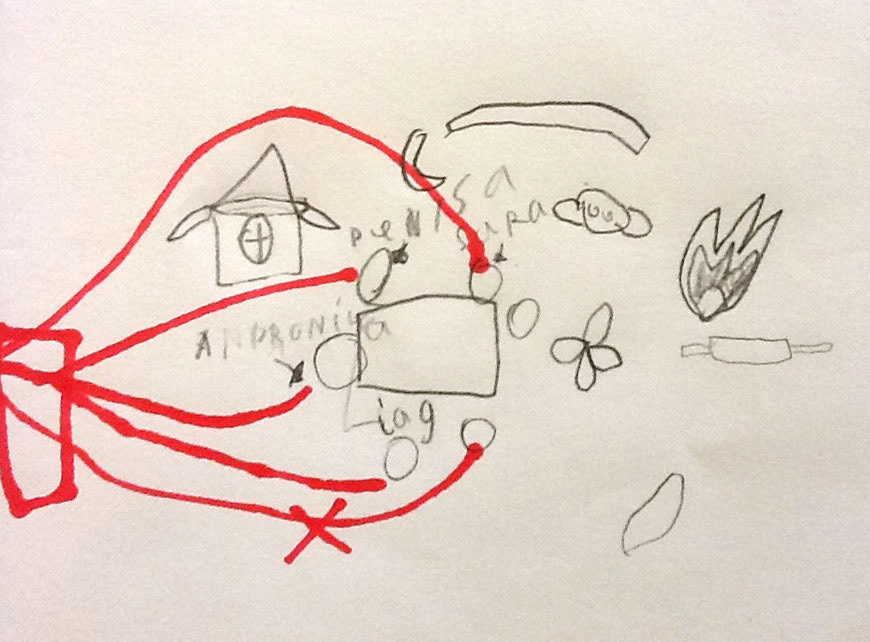
Map By: T, 8
Bird's Eye View
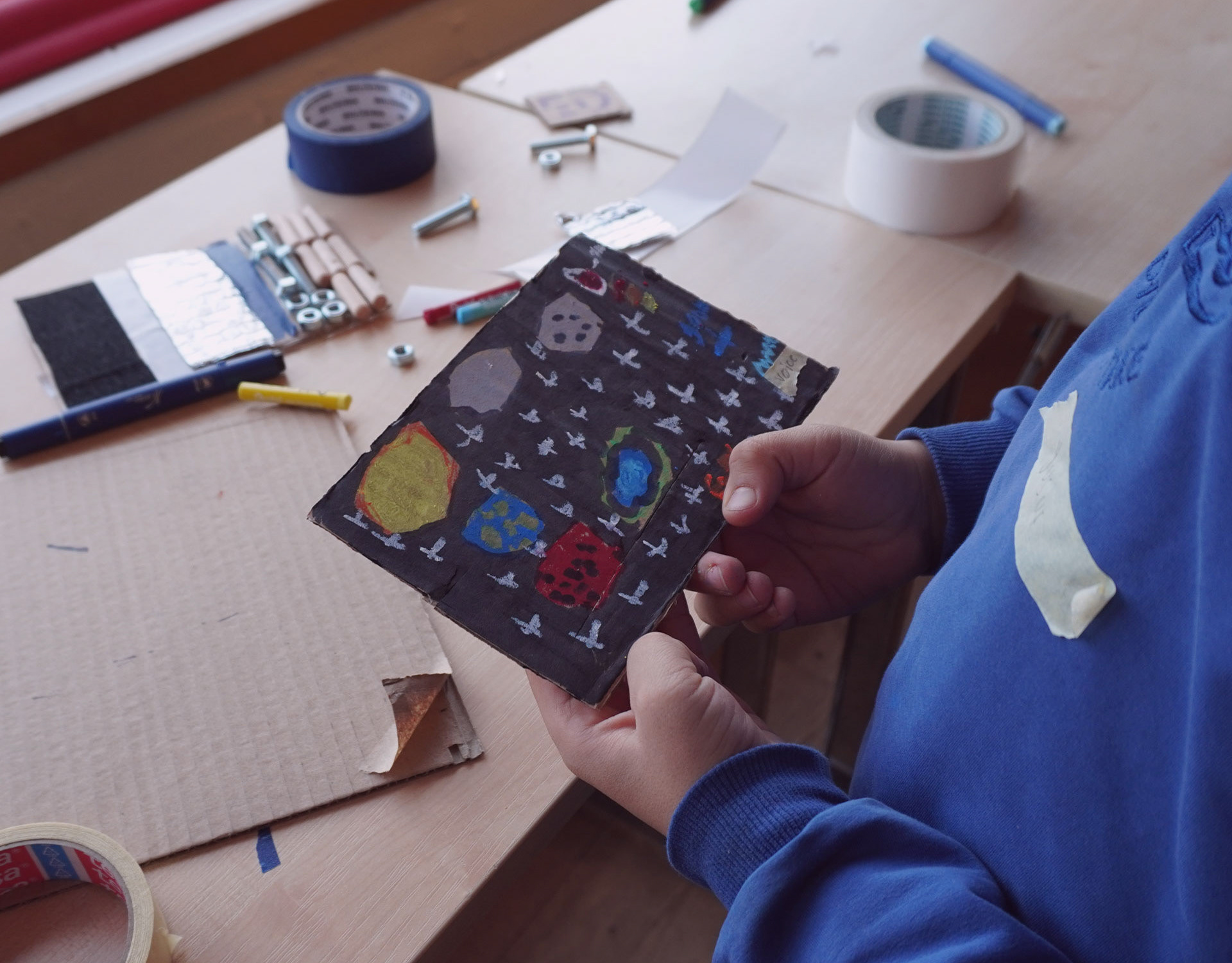
One eight-year-old child drew a map of the space we were working in from above. The star looked like a cross when seen from a bird's-eye view. Without being instructed to do so, she added the table where she was sitting and drawing, as well as the door through which she entered the room. She also turned it into a game, marking the entrance with a sad face as the starting point, drawing a line tracing her steps, and leading to the endpoint marked with a trophy symbol.
She also added several detailed icons to show various facilities, such as a toilet symbol indicating its location.
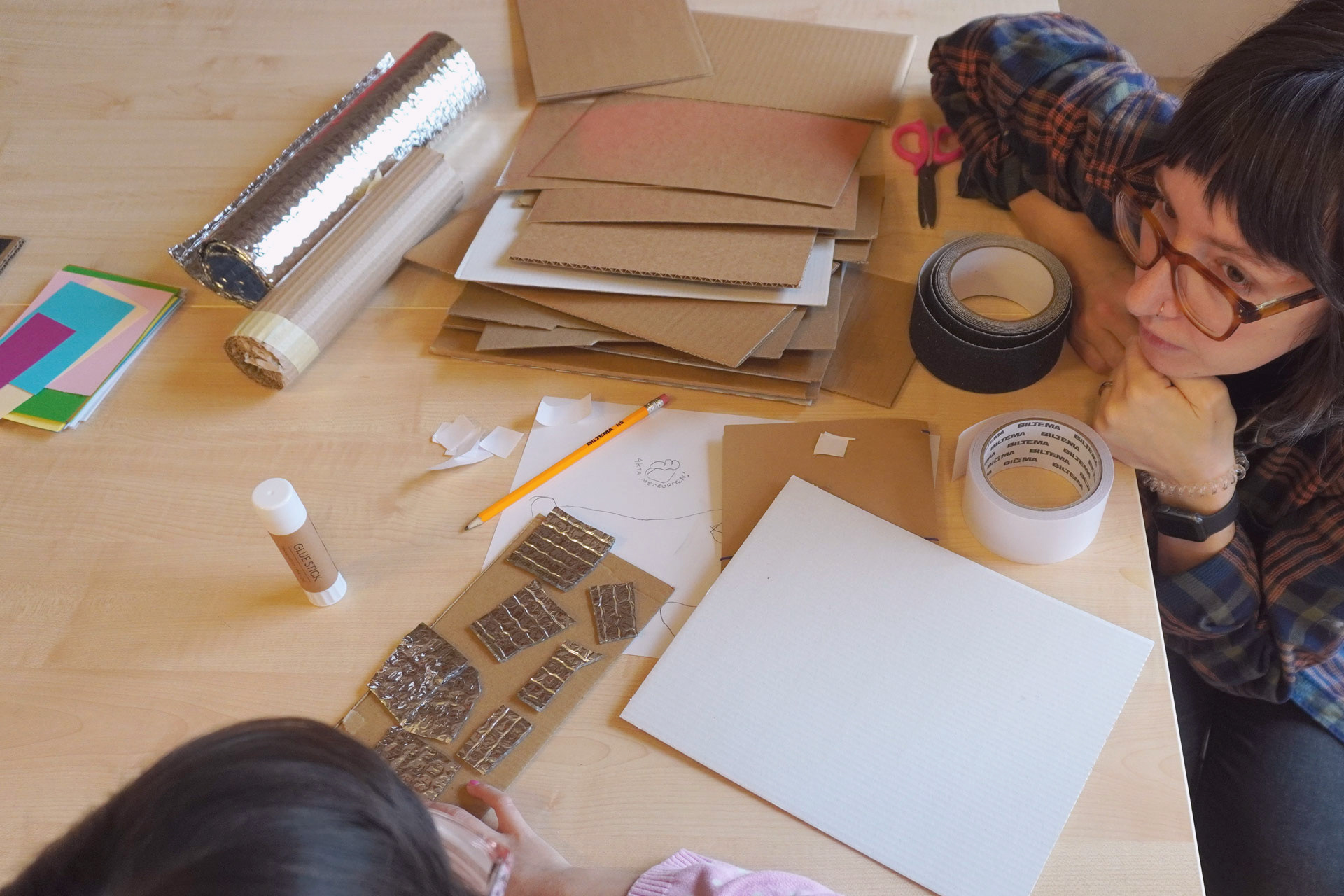
Photo: Leila Natsheh
"That one is the Candies ICA... And it is a 5-star ICA!" — T, 8
Naming Places
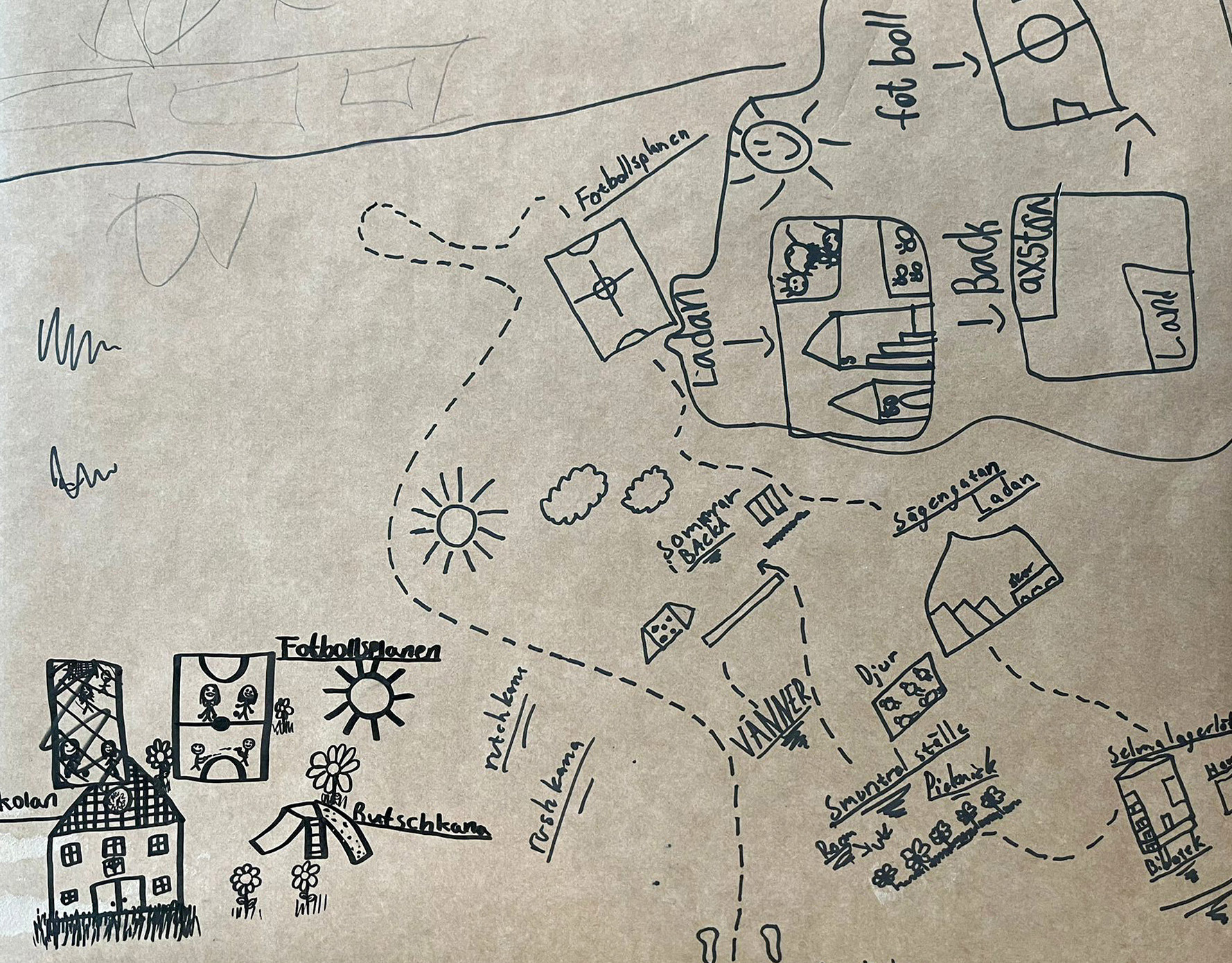
When one child was drawing a map of her neighborhood and the route to her friend's house, she focused on many important details that we as adults might overlook, which is what makes these workshops so essential and why we learn so much from our interactions with children.
She began by carefully drawing the façade of her apartment building and mapping out who lives where within it. Then she showed the bus route to her friend's home, highlighting the nearby ICA and the boom gate close to her friend's house.
She also described the different ICA stores near her home, rating one five stars because it has good and affordable candy, and naming it "The Candies ICA."
Children see the world from a different perspective, and through these workshops and dialogues we are trying to better understand their world and what is important to them.
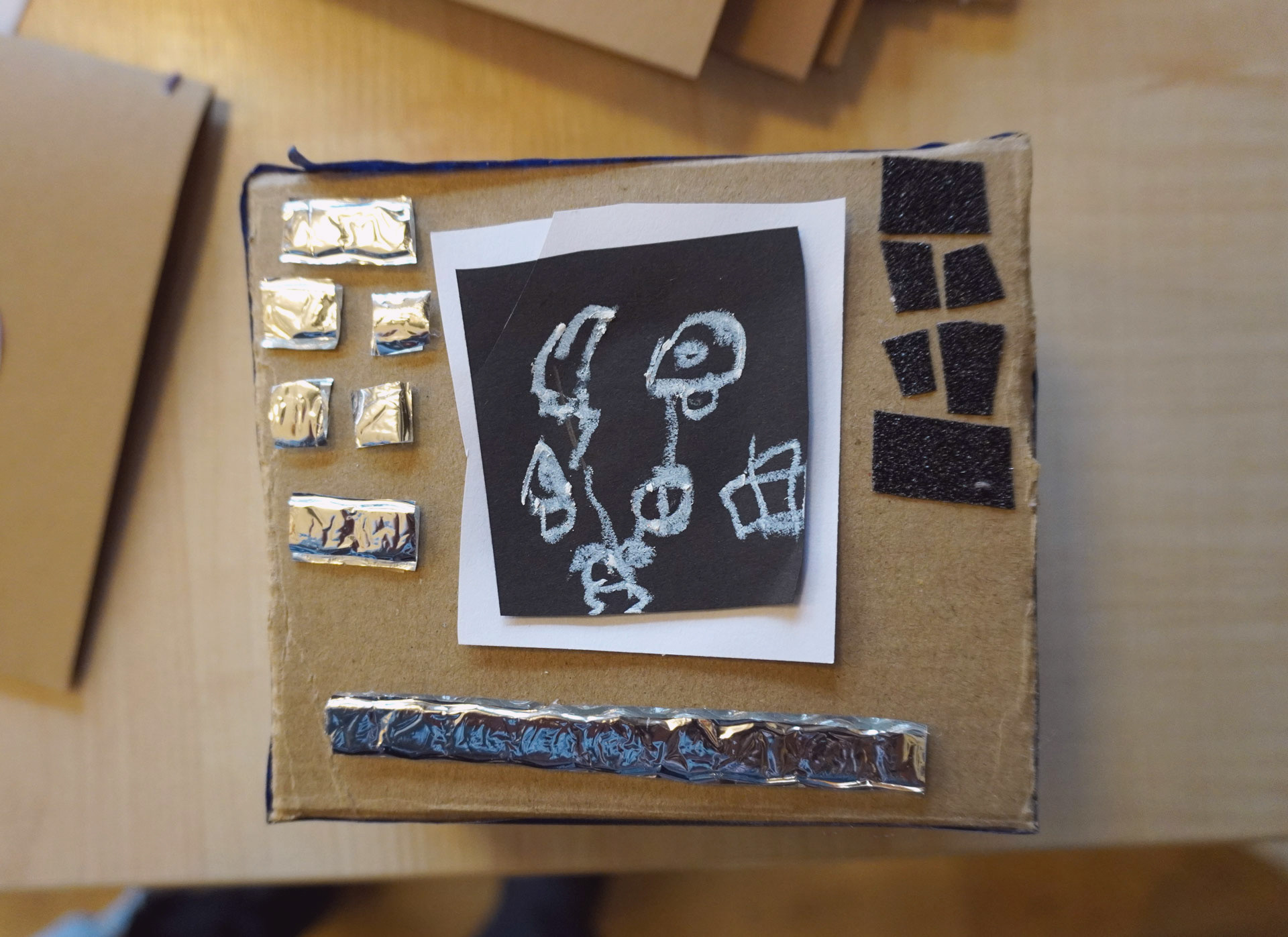
Photo: Leila Natsheh
Calm, Imaginative Play
Play comes in many forms. It can be loud or calm, structured or unstructured. It can look like energetic fun filled with laughter, but it can also be a quieter activity that sparks imagination — where play happens in the mind and is not always visible to outside observers.
During this workshop, many children were deeply engaged in their ideas in a calm and focused way. Some of their thoughts were shared with us, while others remained unknown. The fact that the children stayed as long as they could — some for two to three hours — shows that they enjoyed the experience and wanted to be there.
Would you like to join us next time?