Twentieth Stop
"Design an App" Summer Club · June 2026
Workshop Leaders: Simona Cavalieri and Katja Mock
Workshop Assistant: Priyadarshini Chilaka
Workshop Assistant: Priyadarshini Chilaka
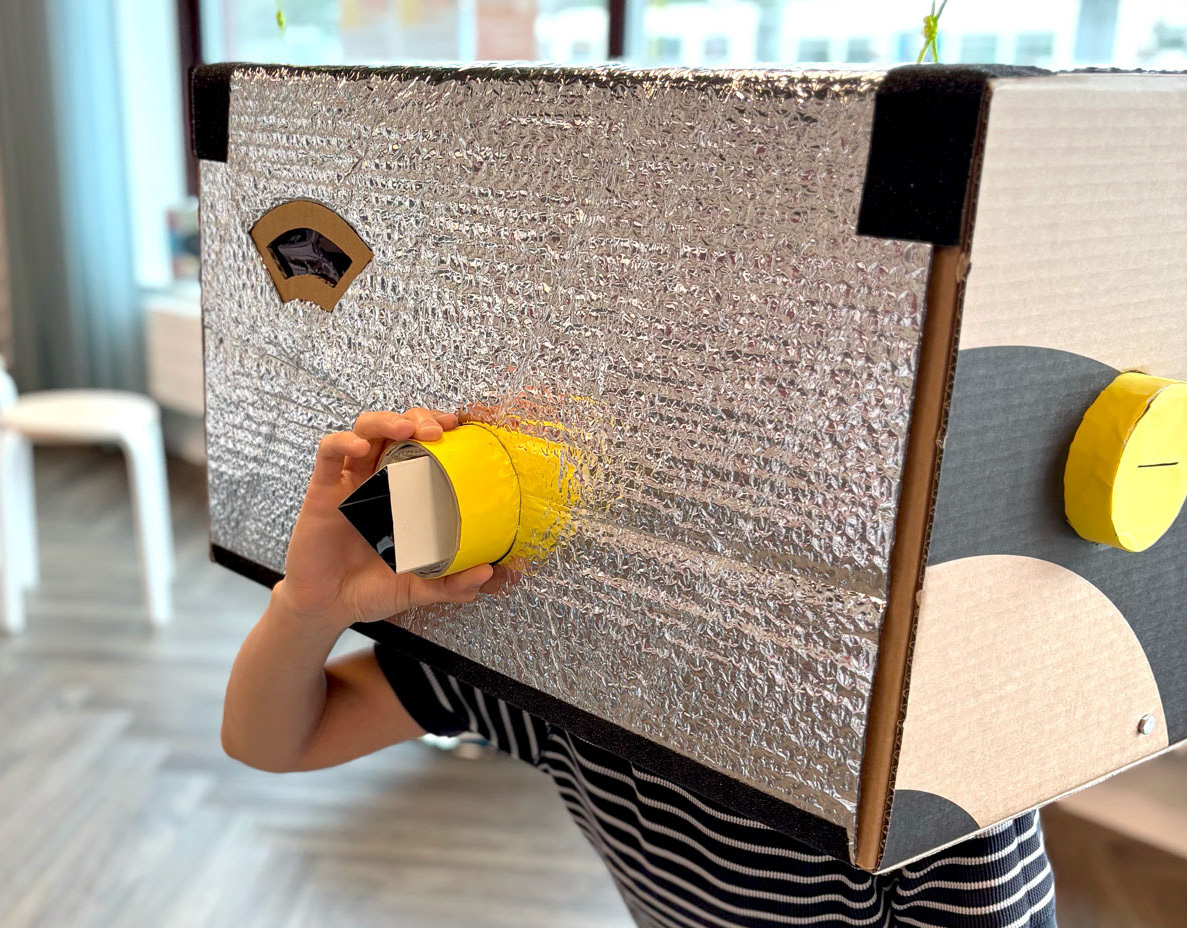
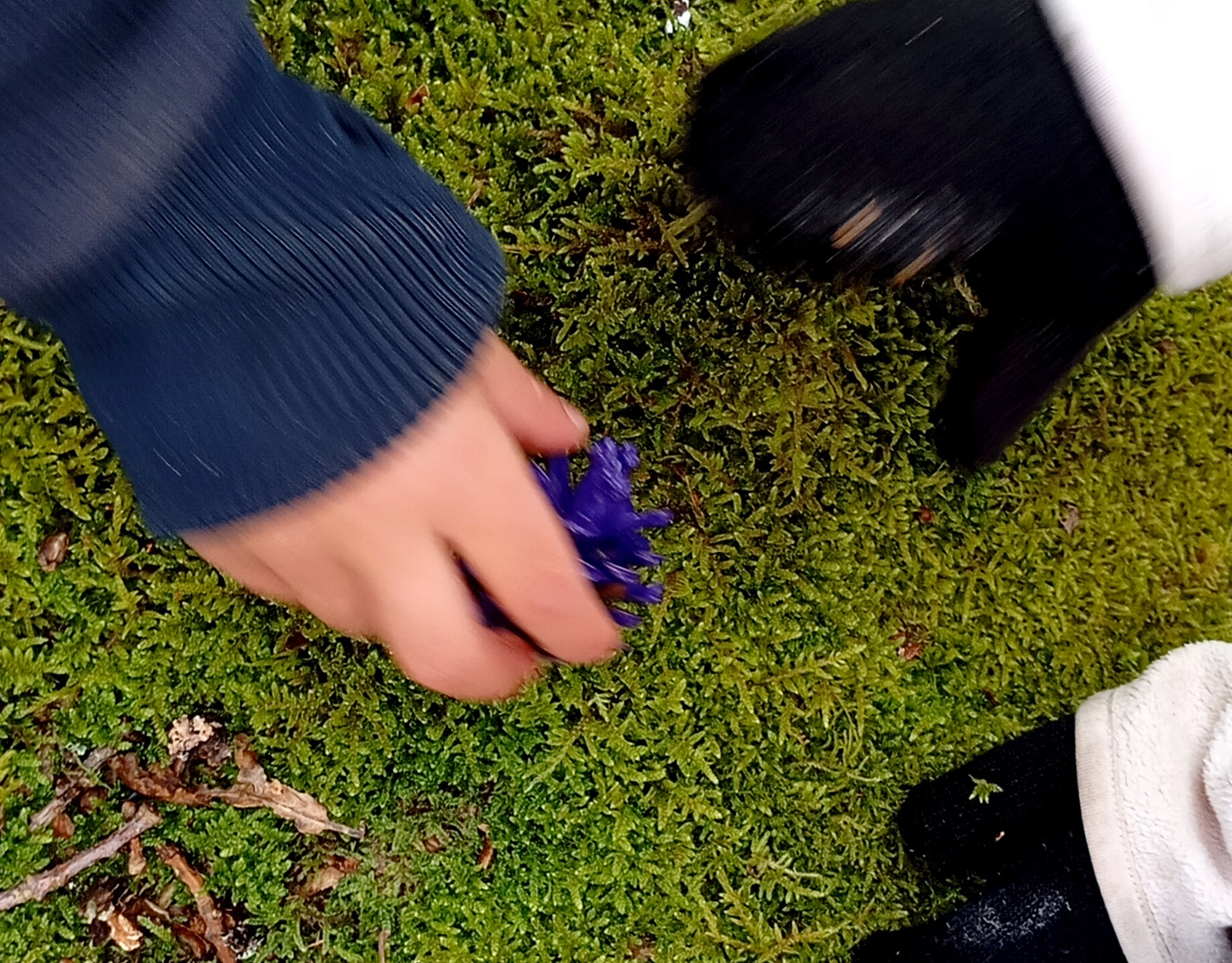
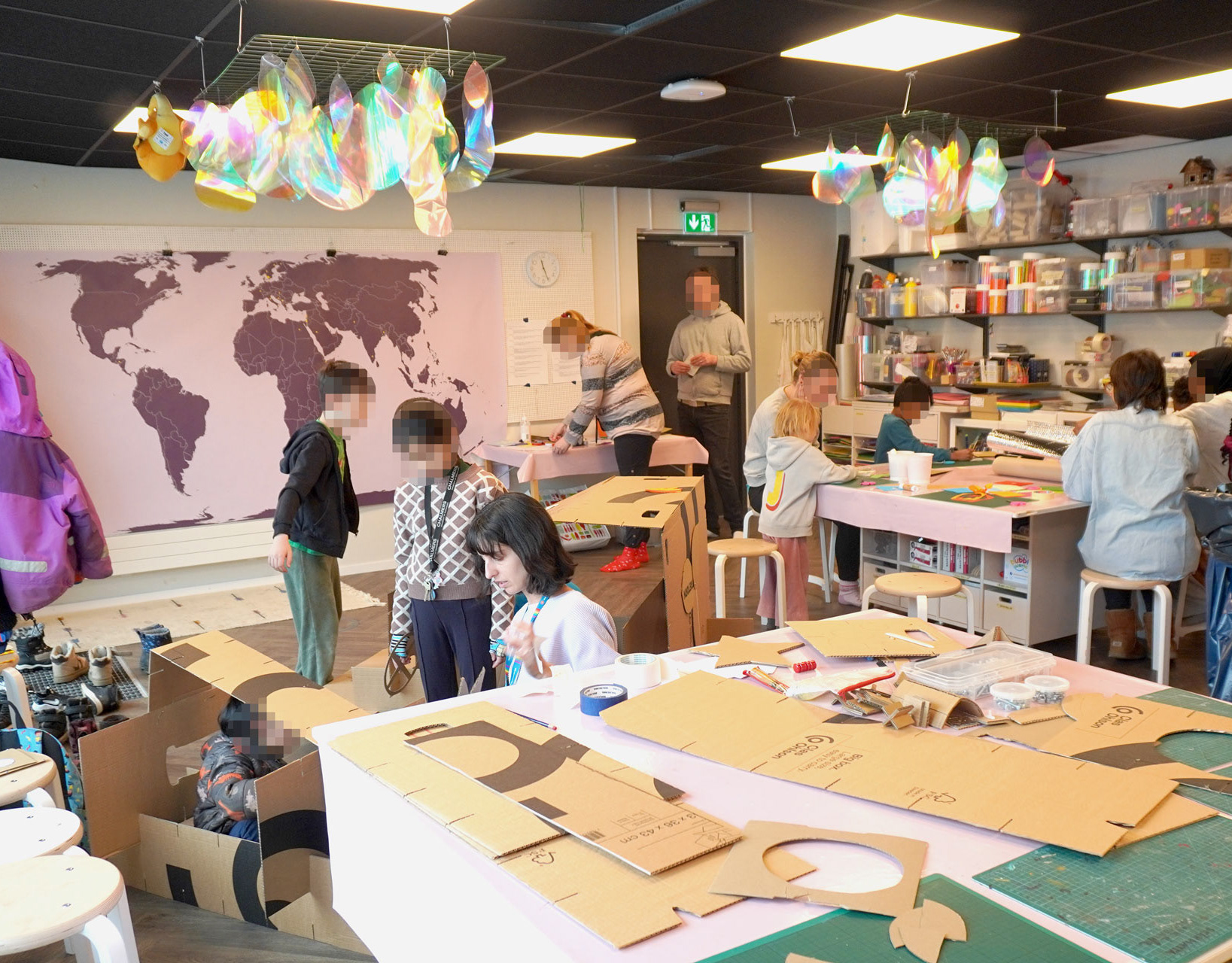
During this summer club, we did not travel to another planet, we entered a digital world without screens. A world made of paper, pencils, scissors, glue, and imagination.
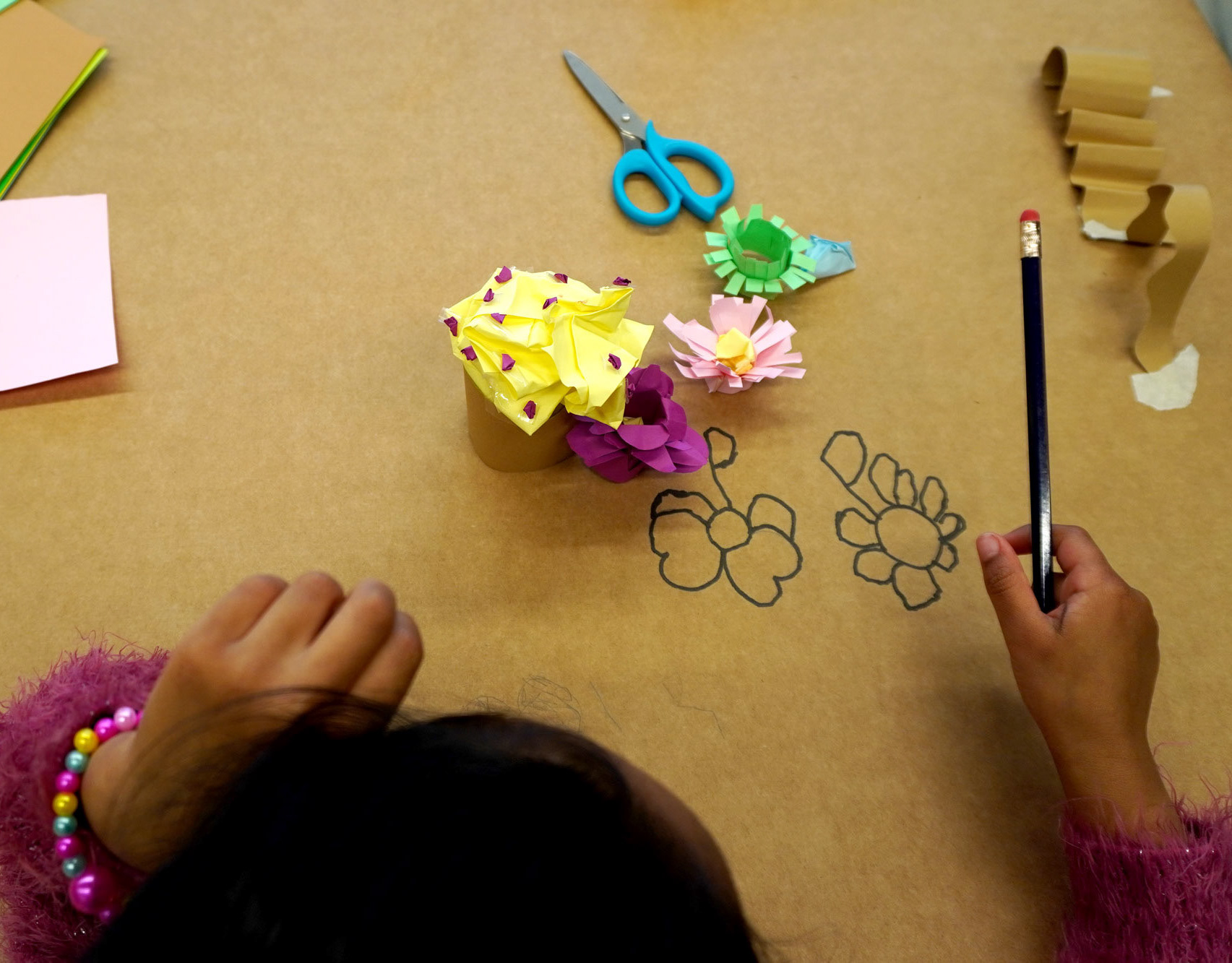
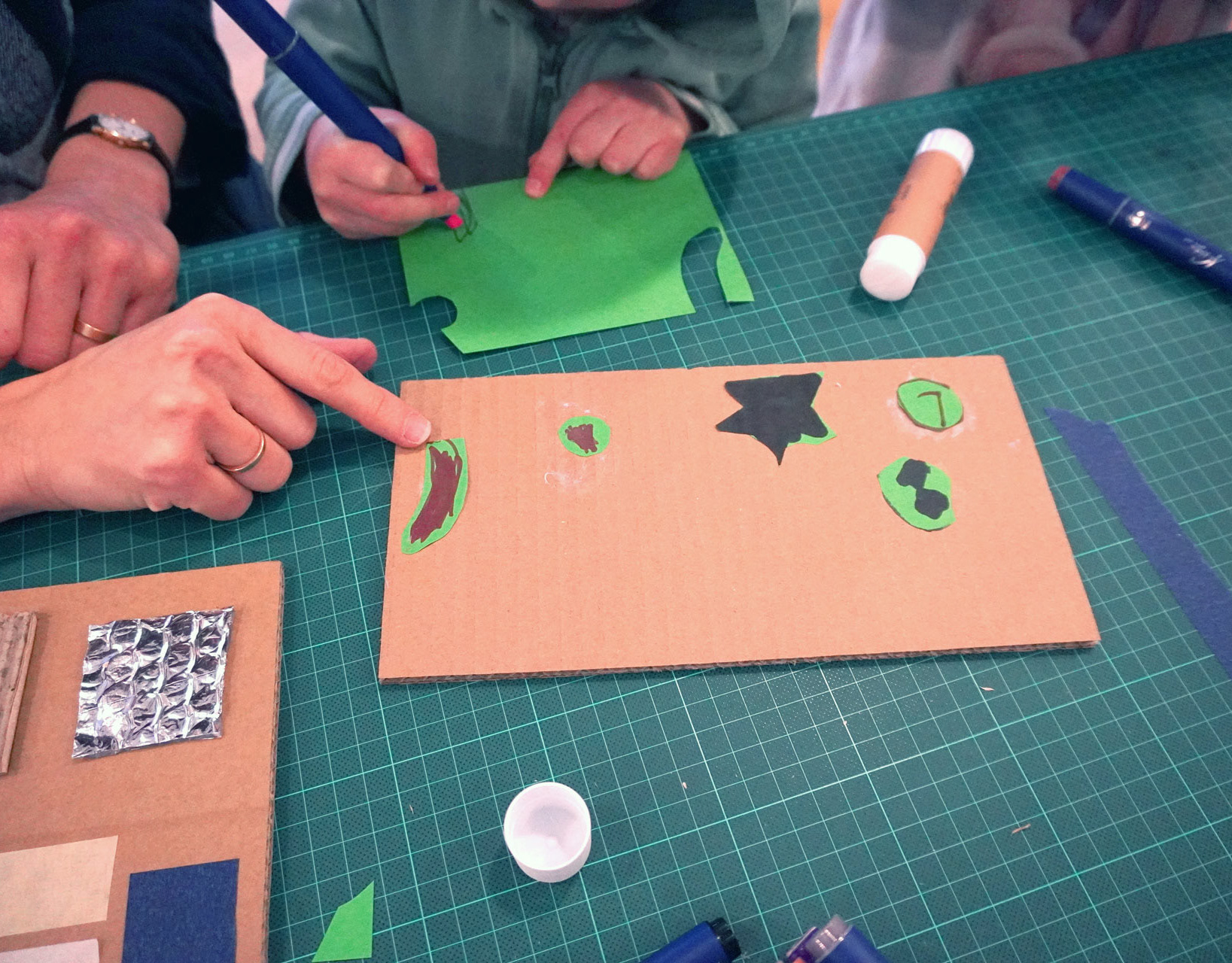
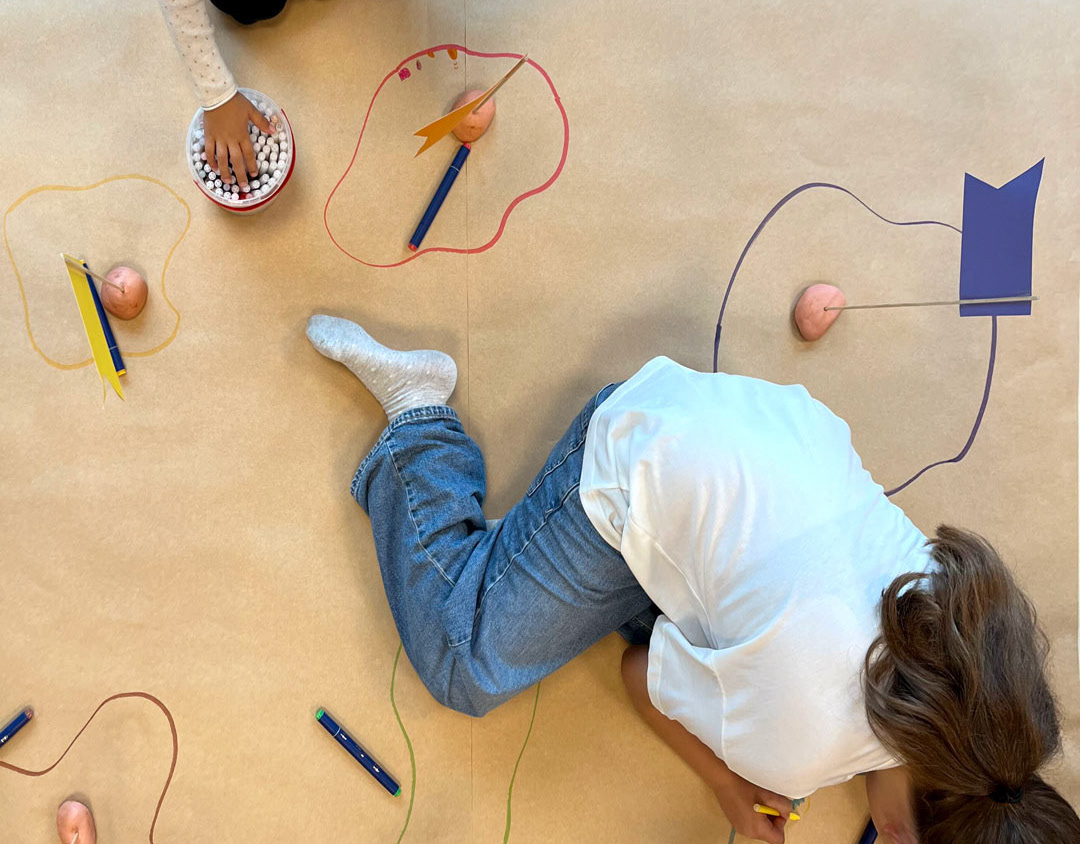
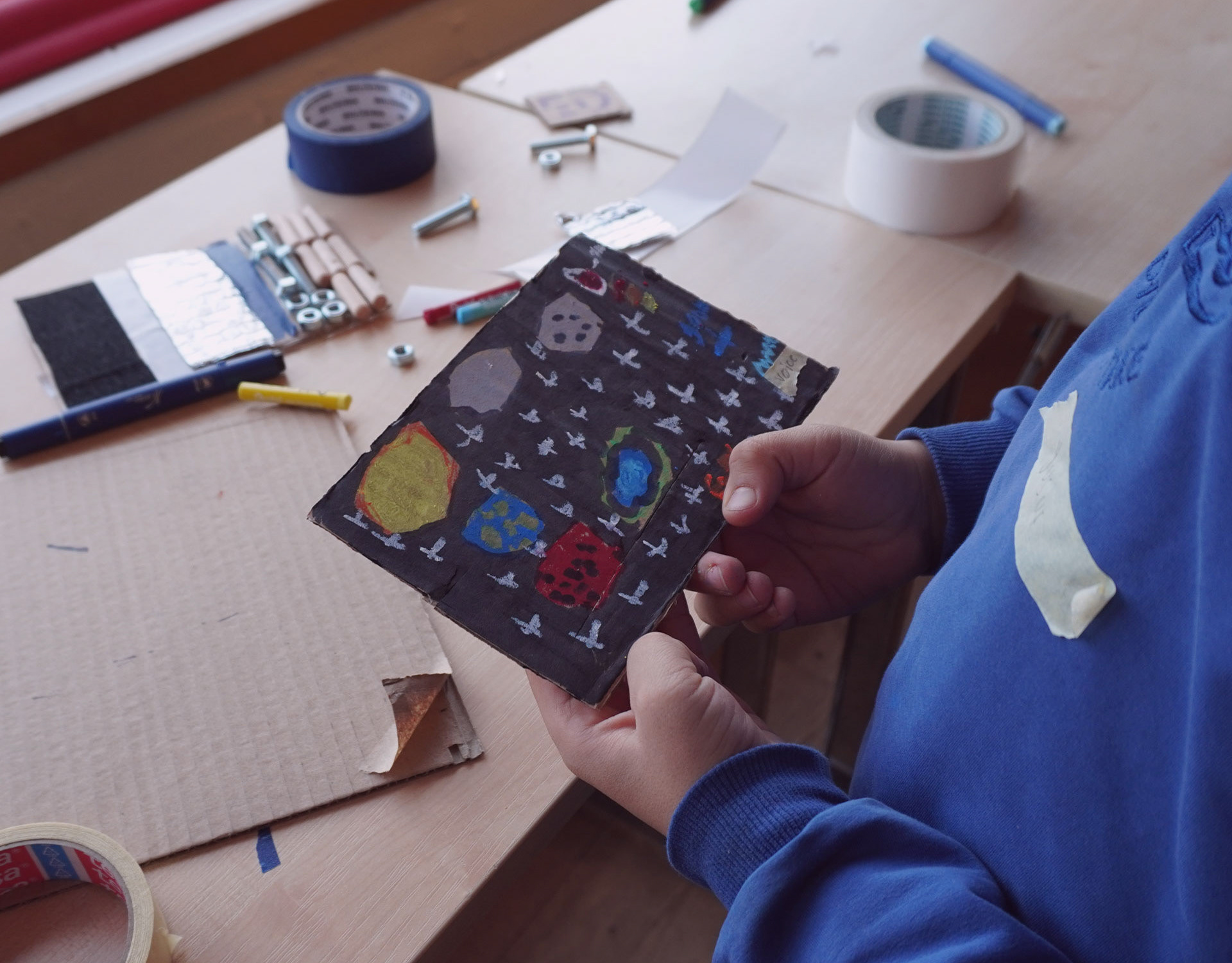
For five days, children aged 8 to 11 designed an app following the design process that happens in reality: early research, idea generation, paper prototypes, and even a real user test.
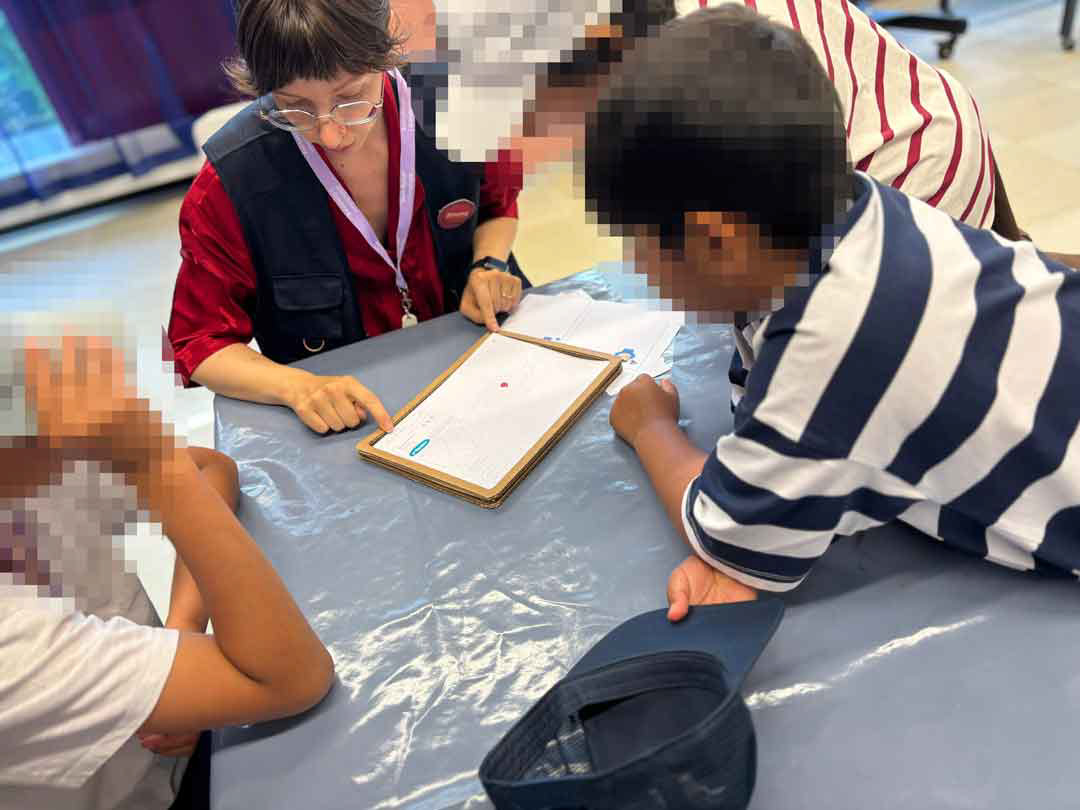
Photo: Simona Cavalieri and Katja Mock
All Without Using Technology
Only paper, pencils, scissors, glue, posters, role‑playing, and physical activities.
Our goal was to observe how children imagine technology when it is not in front of them: how they describe it, how they build it, which words they choose, and which concepts appear naturally. In other words, we wanted to understand how they inhabit technology in their minds, so we can design Barnens Smarta Karta in a way that is respectful, natural, and aligned with their way of thinking.
What emerged is a rich set of insights: technology as a social space, the clarity with which they define what an app is, their natural tendency to organise the world in categories, their preference for discovery rather than immediate solutions, and their need for simplicity, calm, and accessibility.
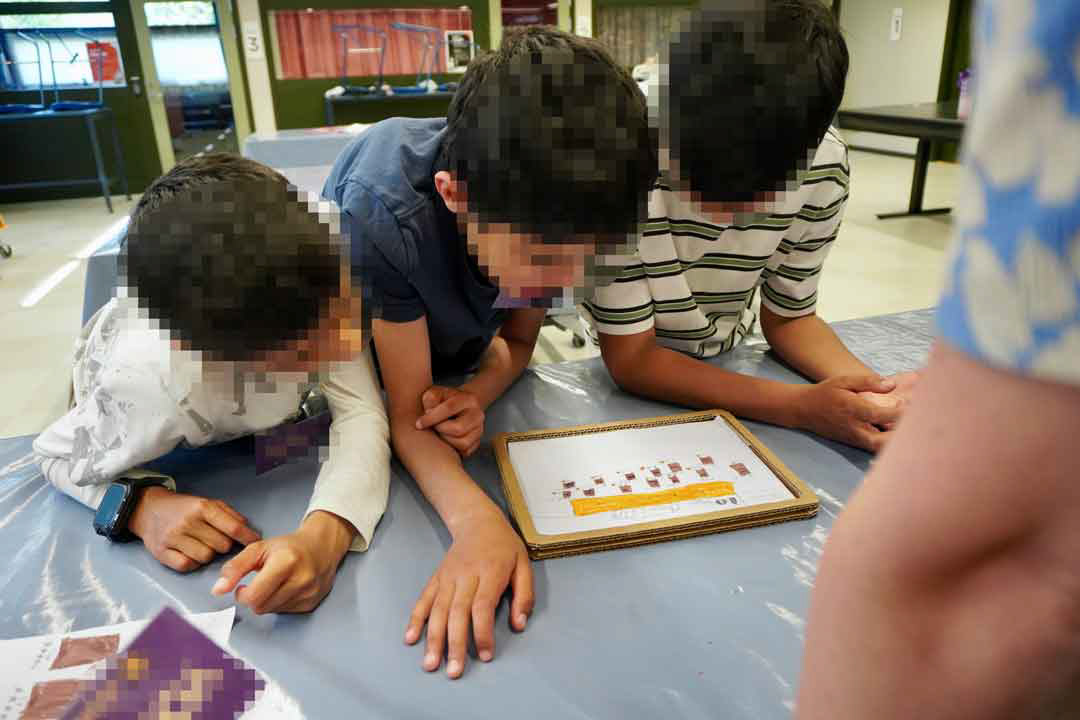
Photo: Simona Cavalieri and Katja Mock
Technology as a Social Space
Children experience technology as something shared. It is not a solitary object; it is a bridge to friends. They play together, watch videos together, build worlds together.
This suggests that Barnens Smarta Karta could become a social place, not only a map or a container of locations, but a space where children can discover, tell stories, and share what’s relevant to them.
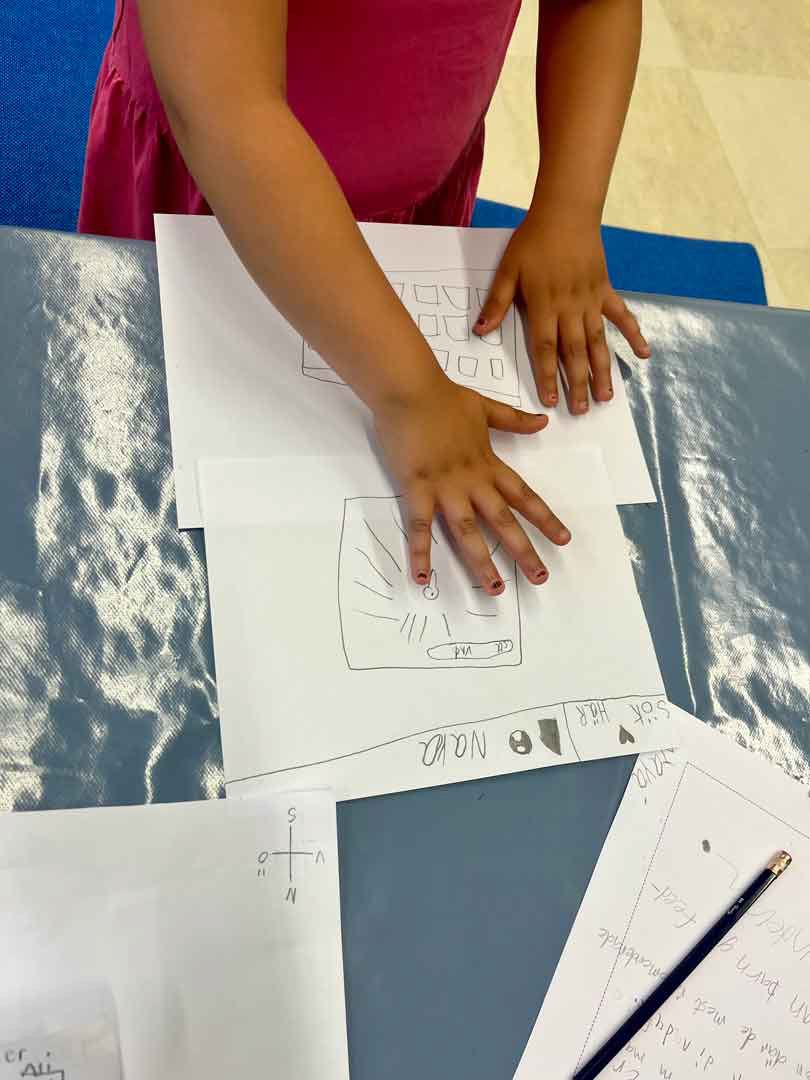
Photo: Simona Cavalieri and Katja Mock
“What is an app?”
When we asked children what an app is, some answers were surprisingly mature:
“Something that helps you do things.” — R, 8
“Something people made to help other people.” — Y, 9
“Something people made to help other people.” — Y, 9
These sentences show that children have a clear and functional understanding of technology. They do not see it as magic, but as a tool created by people to make life easier. This practical view is essential for designing Barnens Smarta Karta in a way that feels natural to them.
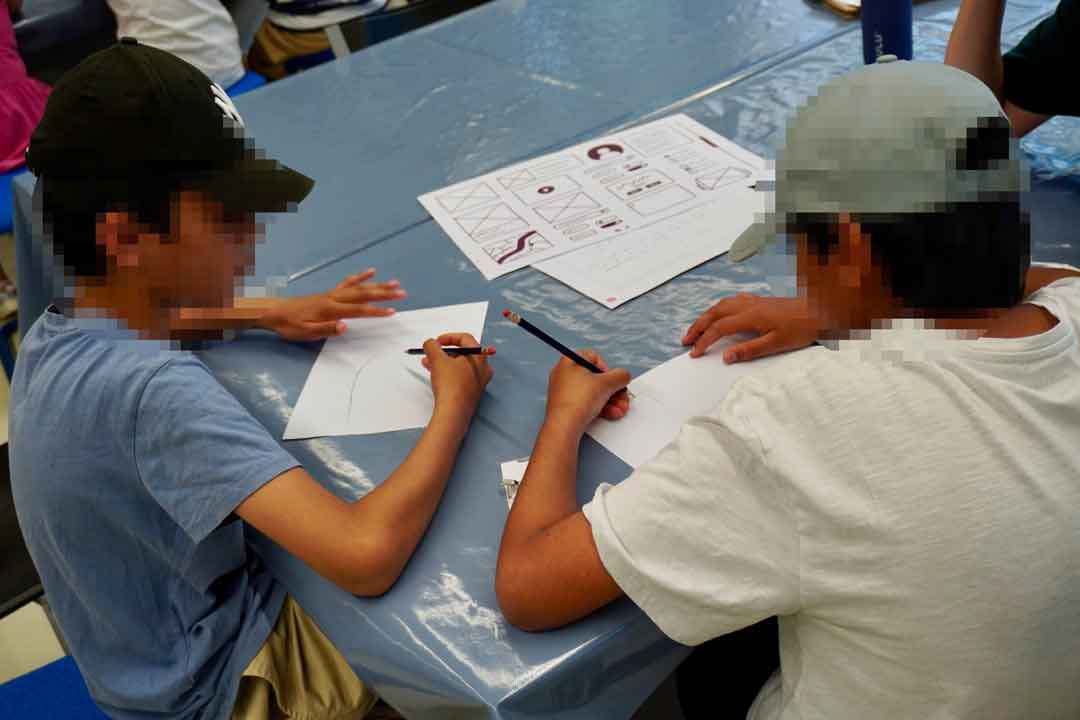
Photo: Simona Cavalieri and Katja Mock
Thinking in Categories: Children's Natural Way of Organizing the World
Throughout the camp, we saw that children spontaneously organise information in categories. They did this when sorting books into genres, and again when talking about books that “make you feel different things.” For them, categorizing is not an exercise, it is a way to orient themselves.
This means BSK should reflect their cognitive style: clear blocks, recognizable sections, visual groups that make immediate sense. A structure that helps them find, understand, and remember.
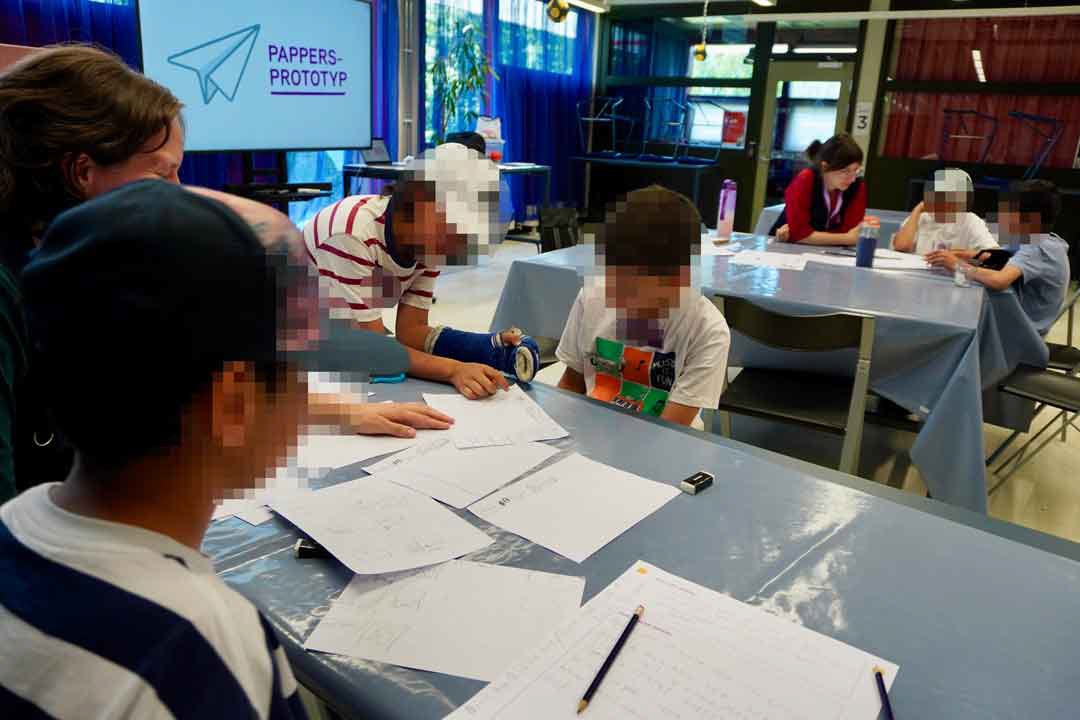
Photo: Simona Cavalieri and Katja Mock
Maps, Clues, and Fun
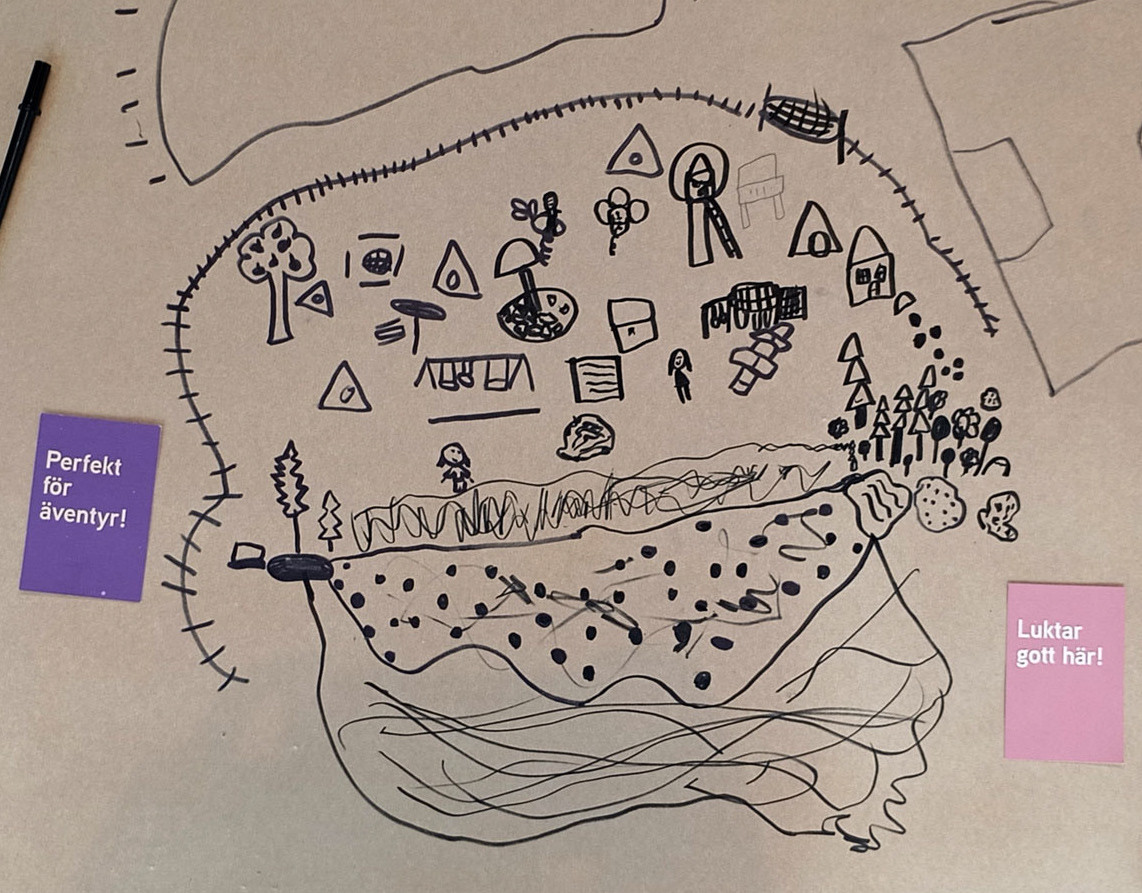
One insight, or confirmation, stood out: “If the map makes me find everything too fast, it’s not fun.” Children prefer clues, paths, and small challenges. The map should be a space for exciting, playful exploration, not a simple navigator. This could be translated into a treasure‑hunt logic: discovering step by step, not receiving everything at once.
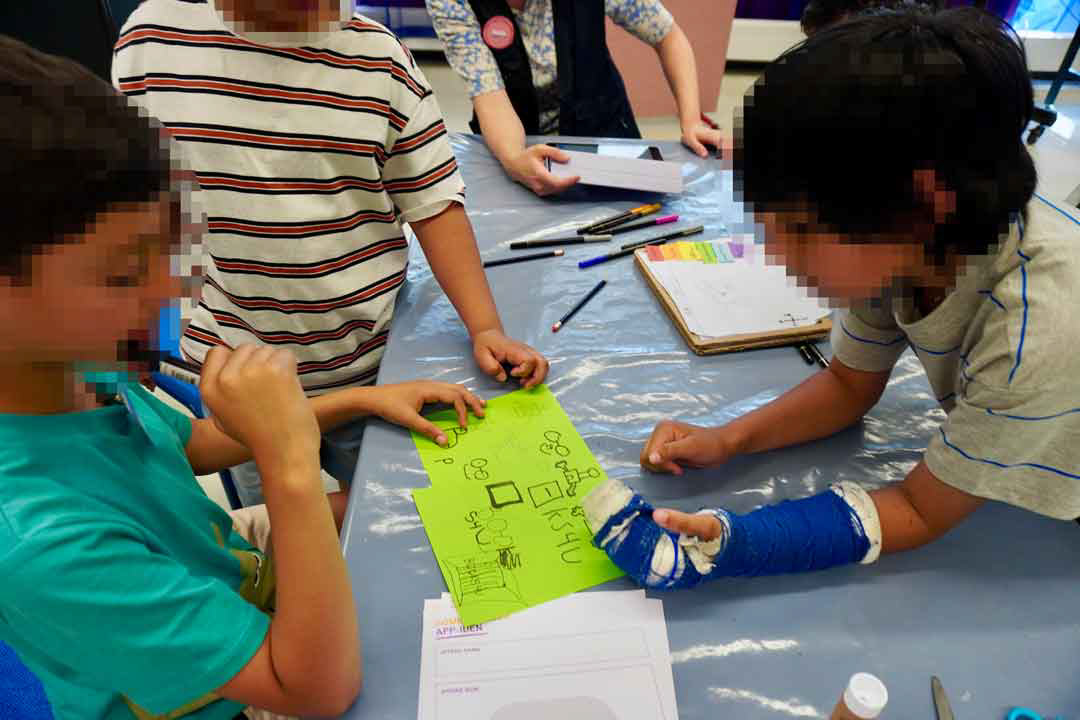
Photo: Simona Cavalieri and Katja Mock
Language: Simple, Not Simplistic
Children understand better by doing than by listening. During the week, we introduced vocabulary from the world of UX design.
At first, we explained the concepts through metaphors, but we noticed they still felt too abstract. We then switched to games, allowing the children to experience each concept with their whole bodies in action. Complex words and themes can be introduced, but only when they are contextualised and visible in use.
This suggests that storytelling alone may not be enough if it remains at the level of metaphor. In Barnens Smarta Karta, stories should be paired with embodied, hands-on activities that allow children to experience through action.
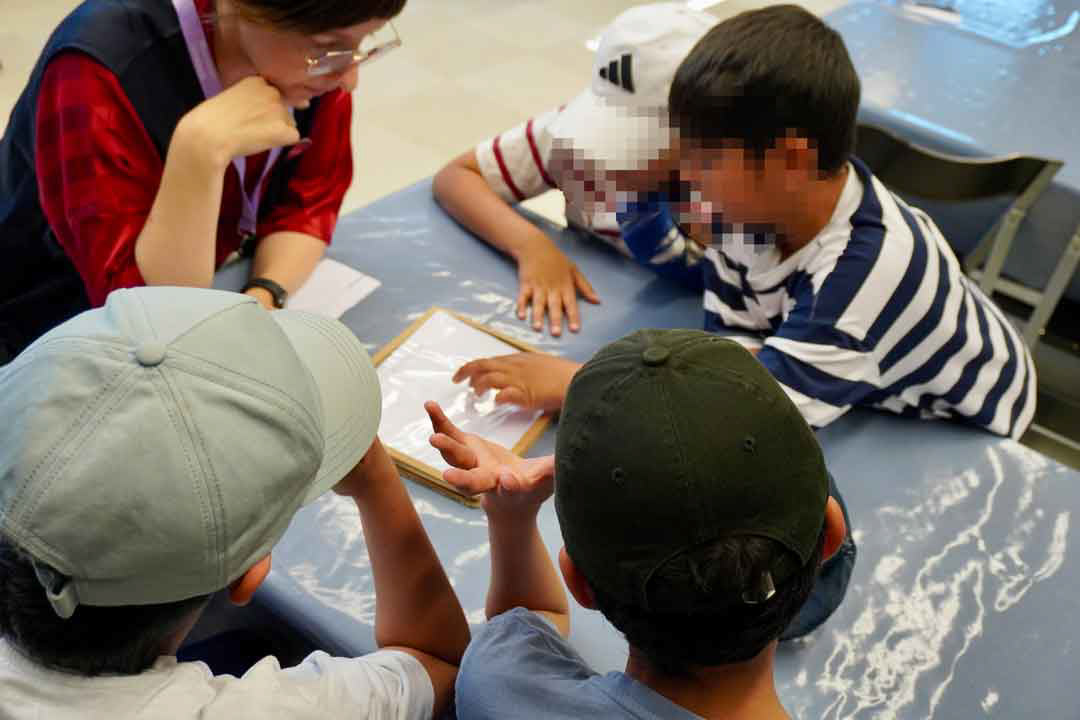
Photo: Simona Cavalieri and Katja Mock
Privacy and Accessibility: Simplicity First
Many children do not remember passwords, data, or procedures. For this reason, Barnens Smarta Karta should work without a profile, or with a very simplified access method. During the camp one child suggested having a visual pin code: a series of four different emoji that felt easier to remember than combinations of numbers and letters.
While reflecting together on what it feels like to look for something in a public space, the children highlighted how difficult it can be to stay focused while being surrounded by distractions. They described the overwhelming number of stimuli—sounds, visual elements, interactions, and other activities happening around them. One of the children said: “When I’m in the library it’s difficult for me to look for a book, because I just want to start reading directly…”
We believe this challenge should also be considered when designing a digital environment. Excessive numbers of choices, animations, moving elements, and visual clutter can make it harder for children to focus and make decisions. Barnens Smarta Karta should therefore be calm, clear, and easy to navigate, with limited interactions and minimal distractions.
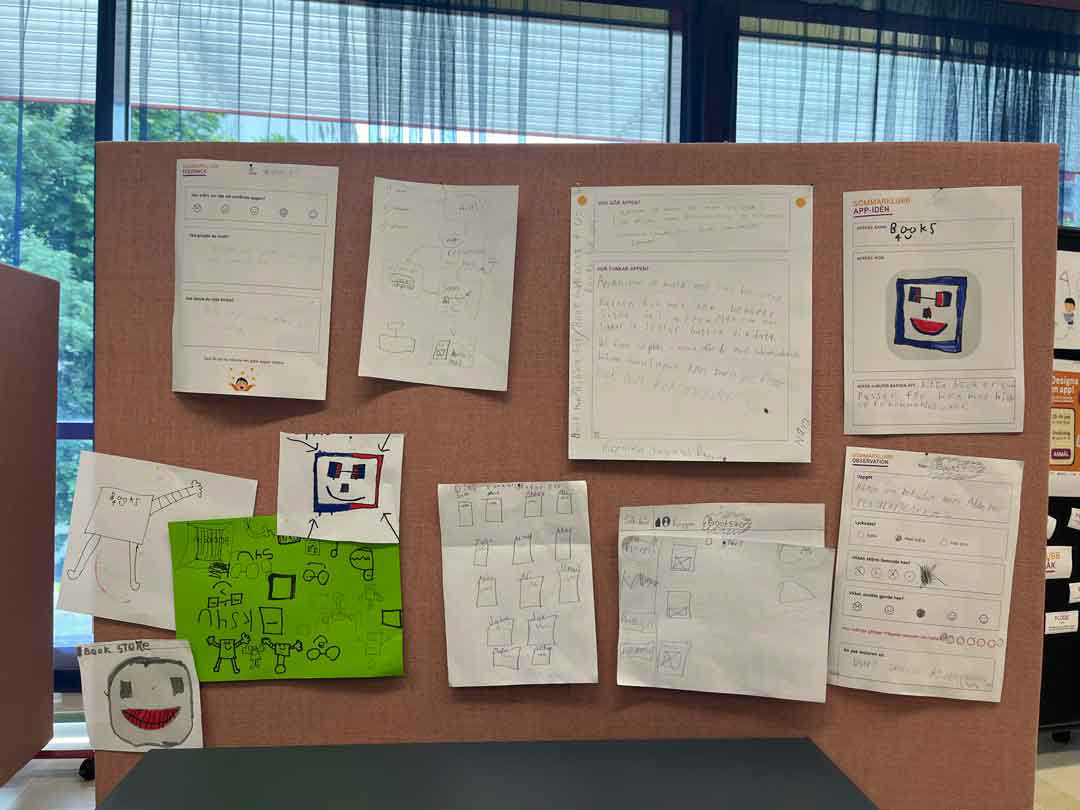
Photo: Simona Cavalieri and Katja Mock
Gamification: Familiar, and Used Carefully
Children are surrounded by gamification: points, levels, badges. But when asked what makes an experience fun, they did not mention scores. They talked about clues, discovery, and treasure hunts. For them, fun comes from finding, not competing.
If Barnens Smarta Karta introduces gamification, it should take a light approach, centered on micro-challenges, hints, and exploratory paths, to support children’s natural, playful way of discovering.
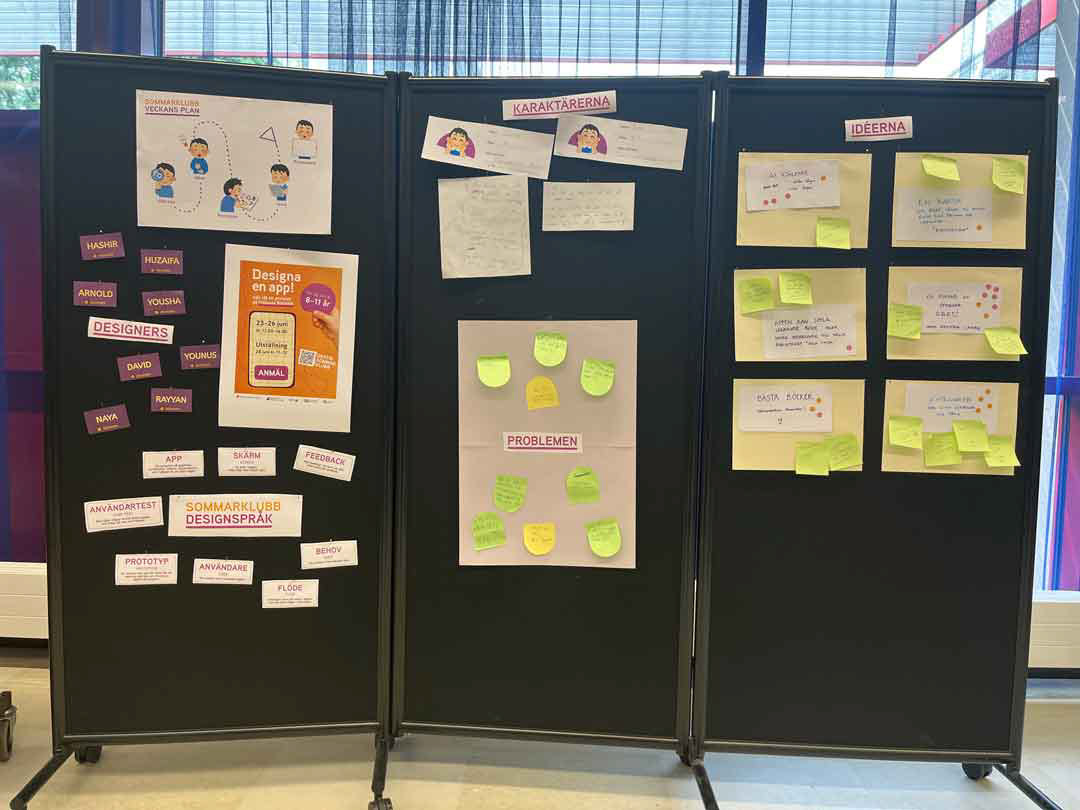
Photo: Simona Cavalieri and Katja Mock
Children's Ideas: Technology as Emotion and Relationship
Some of the ideas the children generated:
・An app with relaxing music to calm down and reduce confusion;
・An app to send a “quiet please” message so the user can enjoy a calm space and experience;
・An app to know what friends like;
・An app with an AI bot that encourages kind behavior and shows consequences when someone is not kind.
These ideas focus on emotions, relationships and norms, showing that children see technology as a tool for supporting their emotional well-being and social interactions.
For children, technology is not just a source of entertainment or information, it is an extension of their social lives, helping them connect with others, express themselves, and navigate everyday social situations.
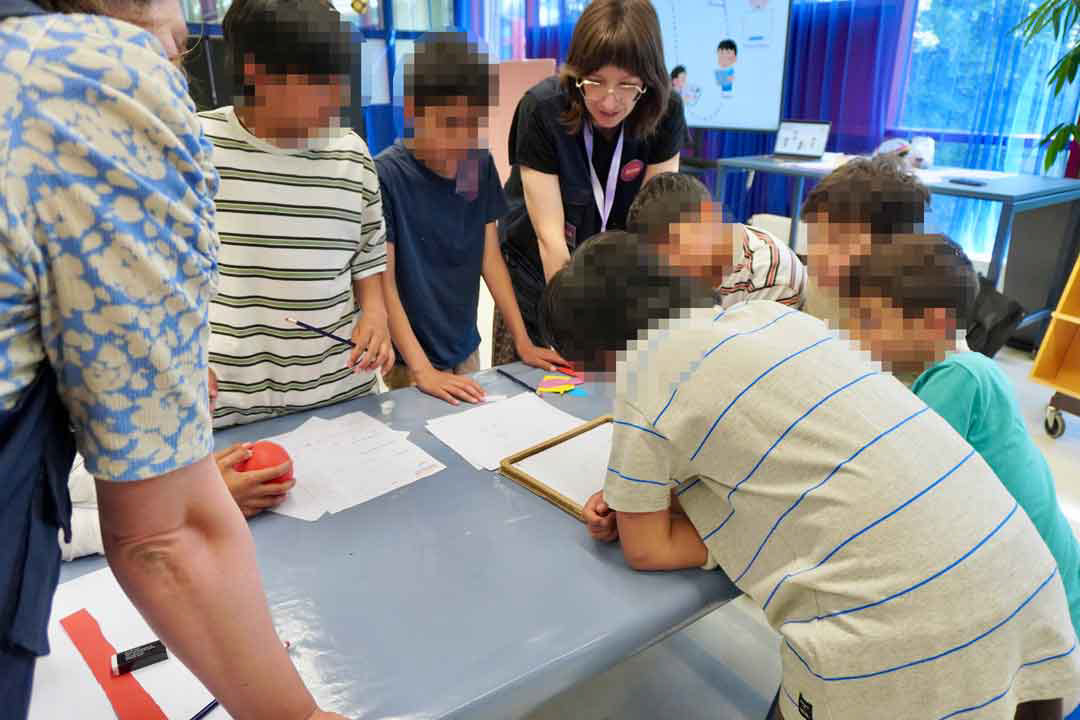
Photo: Simona Cavalieri and Katja Mock
Technology as a Bridge, Not a Destination
The summer camp clearly showed that children have their own way of inhabiting technology: they see it as a social space, organised in categories, guided by simple rules, a space that supports their experience without taking control.
It is a world they know well, interpret naturally, and use to understand themselves and others. For this reason, Barnens Smarta Karta must respect this understanding: it must speak their language, follow their rhythm, and reflect their way of organising and living digital experiences.
But at the same time, it must remember its essential purpose: it is not the goal, it is the tool. Barnens Smarta Karta is not meant to keep children inside a screen, but to accompany them outside, into their real environment.
The platform is a bridge: a way to discover places, to orient themselves, to imagine paths, to feel part of their neighbourhood. Technology is only the beginning of the adventure; the real world is where the adventure truly happens.
Barnens Smarta Karta should therefore be a digital experience that respects their way of thinking, but invites them to do what they do best: explore, move, discover, live.
Would you like to join us next time?