Eighteenth Stop
Workshop at Opaltorgets Bibliotek · May 2026
Workshop Leader: Katja Mock and Leila Natsheh
In this workshop at Opaltorgets Bibliotek we followed the same storyline as at our previous workshop at Blå Stället. The children were invited to travel through space and land on an amazing new planet, thinking about all the possibilities on this planet.
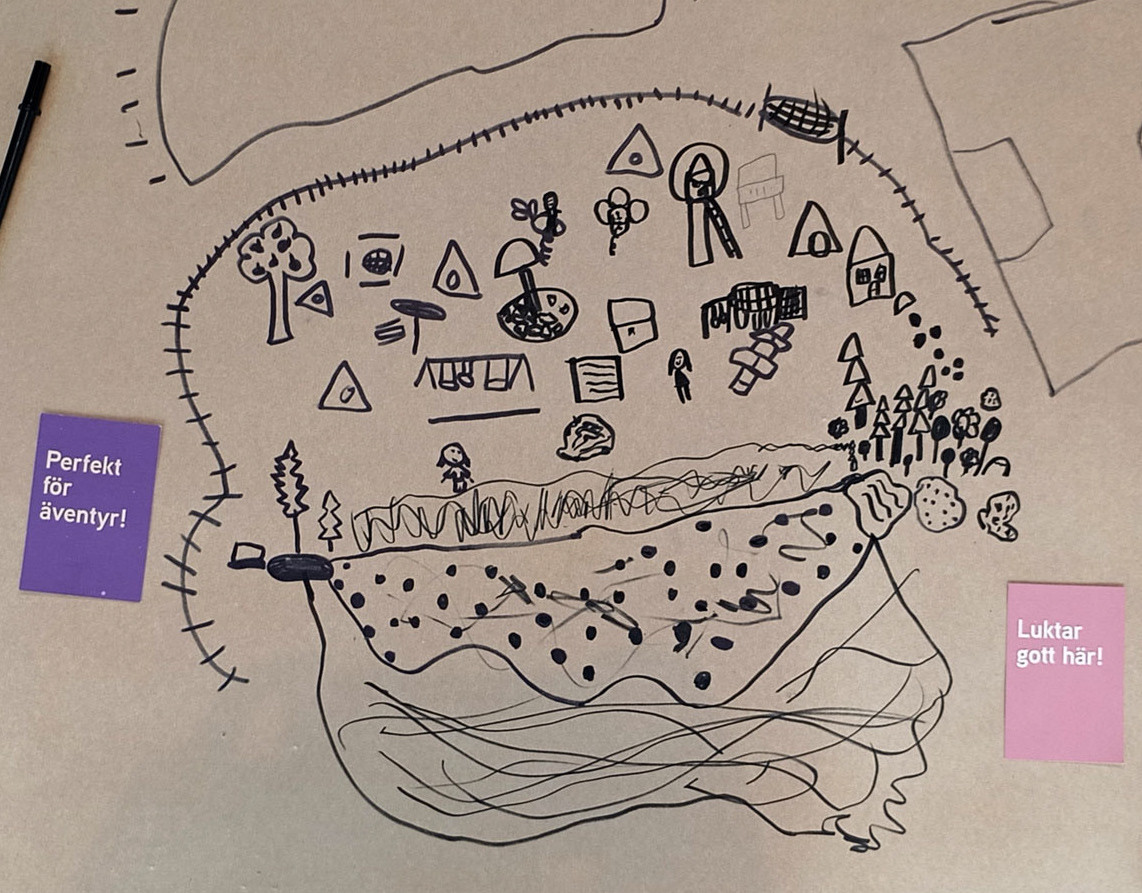
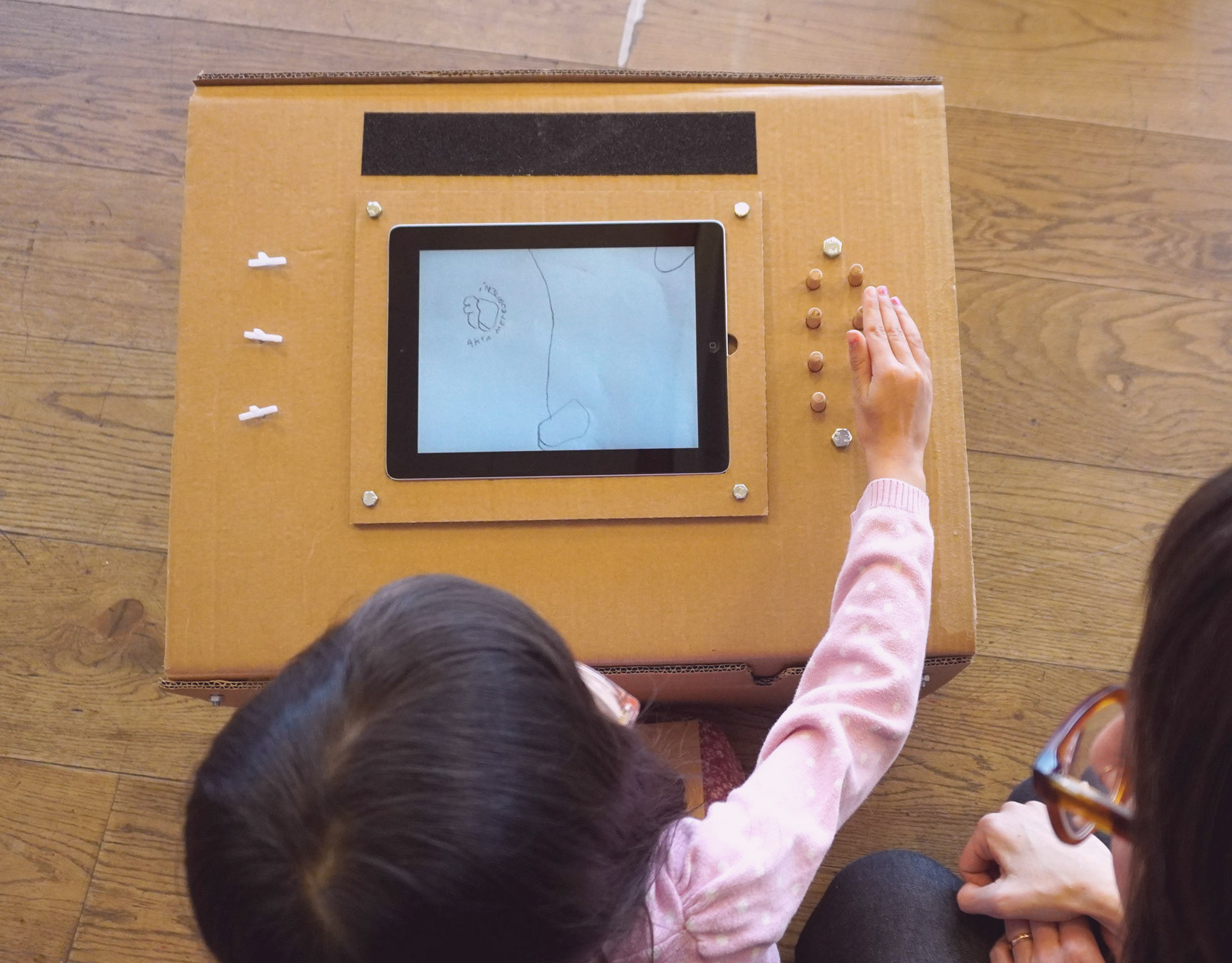
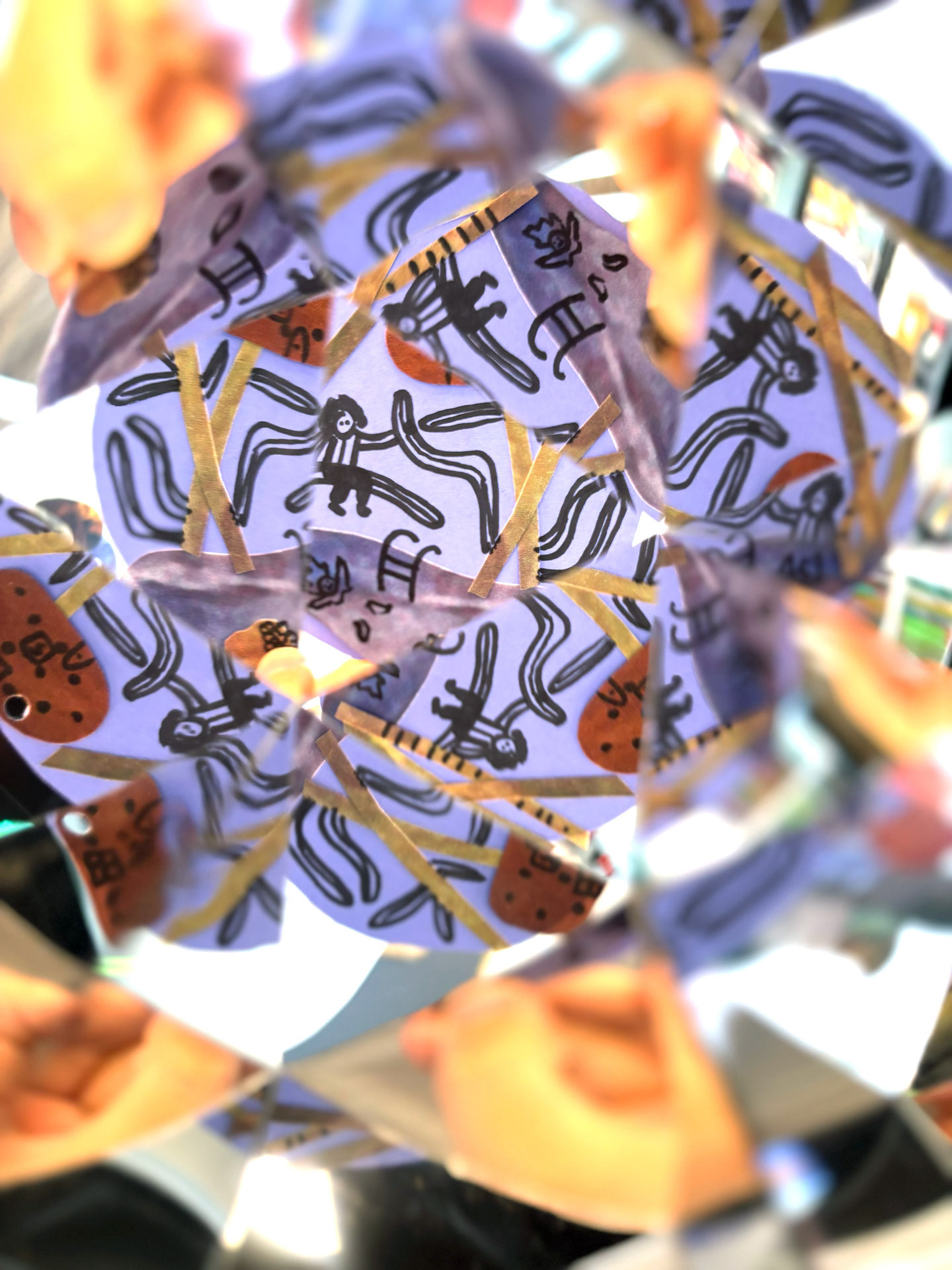
Once the children had an idea of what this new planet is like, they moved onto visualizing it on a circular piece of paper showing all the different things found on their planets. We then took pictures, and wrote short messages beside them, to send them home as postcards, telling our friends and family about these amazing places we discovered.
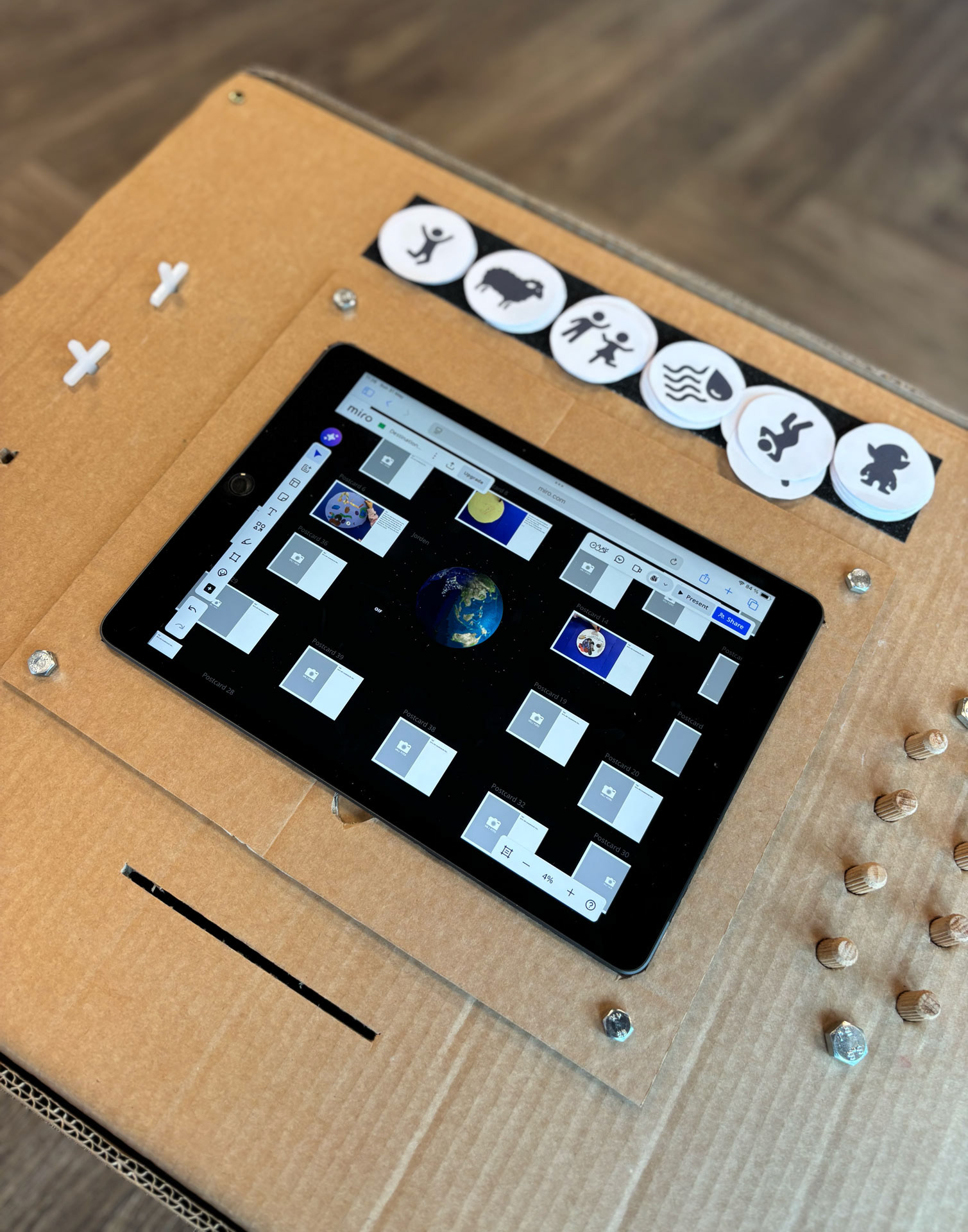
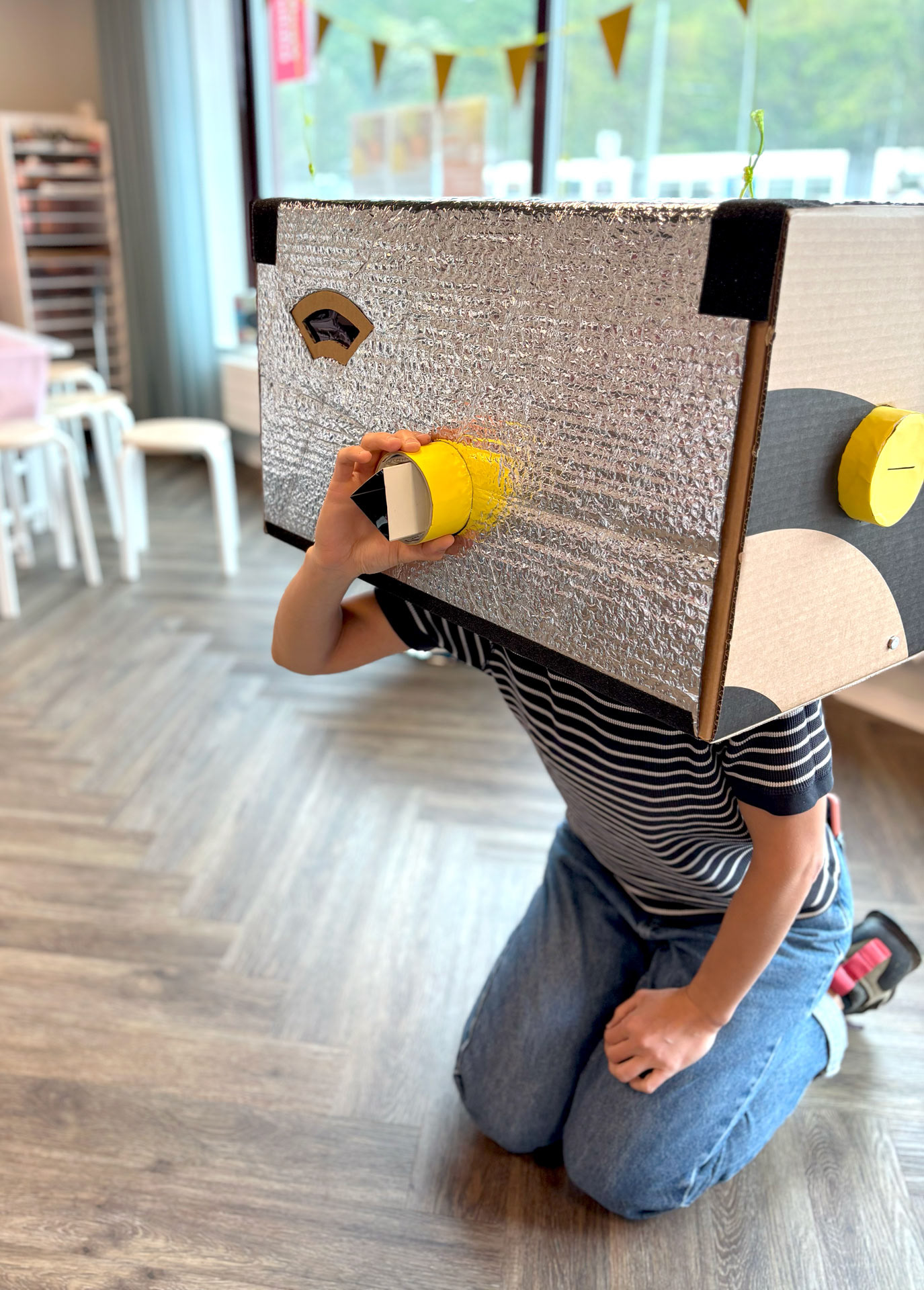
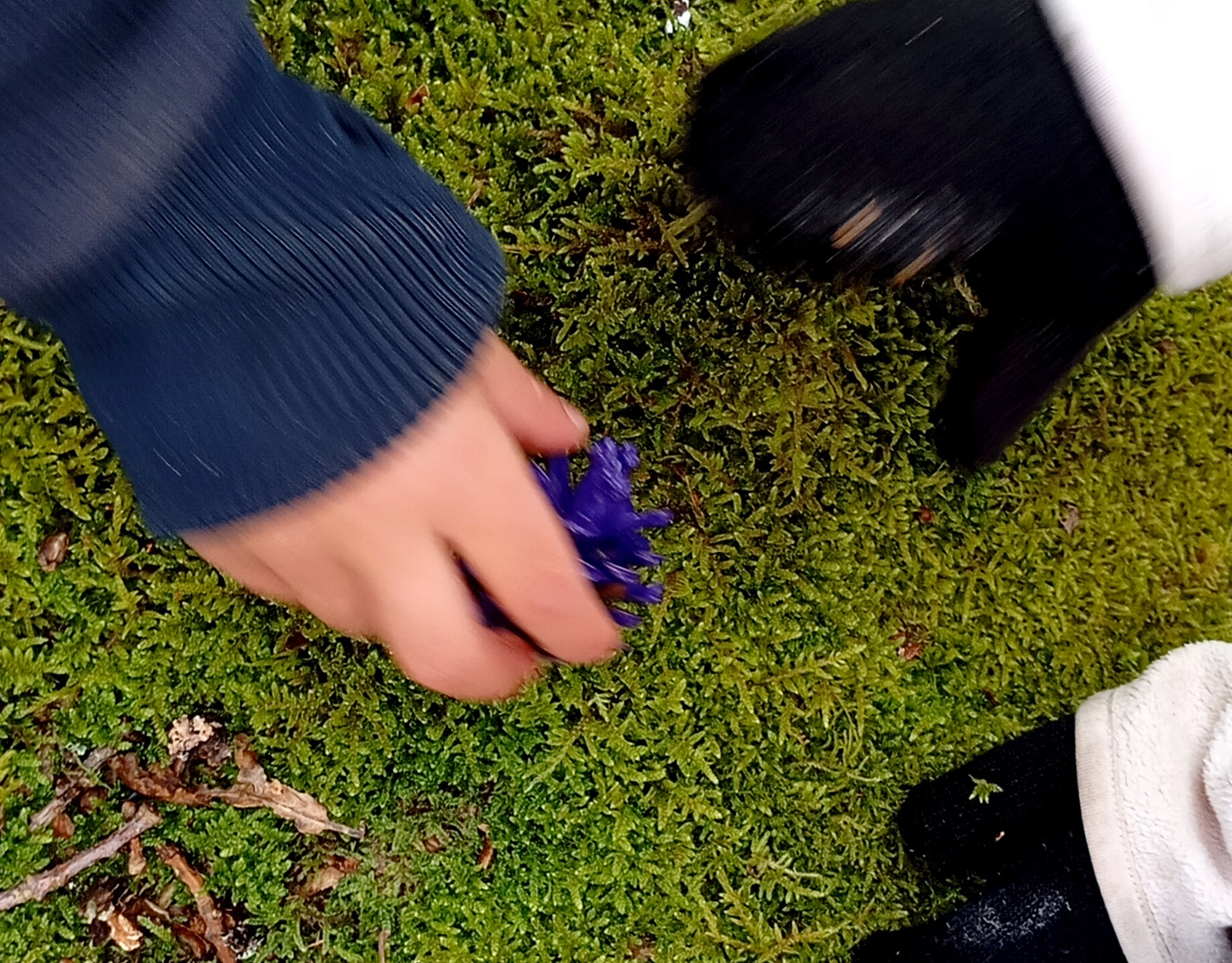
Photo: Katja Mock
Reoccurring Themes
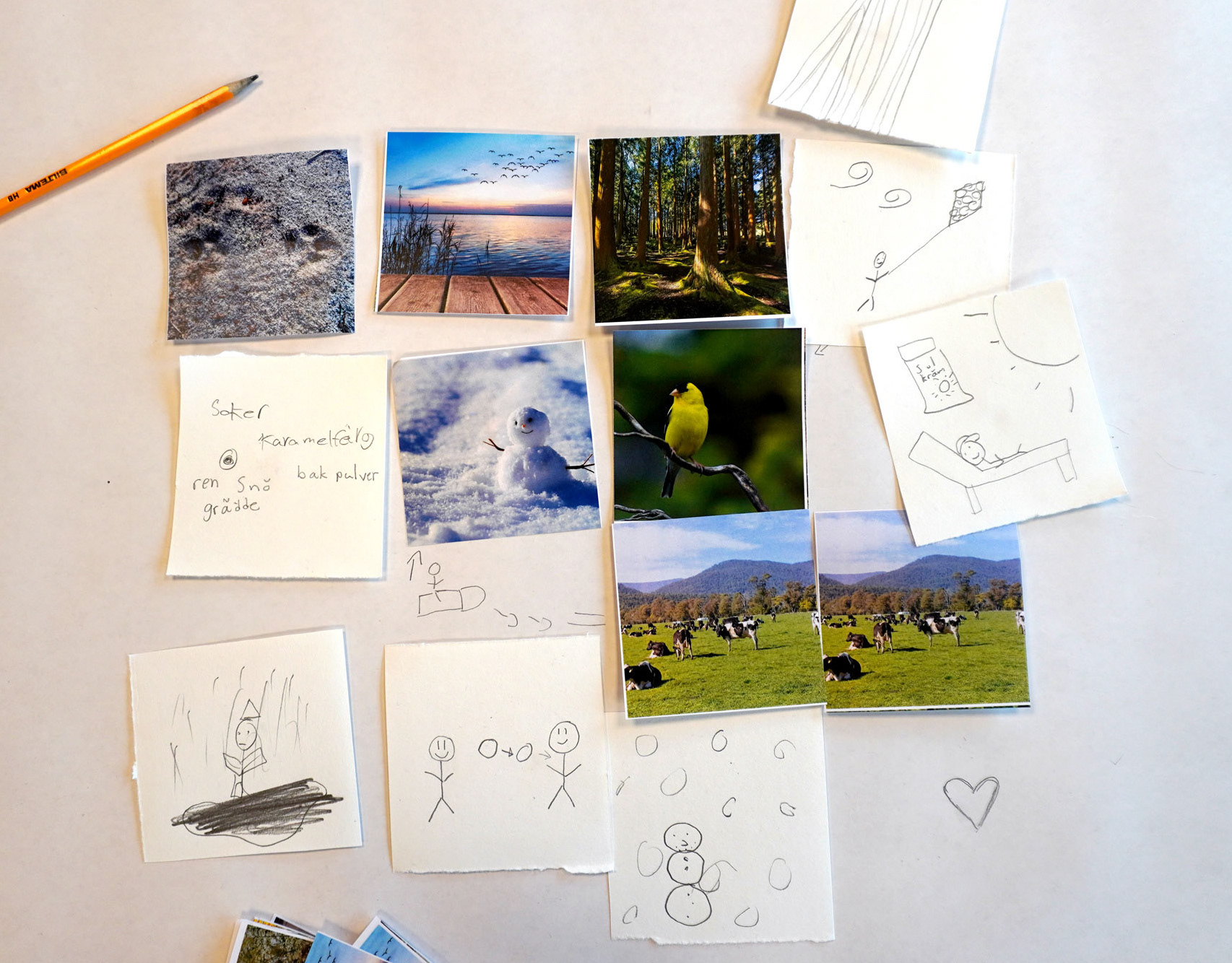
Water is often an important element or aspect in children’s views of these new planets. It comes up as an element they like to be near in different ways to support their play, their rest, their socializing with friends and family.
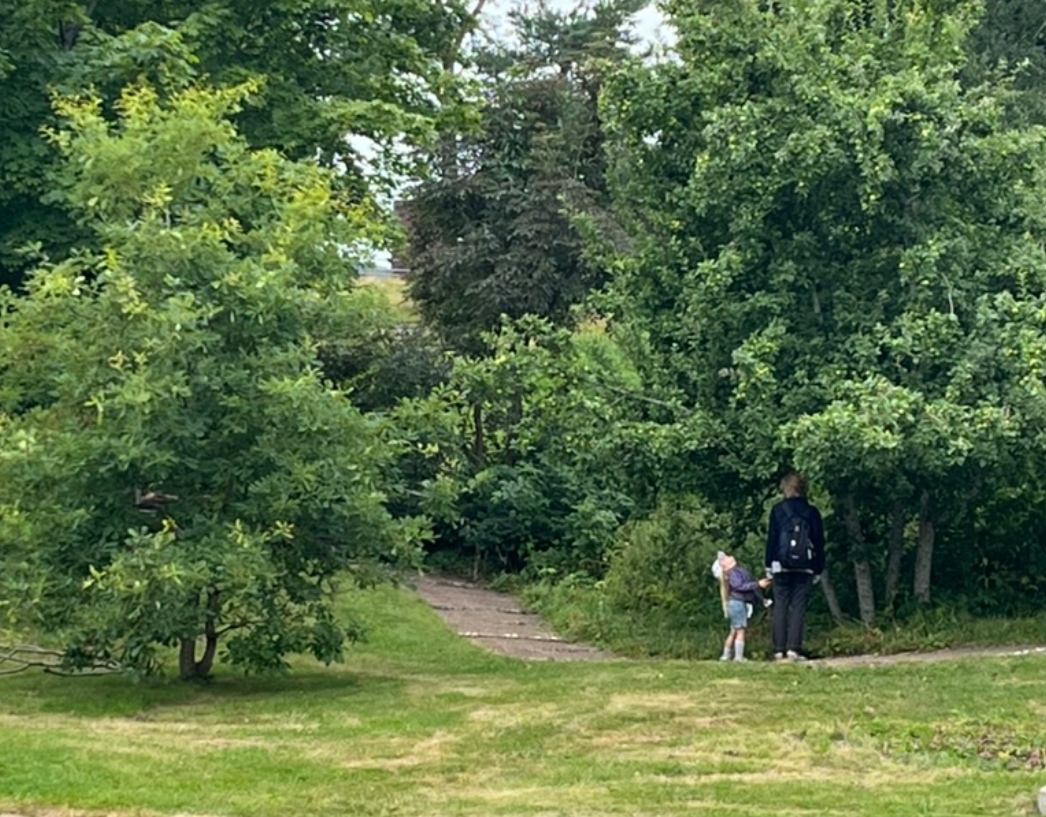
When it comes to spaces with active play, children almost always bring up hide-and-seek. Climbing trees or rocks is also very popular.
Photo;: Katja Mock
Experts in the Field
One 13‑year‑old child took time to describe and visualize his dream planet in remarkable detail. He imagined a world where humans and aliens live side by side, building together and developing places in collaboration. The humans who arrived there had left Earth behind after it was destroyed through misuse and unsustainable living habits. They brought their knowledge and skills with them, teaching the aliens how to build schools, homes, and shared spaces.
We see this child’s perspective — showing the way, passing on knowledge, and co‑creating a world — as a valuable insight for how we might continue developing Barnens Smarta Karta. The experts in the field of play — children — will guide us, and the users of the platform, to where play, joy, and discovery can be found in every neighborhood.
In addition, the platform could include a layer of expertise where first‑time users don’t immediately have access to add new points to the map. Instead, they would first need to gain trust — by exploring, engaging, and learning from the existing child‑generated content before contributing their own.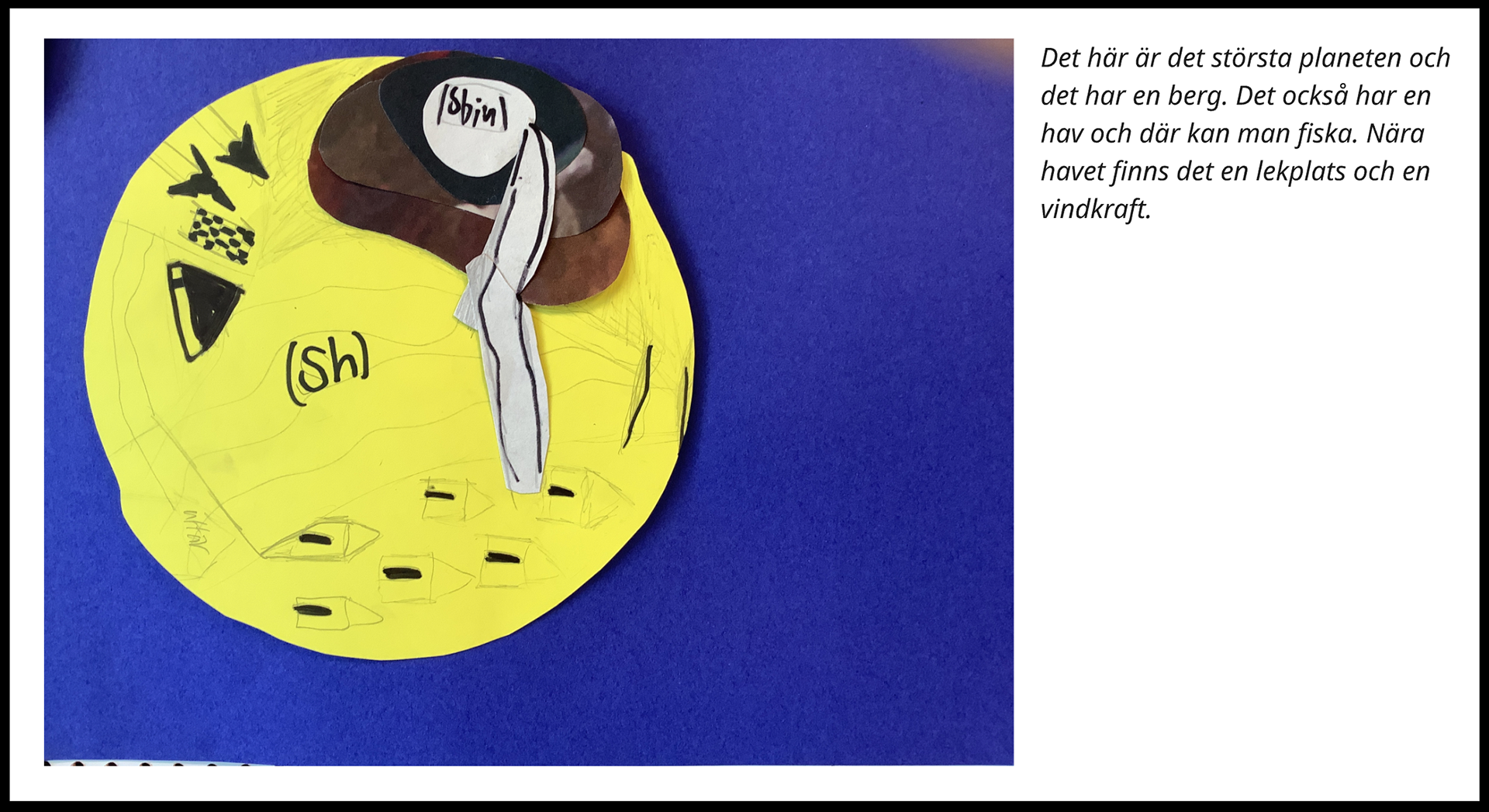
A POSTCARD OF MY PLANET— H, 11
Naming Places
One 11‑year‑old visualized a remarkably detailed planet with houses, a river, windmills, and the tallest mountain offering a panoramic viewpoint. What especially caught our attention was the way he named the places on his planet. Every place had an abbreviated label. (Sh) stood for Stora havet — “The Big Sea” in Swedish — for example.
We are curious about where children draw inspiration from when naming the things they create or imagine. Is this habit of using abbreviations influenced by how places, items, and characters are named in the gaming world, or is it a personal system he has developed to organize his own universe?
Would you like to join us next time?