Twenty-first Stop
Workshop at Positivparken · July 2026
Workshop Leader: Simona Cavalieri
Workshop Assistant: Vasco Keppel
Workshop Assistant: Vasco Keppel
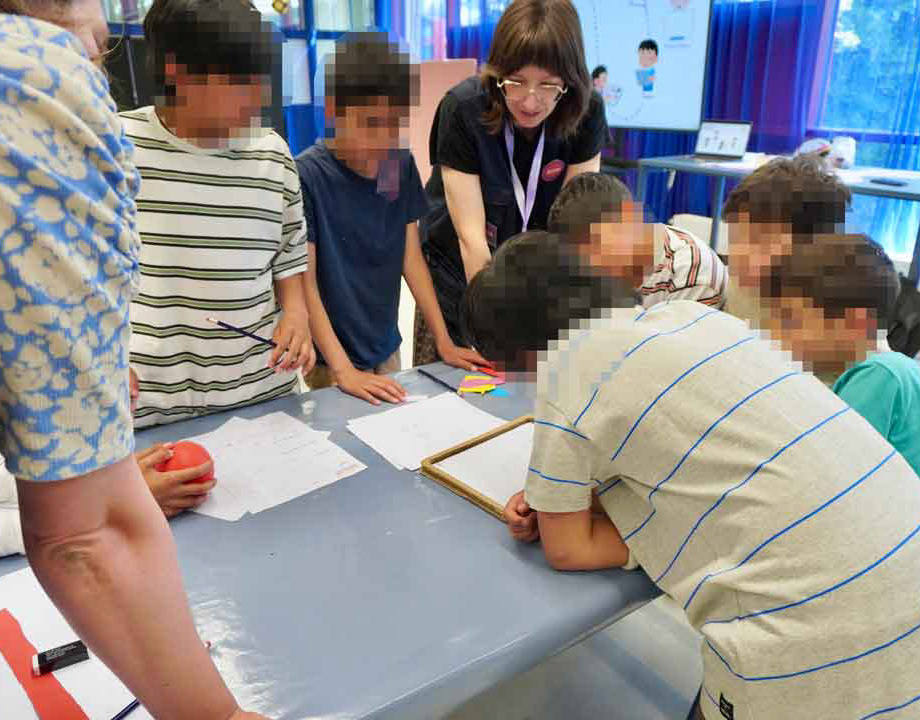
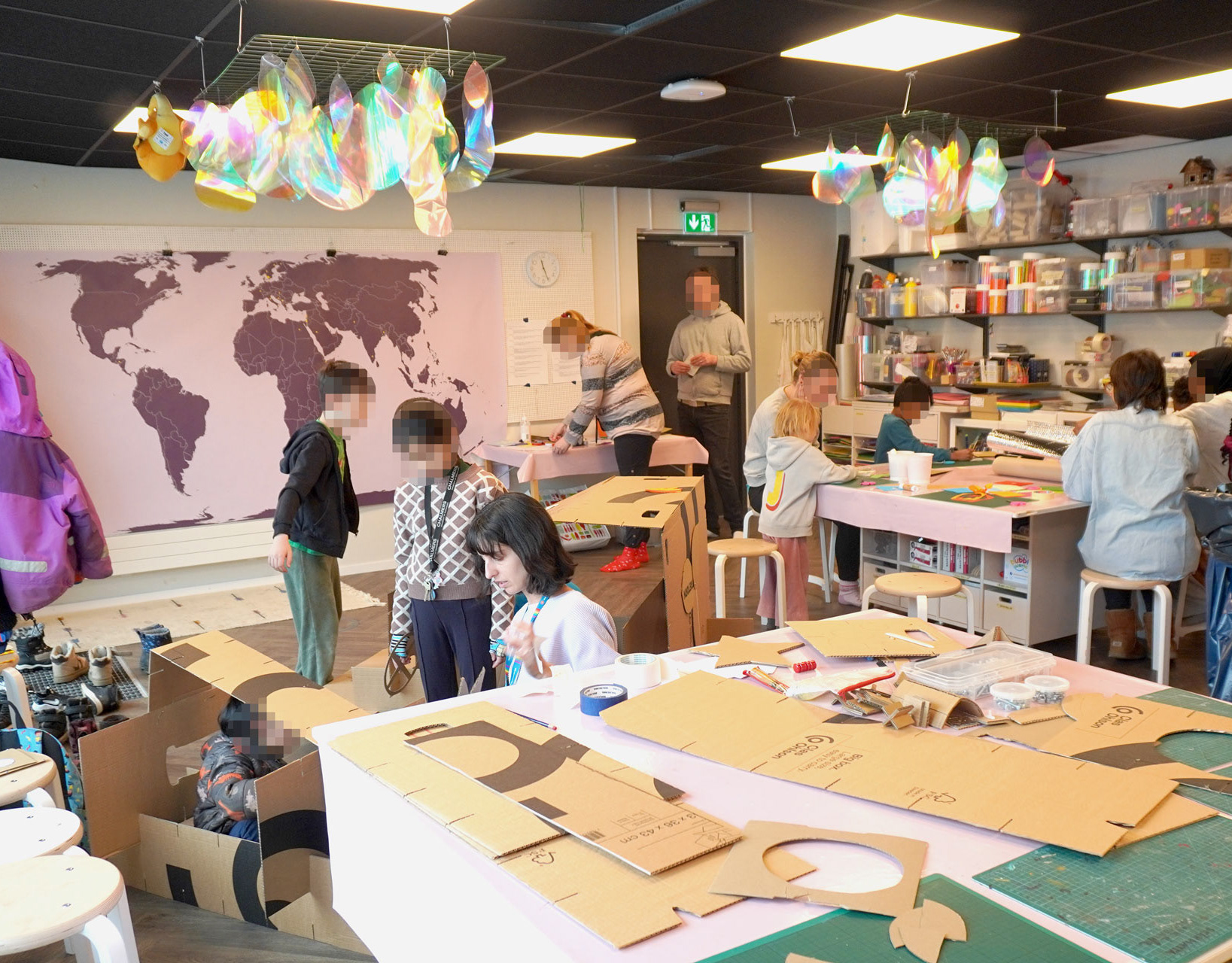
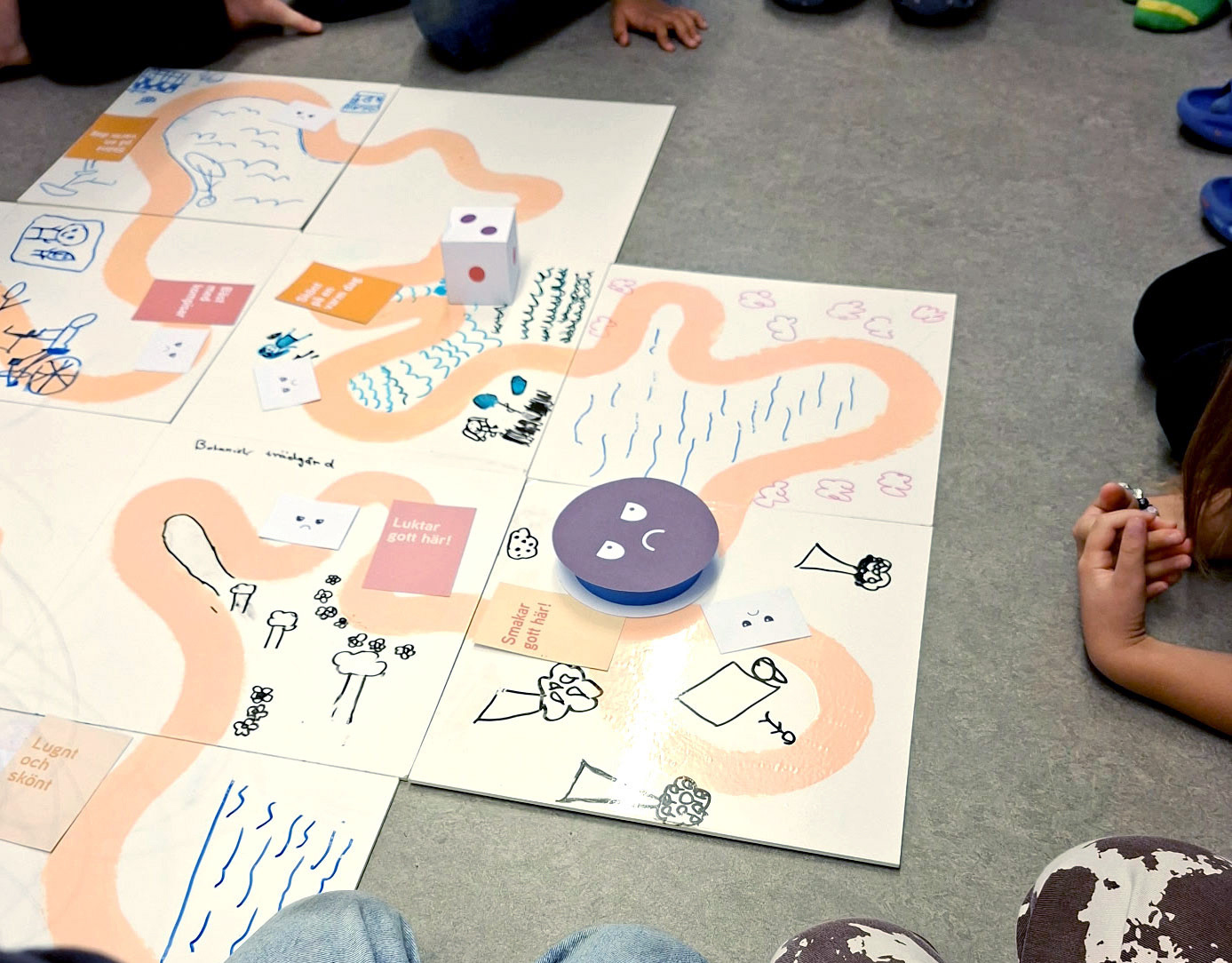
This workshop involved a small group of children, allowing us to closely observe how children between four and six years old explore places and interpret different types of clues. The workshop provided rich qualitative insights into children's motivations, behaviors, and ways of experiencing a place.
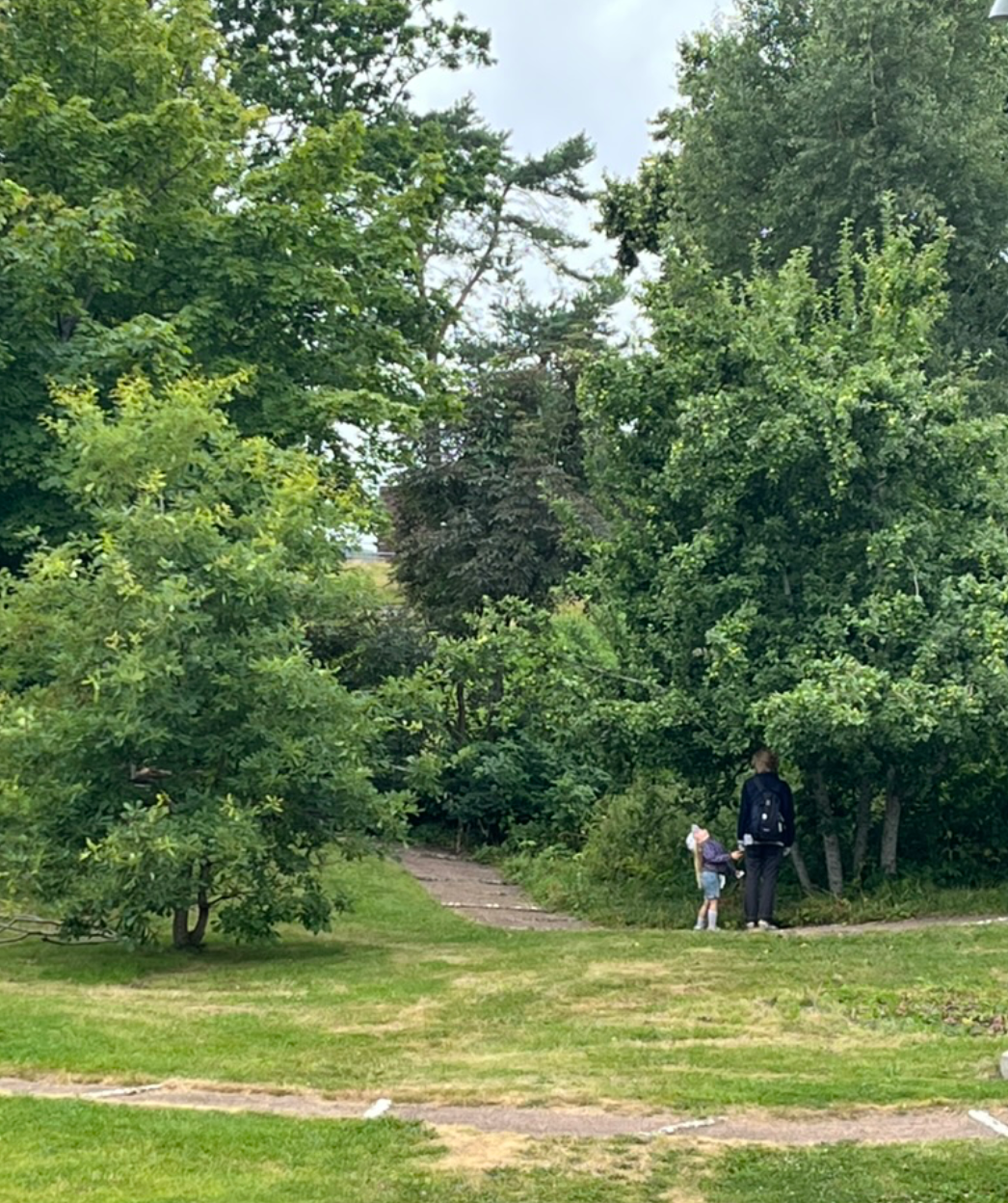
Photo: Simona Cavalieri
Different Ages, Different Motivations
Although the children participated together with their parents, they approached the activity in different ways.
The younger child experienced the activity as an exploration. There was little interest in "winning" or finding the correct answer first. Instead, the joy came from walking through the park, discovering new places, and sharing the experience with her mother, who naturally guided and supported her.
The older child approached the game more as a challenge. She wanted to complete all the clues and find all the locations. Interestingly, the motivation was not the reward (stickers), but the satisfaction of completing the game. This suggests that progress and reaching a goal can be a strong source of motivation for children, even without external rewards.
Small Discoveries Along the Way
The game was designed around finding a place through clues, but the journey itself became part of the experience.
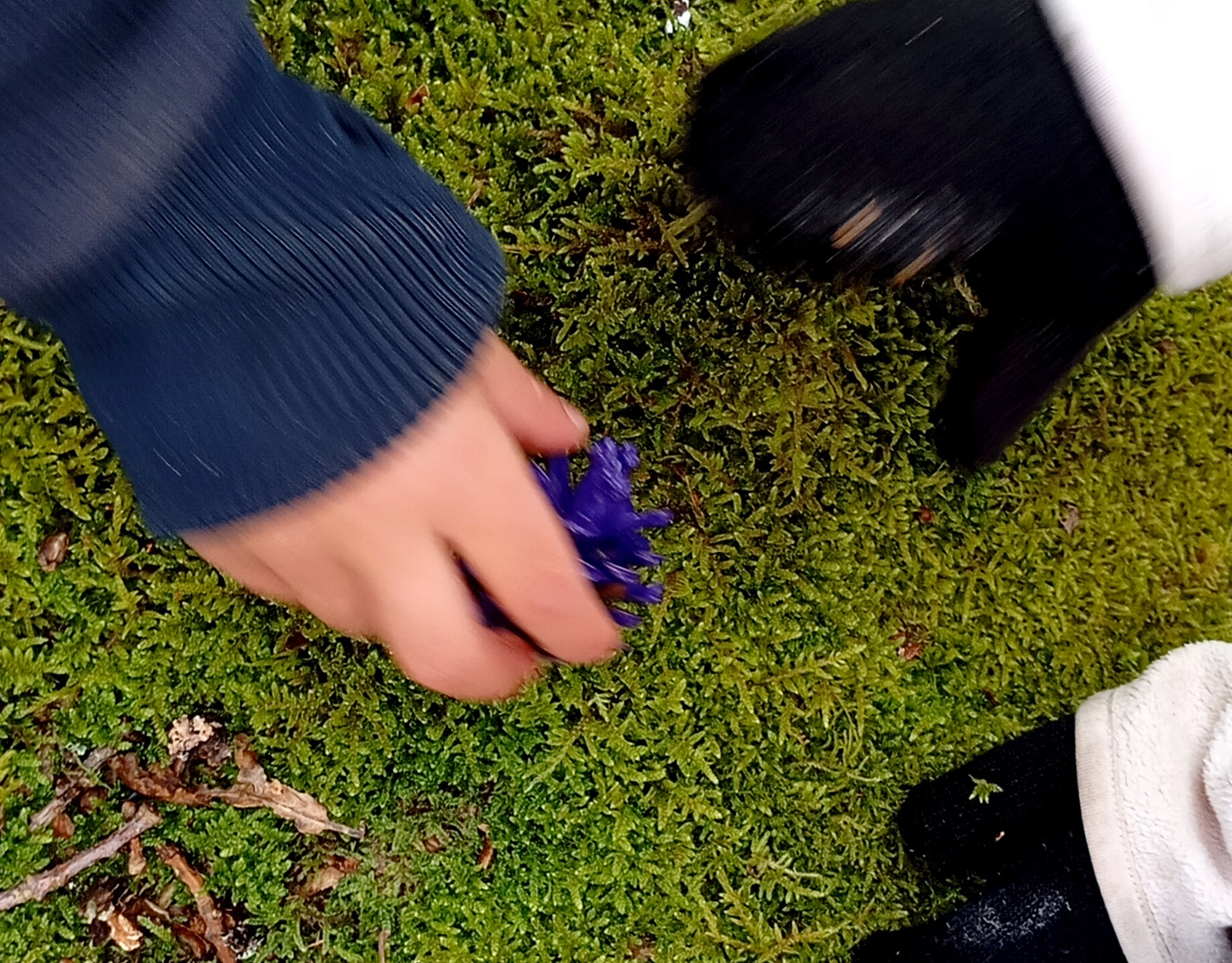
While running towards the next location, the children discovered a seagull feather on the grass. This small detail immediately captured their attention, leading them to stop and observe it together.
This moment showed how children experience their surroundings: they are often attracted by unexpected details, small changes, and things that feel "out of place."
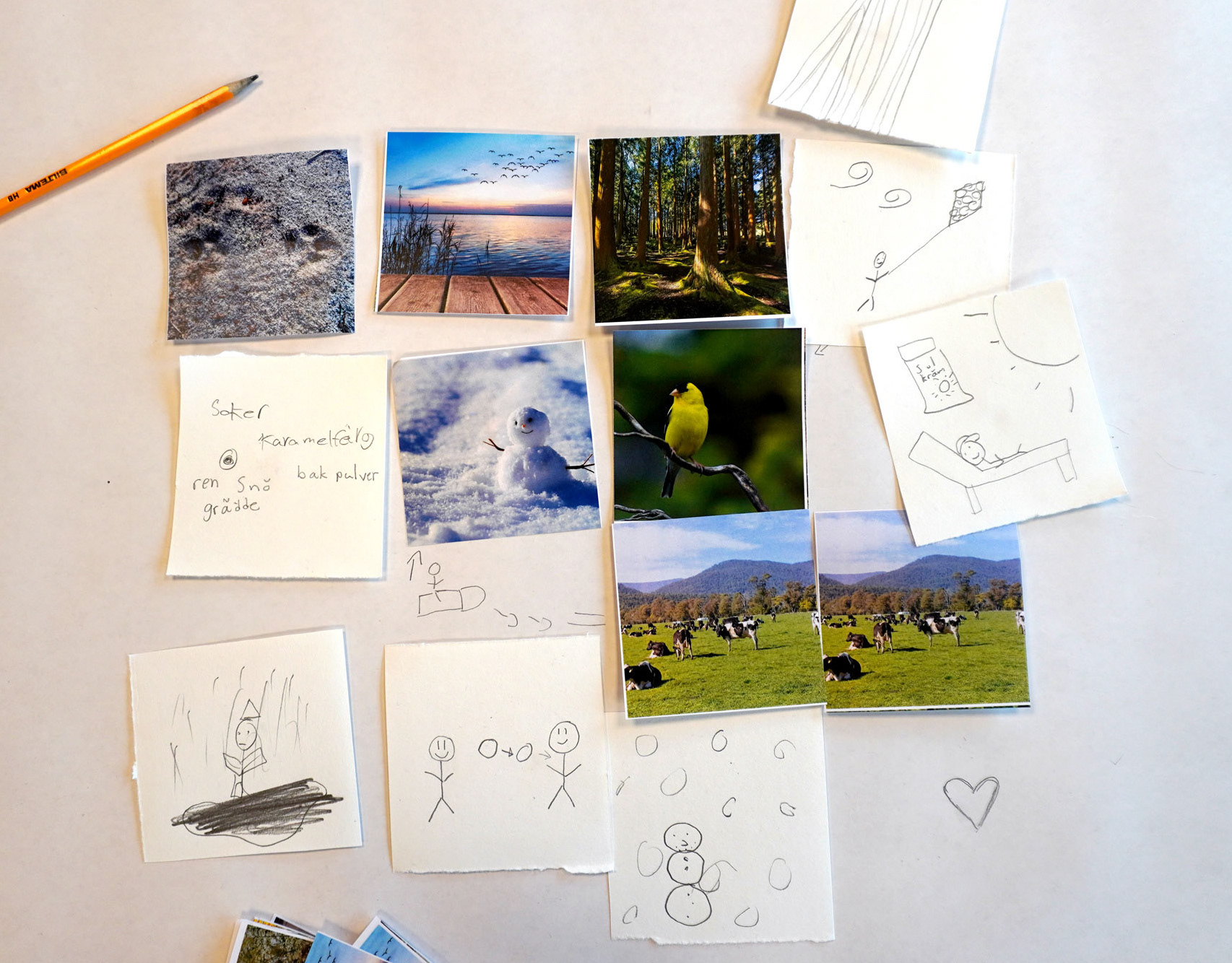
This attention to detail was also reflected in the clues they found easiest. The close-up images, such as the owl's eye or details from the wooden sculptures in the park, were immediately recognized by all children. Looking closely helped them connect the clue with the real world around them.
Supporting Exploration
Text clues were interesting for the children, but for younger ages they required adult support. The text became part of a shared exploration rather than something children could use independently.
The experience with maps raised a more fundamental question: what makes a place recognizable and meaningful from a child's perspective?
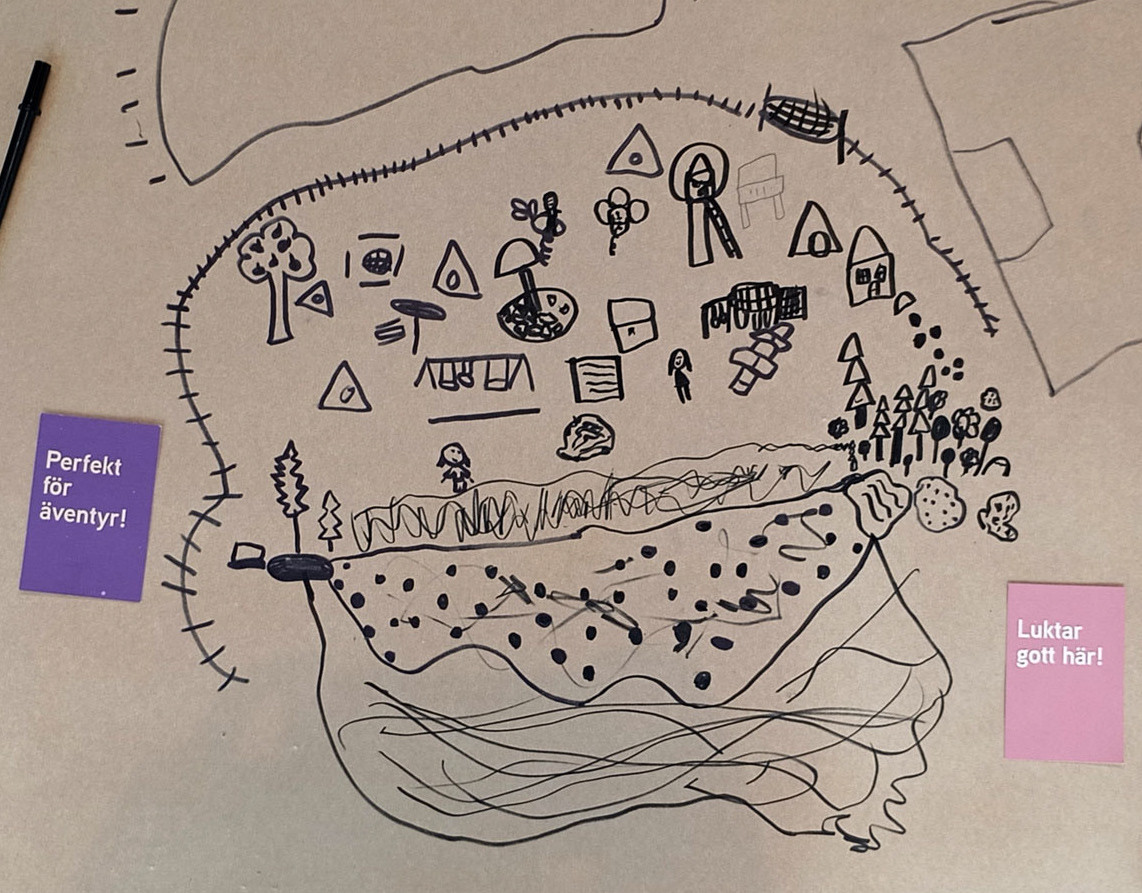
While maps can be useful tools for adults, children may not always start from a map when exploring their surroundings. They might instead orient themselves through memorable details: a special tree, an animal, a sculpture, a color, a play area, or something connected to an experience they had in that place.
While maps can be useful tools for adults, children may not always start from a map when exploring their surroundings. They might instead orient themselves through memorable details: a special tree, an animal, a sculpture, a color, a play area, or something connected to an experience they had in that place.
Understanding what "stands out" for children will be essential when designing ways to help them discover and connect with places through Barnens Smarta Karta.
Combining Different Clues
The collage clue, combining a close-up image, a shape, and a child performing an action, was more difficult to understand. It seemed to require too much information to combine at once. With adult guidance, it worked better, but it was not as intuitive as simpler visual clues.
This suggests that fewer, clearer elements may better support children's interpretation.
Play Suggestions and Physical Maps
The play suggestions were interesting because children seemed motivated by the activity itself rather than by a reward. However, parents did not comment much on this part, so it would be interesting to explore further how valuable these playful challenges are for families.
An unexpected insight came from the printed paper map given as part of the activity. When the next clue included a map, one child immediately thought: "Ah, then we should use the paper map to find the place!"
Although the two maps were not connected, this revealed an exciting possibility: combining digital and physical exploration. A printed map of children's saved places could become a tool for future treasure hunts and real-world adventures.
A Final Reflection
Looking across all the observations from this workshop, one insight stands out: Children are not necessarily looking for the most efficient route to a destination — they are looking for the richest journey.
Whether stopping to examine a feather, recognizing a place through a tiny visual detail, or imagining how a paper map could become part of the adventure, children constantly transformed the path itself into an experience of discovery.
Barnens Smarta Karta has the opportunity not only to help children find places, but to support curiosity, observation, and exploration along the way.
Would you like to join us next time?